
We chronicled and categorized Chicago alders’ actions and statements regarding protection for immigrant communities and the actions of federal agents in the city.
by Grace Del Vecchio, Sophia Kalakailo and Jerrel Floyd
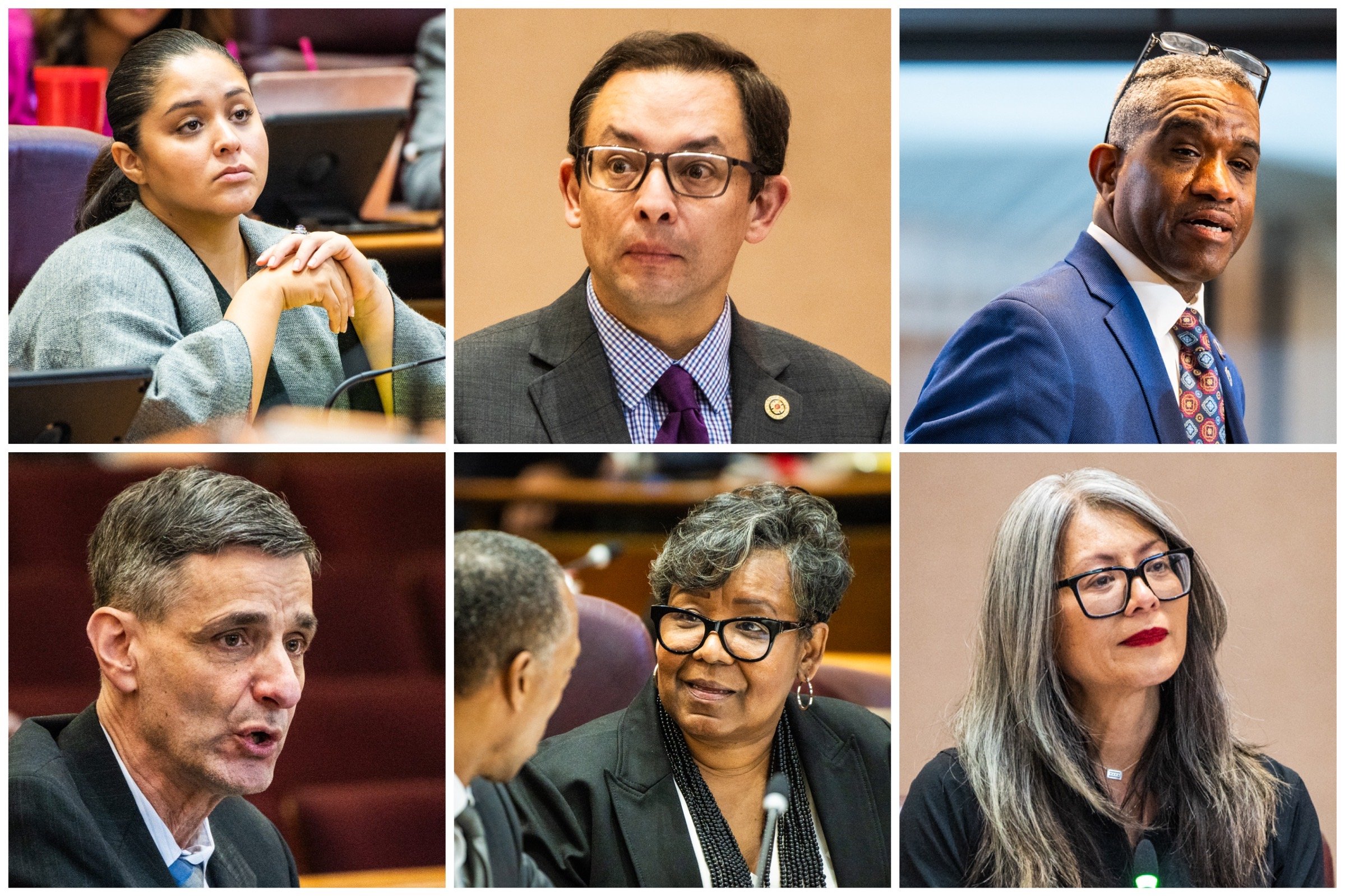
Alds. Julia Ramirez (12th), Raymond Lopez (15th), David Moore (17th), Nicholas Sposato (38th), Michelle Harris (8th) and Leni Manaa-Hoppenworth (48th). (Colin Boyle/Block Club Chicago)
For months, “Operation Midway Blitz” flooded Chicago with federal immigration agents, leading to an estimated 3,000 people detained between June 12 and mid-November.
Last month, a federal appeals court temporarily paused an order to release more than 400 people detained by federal agents as part of a lawsuit that accused agents of violating a 2022 consent decree governing warrantless immigration arrests, Block Club reported. Hundreds of those people had no criminal records.
While “Midway Blitz” has ramped down in recent weeks, arrests have continued in the region into December, and law enforcement officials have hinted at another spike in enforcement come spring.
Since the operation began, state and city officials have issued a variety of responses, ranging from protests, legislation and letters condemning federal agents’ actions; to sit downs with Trump administration officials and attempts at organizing partnerships between the Chicago Police Department and U.S. Immigration and Customs Enforcement.
Under the city’s Welcoming City Ordinance, Chicago police cannot set up a traffic perimeter or help federal immigration agents carry out an enforcement operation. The Illinois TRUST Act of 2017 also blocks local police from assisting in immigration enforcement. However, local police do not have authority to stop federal officials from arresting or detaining anyone, regardless of local and state sanctuary laws.
To better understand how Chicago’s leaders have engaged with these issues, City Bureau chronicled all 50 alderpeople’s actions and statements regarding protection for immigrant communities and the deployment of federal agents in Chicago.
Not sure which ward you live in? Search your address.
Icon guide
To better understand each alderperson’s stance on protection for immigrants and the presence of federal agents in Chicago, we identified relevant categories to research for each alderperson. We looked into the following:
Legislative record
Letters of support
Public statements
Support and resources provided to constituents

Legislative record
This category includes legislation that alders have either voted on or sponsored (starred) regarding protections for immigrations and the federal government’s actions in Chicago.

Letters signed
This category covers major letters that alderpeople signed — or did not sign — since the start of “Operation Midway Blitz.” We referred to the following letters:
An open letter from Illinois officials condemning charges against a group of six people for protesting at the Broadview ICE facility, known as “The Broadview Six.”
An open letter in support of Ald. Jessie Fuentes (26th Ward) after she was detained by ICE, calling the action an “abuse of power” by the federal government.

Public statements
This category covers what public statements (via the news media, social media, blog posts, public meetings, etc.) this alder has made regarding the presence of ICE in Chicago and protections for immigrants. If this symbol is absent, it means an alder has not made a clear statement indicating their stance on the issue.

On-the-ground support
An alder is contributing on-the-ground support if they are involved in any of the following: a rapid response network, in the community passing out know your rights information, going door-to-door, or warning community members about the presence of federal agents.

Resources for constituents
This category interrogates if an alder has provided resources to inform and equip their constituents to protect themselves and each other in case of the presence of federal agents.
Providing resources may include Know Your Rights information, the Illinois Coalition for Immigrant and Refugee Rights (ICIRR) hotline, or sharing mutual aid opportunities via their ward website or social media accounts. It could also look like hosting Know Your Rights workshops, ICE Watch trainings or other events to disperse information and resources to constituents.

Notable contradiction
This symbol indicates that an alder’s statements, votes or actions regarding their stance on ICE and immigration are contradictory.
Symbols and colors indicate each alder’s stance, with green for actions supporting immigrant rights and opposed to enforcement; and red for actions that restrict immigrant rights and support enforcement. We also used red to indicate if an alder did not sign open letters condemning federal actions.
This is your guide to alders on ICE.
Editor’s note: This article has been updated to include additional information for Alds. Marty Quinn (13th), Ruth Cruz (30th), Gilbert Villegas (36th), and Timothy Knudsen (43rd).