In conversations in Austin, McKinley Park and Back of the Yards, some Chicagoans have clear priorities for how the city should spend taxpayer money — but they also want more information on how the whole process works.
By Carolina Baldin, Zainab Qureshi, Cynthia Salgado and Alana Warren
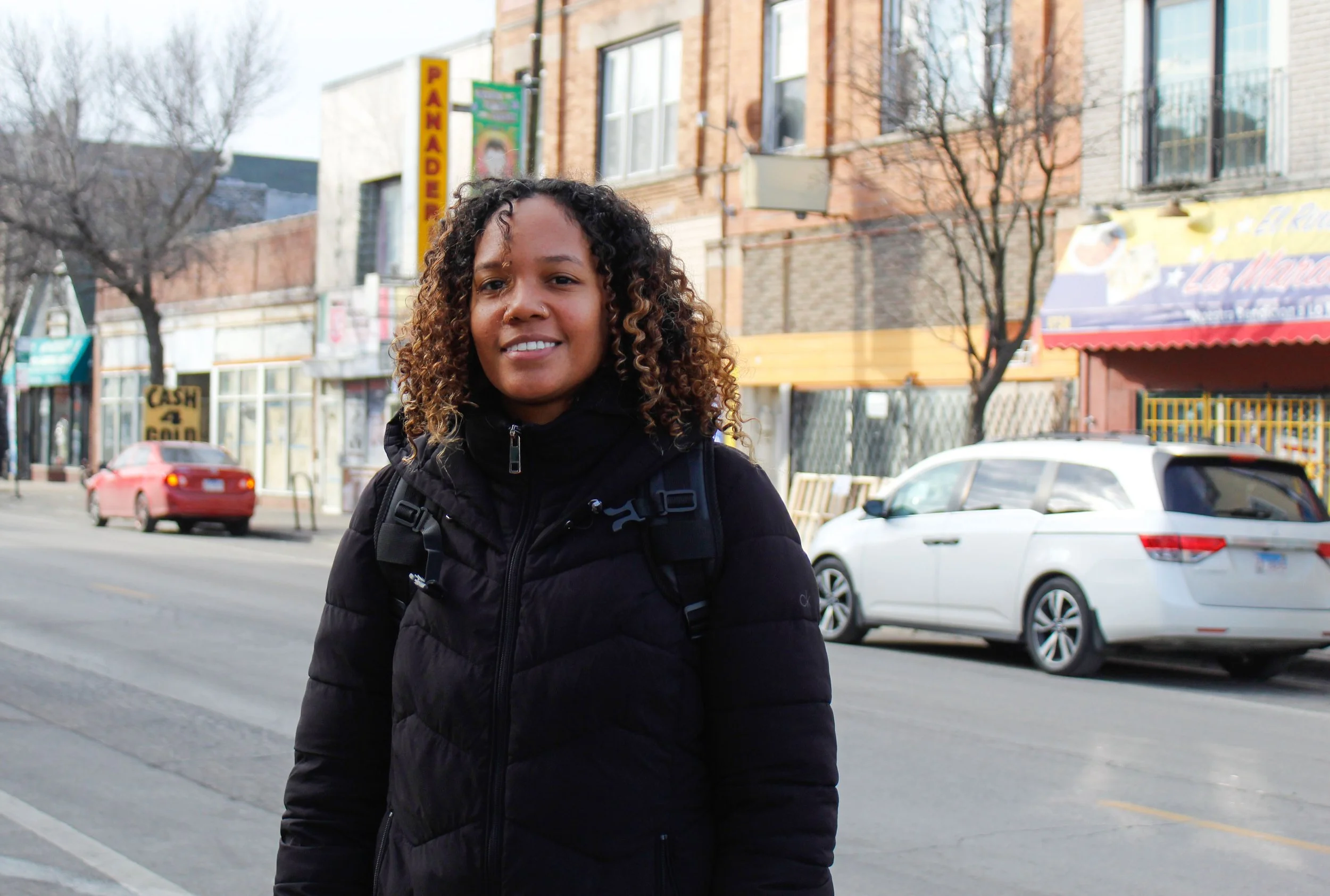
Jessica Stephenson, 32, walks home from work in Back of the Yards, on Feb. 10, 2026. (Sofía Oyarzún/for City Bureau)
Years pass, budgets are approved, but people are still confused.
In the weeks after Chicago finalized its $16.8 billion budget, City Bureau Civic Reporting Fellows spoke to South and West siders about the budget process and how well they think the city is providing services and programs they want most.
Many said they care deeply about this issue, but they don’t always understand how — or why — local leaders make key decisions, and they don’t know how to give their input. In a budget process promoted to be community driven, many still feel shut out.
The budget was finalized in late December, narrowly avoiding a potential government shutdown. The stakes were high: the city was looking at a $1.15 billion deficit as some federal grants were cut and COVID-19 money ran out. Alders clashed with Mayor Brandon Johnson over reviving a corporate head tax, how to handle the city’s ballooning debt, and adding or increasing some fees and taxes. In the end, a majority of City Council members scuttled Johnson’s proposals in order to approve alternate revenue and spending plans.
Whatever the process, residents want the city to spend more on youth programs, violence prevention, social services and health care. Some also said they want city programs and resources to be easier to access, and they want clear ways to get answers to their questions.
This is the first in a series of articles on how the 2026 budget impacts Chicagoans’ lives.
These interviews have been edited and condensed for clarity.
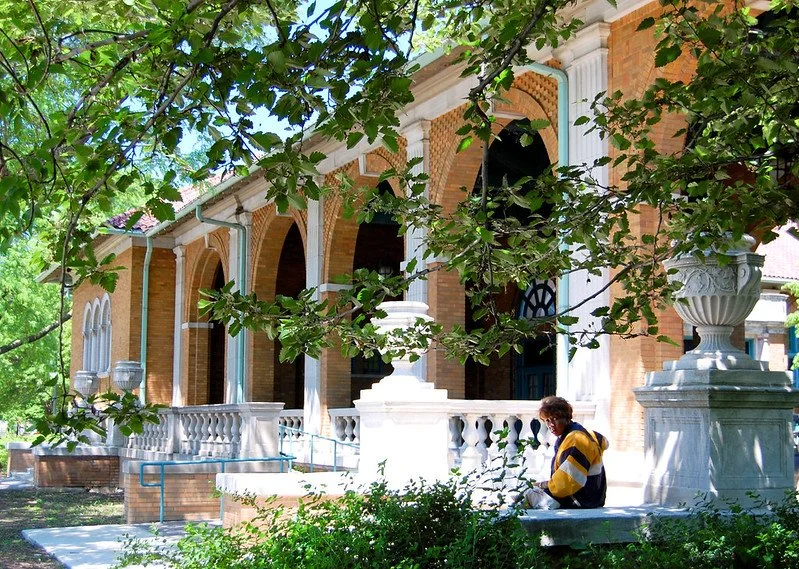
Columbus Park Refectory in Austin. (Eric Allix Rogers/Flickr)
Columbus Park Refectory, Austin
Around 40 people are gathered inside the space for “Self Care Sunday,” the last event of 2026 Austin Collective Action Week. The event series was designed to help young people learn skills, build confidence and find future opportunities. Visitors could stop by a massage booth, stations to prepare flavored water, collage, journal, paint or take a yoga class.
Diamond Jackson, 31, lives in west suburban Forest Park and commutes to work in Austin.
What do you want to see the city of Chicago spending more or less money on?
Maybe more resource centers to help the homeless, get them off the streets. I know they try to help, but the little help they're giving isn't really working. Maybe more financial institutions for the younger kids and also for the homeless.
What else would you like the city to take better care of?
They could be fixing the streets, all these potholes. When it do snow, I don't feel like those streets are salted properly or that it’s plowed properly. They do a very poor job of it.
What do you want to know about city programs and how the city spends its money?
I would like to know how I would be able to get in connection with answers to that. I wouldn't know how to look that up to find out how they're spending their money and what to do. So if I could have a resource to help me, show me how the city is exactly spending their money, that'd be nice. Because right now, I honestly don't know. It's just what I see, and I don't think they're spending it very well.
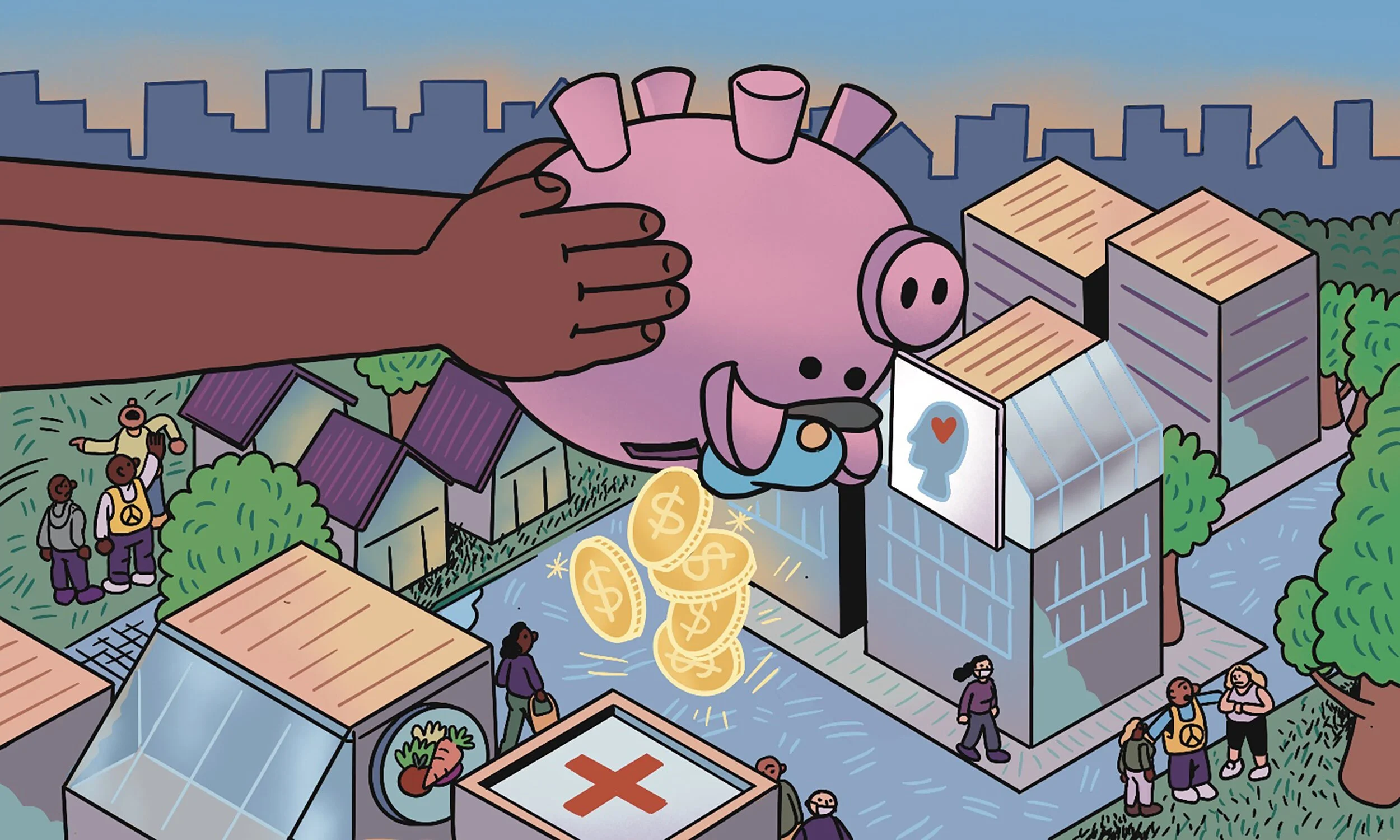
(Illustration: David Alvarado)
Michele Clark Magnet High School, South Austin
Austin Collective Action Week also hosted a youth job fair. Booths are lined up in the hallways with bright flyers and decorations. Representatives from Altitude Trampoline Park, Chicago Police Department, Central States SER and the Westside Health Authority were on site to discuss job opportunities.
Titus Johnson, 16, attended the job fair as part of multiple programs helping young people look for opportunities. He also participates in One Summer Chicago.
What would you like to see the city spend more or less money on?
Programs that kids can go to to get them out of the streets, to keep them in places where they don't have to be around violence a lot.
Seeing as though we are at a youth job fair, is this something you would like to see the city spend more money on?
Yeah, because it helps upcoming adults have ways to get money instead of having to go into a different route, which may jeopardize what they have going on. I like how these programs are helping people get jobs the right way and being able to do what they got to do.
What would you like to know about in regards to city services and the programs they provide?
I really want to know [about] different stuff they're putting their money into because right now, I’m really in the dark when it comes to that. If I was able to know what different things they put their money into, I can probably see or think of a way as to where they can put more into this or less into that.
How would you like to receive this information?
I think if they have a way to put it inside our school systems, because I feel like kids growing up will really need to learn that. I don't feel like the kids would have to go out of their way to know this. So that's one thing they should do: [make it] accessible for people like me, younger kids probably.
Ravan Thomas, 35, is the youth programs director at the Westside Health Authority and is frustrated over the lack of transparency in how the city spends tax dollars. A product of the Robert Taylor Homes, she grew up participating in After Schools Matters programs.
What do you know about the city's budget?
I was talking to your colleague about how we are receiving city grants and funding, but the amount that we are receiving has been less than it previously was. When we do receive city grants and funding, it's not in accordance with what the youth may want; it's in accordance with what [city leaders] have planned. So I was just talking about how these grants should include youth voices more. If you do, then you won't see things like the trends and the curfew things going on, because they will have a safe place to go and have activities that they're interested in, versus what higher ups and adults are asking them to do.
What would you like to see the city spend more or less money on?
Housing is a big thing. We have a lot of youth now that are couch-surfing, so I think that it is very important to do more services around housing as well as mental health. We see a big mental health need in working with our kids. Any supportive services that mitigate barriers that they may be facing: housing insecurity, food insecurity and things like that. So I think that those things need to be incorporated more.
What do you feel like you should be getting for your tax money that you aren’t?
Transparency. How exactly is our tax dollars being spent? Could we, as residents, dictate where our money goes? I think it's very unfortunate that I get over $800 taken out of my check and I don't know where it's going. So that's pretty frustrating.
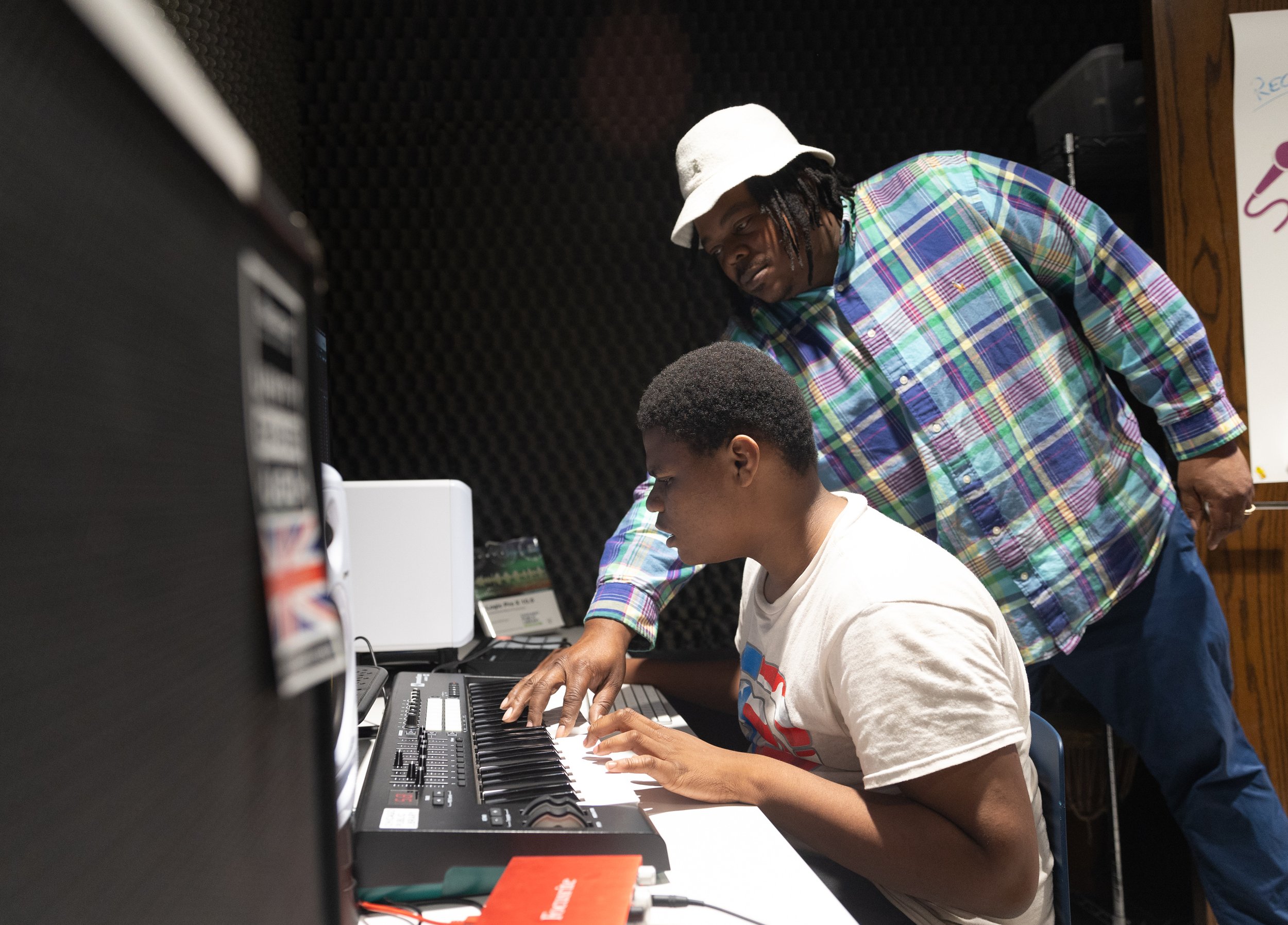
Jonathan, age 13, creates a drum track during a youth music program at Whitney M. Young, Jr. Branch, Chicago Public Library’s Whitney M. Young, Jr. Branch in Chatham on Thursday, July 11, 2024. (Talia Sprague/for City Bureau)
Friendship Baptist Church, Austin
Community members are gathering inside the 132-year-old church waiting for Mayor Brandon Johnson and his leadership team to arrive for a budget town hall and Q&A. Johnson takes the stage with Annette Guzman, director of the Office of Budget and Management, and Jung Yoon, chief of policy.
Sidney Brooks, 61, is a retired city employee who lives in Austin. He’s concerned about taxes and fees in the budget, including the liquor and the grocery bag taxes.
What do you want the city to spend more or less money on?
Everything to me is about youth: youth jobs, youth programs.
I’m also stuck on the meaning of “affordable housing.” What’s “affordable housing?” Affordable housing to me ain’t affordable housing to somebody else: a single parent, a teacher, a police officer — everybody [is] at different levels.
What do you feel like you should get for your tax dollars that you aren’t currently getting?
I get everything. The city of Chicago cannot complain about taxes. Go to the suburbs. I have a building out [in the suburbs] and paid $6,000 in property taxes. The average person in Chicago pays $2,000. The people in the suburbs also pay [more] for their garbage to be collected. People in Chicago talk crazy, but we’re not paying nowhere near the taxes they pay in the suburbs.
How do you feel about the grocery bag tax?
That tax was based on the grocery bag was a nuisance. Now they use it for the city budget. You raise the bag tax, but I don't use bags in the city. People go to Aldi, they save their bags. How can you count how many people are gonna buy bags? That's speculation, that’s not solid. What happens if people don’t use those bags? You can’t do a budget like that.
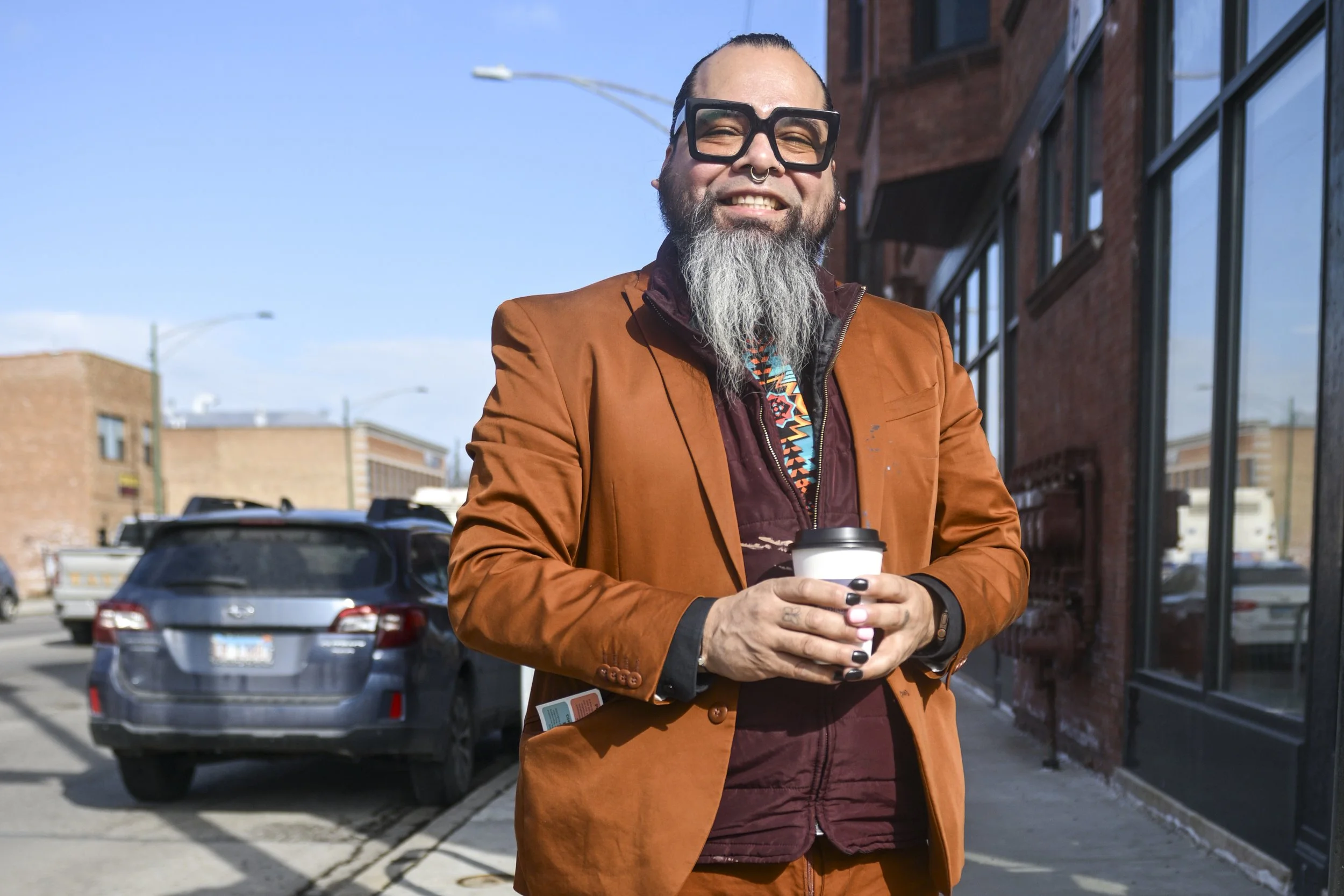
Hector Gonzalez, a customer at Cadinho Bakery and Cafe, poses for a photo outside the cafe in McKinley Park in February 2026. (Zoe Davis/for City Bureau).
Cadinho Bakery & Cafe, McKinley Park
The Portuguese-inspired cafe inside the red-brick facade has a warm, friendly aesthetic highlighted by a mural from local artist Mario Mena. They serve pastries, cakes, pies, coffee and tea.
Paloma Rodriguez, 43, lives in McKinley Park and stopped in Cadinho on a recent afternoon.
What would you like to see the city spend more or less money on?
Resources for youth. The budget should be bigger and spending should be focused on resources for youth.
Definitely defunding police activities, but definitely less should go into that. There should be more accountability on if and when there needs to be a payout to a family, that should come from the funds set aside for pensions, and maybe there can be changes there. That sounds maybe a little extreme, but accountability has to be somewhere otherwise no changes happen.
Is there a city program that has impacted you?
I've worked in the nonprofit world for quite some time and I used to be in nonprofit housing. I think there was more access and there were more different types of programming. More corporations, large agencies were involved in it to bring in the kids.
I think a lot of the problems we have in Chicago are not having access for our Black and Brown communities. If we had more access for them, literally just to experience something new, they might want to start to pursue other activities. And again, if the resources were there, we're opening the world up.
What do you feel like you should get for your tax dollars that you currently are not getting?
More resources for things that need it, more visibility of the resources that currently exist. Let’s keep funding resources in our schools, let’s keep funding activities in the neighborhoods. I do believe there are a lot of activities and resources on the North Side. Anytime I want to do or get involved with a different activity, I have to travel from two or three neighborhoods over, maybe even further. So bringing access to anything that's happening in certain parts of the city to other parts of the city, and not making it so difficult and making it more visible.
How can city leaders better communicate with people about resources and key information?
In a perfect world, there would be some sort of centralized place where we can go for connecting resources to the people that need them. I think there's a lot of, “I know how to do it better” [mentality], and that's really frustrating. The nonprofit work, we’re all here for the actual work. None of us are getting paid billions of dollars to be here and to do it. So let's work together and put our egos down. We’re playing telephone — you're gonna get misinformation.
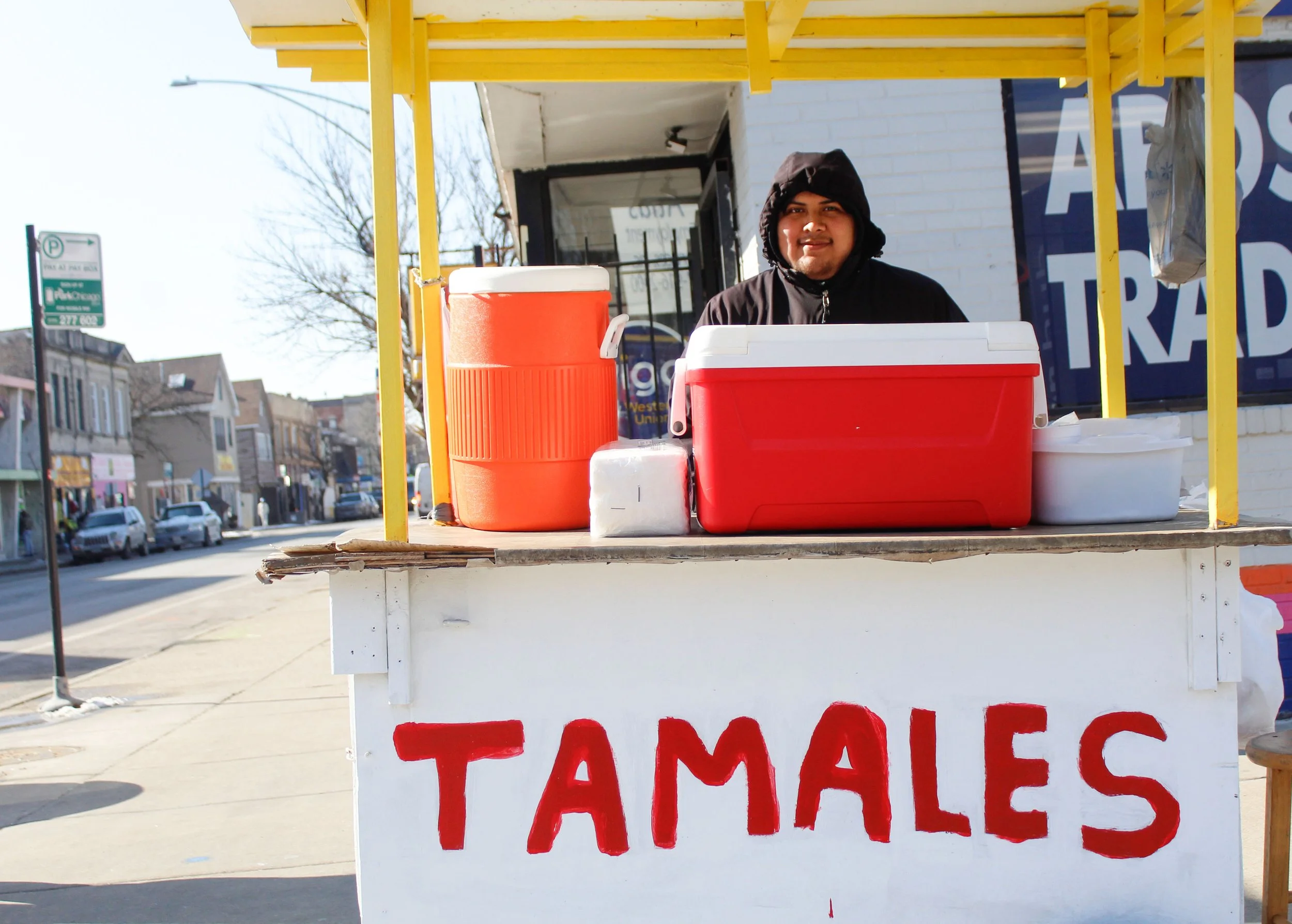
Fausto Barrera, 21, spends his day selling tamales in Back of the Yards on Feb. 10, 2026. (Sofía Oyarzún/for City Bureau)
Back of the Yards
Jessica Stephenson, 32, lives in Hyde Park. She feels the city spends more on communities located closer to Downtown at the expense of underserved communities near her.
What do you want the city to spend more or less money on?
I think that all of the budget is for making downtown the focal point of coming to Chicago when every neighborhood has something that it could benefit from. It could be bringing in money. It could bring jobs. It creates housing. Why don't we pump the money into the ground the same way that they do downtown? Why don't we give them more parks and more things for kids, more opportunities, more jobs that we're just not benefiting from because they would rather prioritize white people downtown and their comfort versus people of color and everybody else in the city. So it's unfortunate.
What would you like to know more about the city budget?
I think that we need complete and total transparency. That means that for every dollar that leaves the American people and that goes to the government and stuff, we need to know where that 50 cents is going, we need to know where that penny goes. Because every dollar matters, every cent matters, especially for funding in the city. If they're saying we don't have money to give kids jobs or whatever for summer, well, let's focus on where the money is being spent, and let's allocate the funds where they should be, and not in the pockets of the people that shouldn't have it at all.
Civic Reporting Fellowship at City Bureau is a hands-on training opportunity where fellows grow their skills in writing, interviewing and community-centered reporting in a supportive team environment. You can support us by becoming a recurring donor.