Tech companies are suing to block a new tax. Without it, a citywide Crisis Assistance Response and Engagement program could hang in the balance.
By Zainab Qureshi and Cynthia Salgado
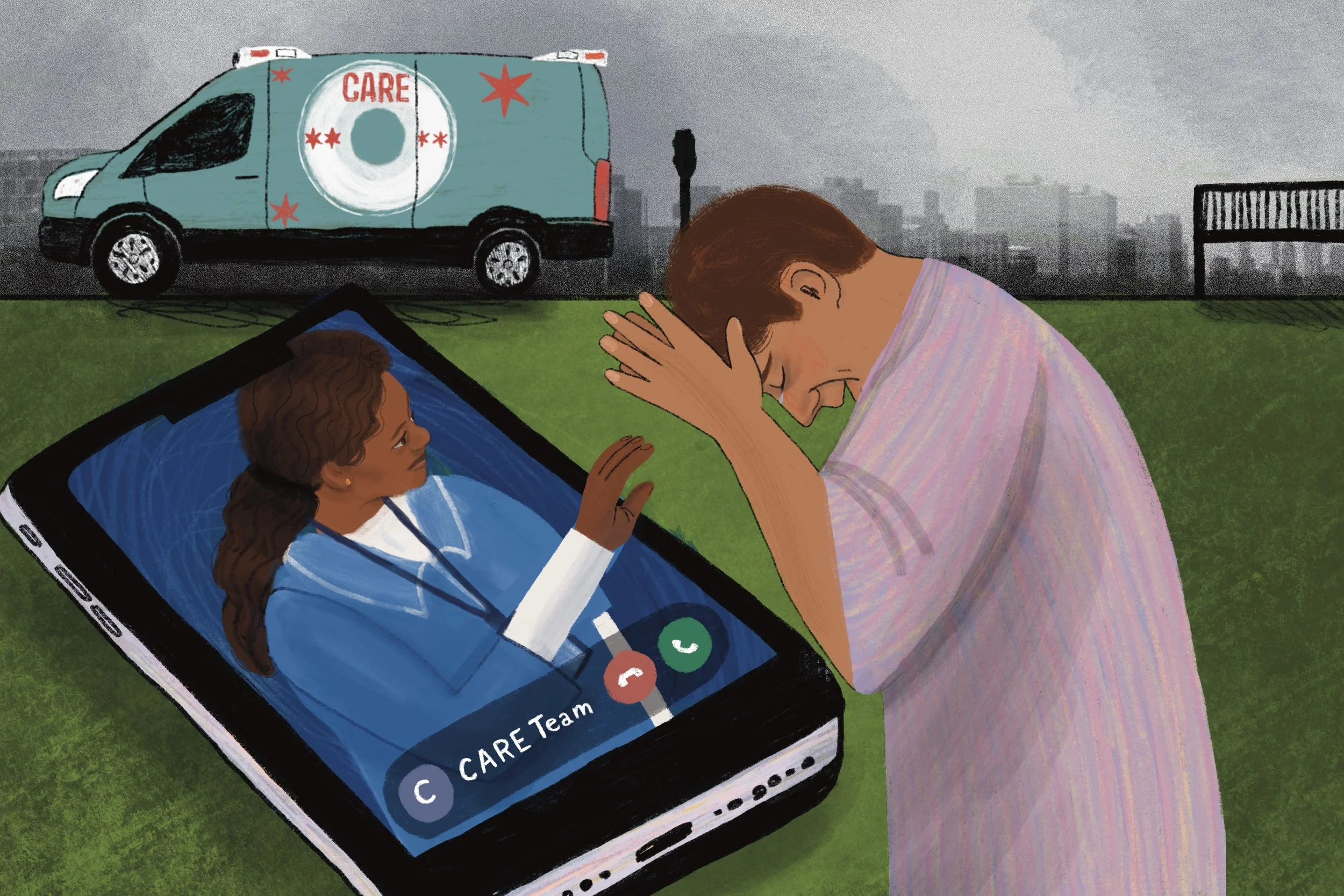
Crisis Assistance Response and Engagement workers are dispatched after someone calls 911 for help with a nonviolent mental health emergency and asks for a CARE team. After a years-long pilot, local leaders are trying to expand it citywide, with more availability and serving more age groups. (Gaby FeBland/for City Bureau)
Editor’s note: This story discusses crisis mental healthcare and mentions violent crime.
Chicago Documenters notes from Nikebia Brown-Joseph, Katie Busch, Fabienne Elie, Ava Grubb, Holland Harmon, Katrina Herring, Talha Janjua, Jana Simovic and Leona Towner were used to help report this story. Find more public meeting coverage at Documenters.org.
Mayor Brandon Johnson’s 2026 budget included a bold pitch: a new tax to generate $31 million for mental health support, youth programs and violence prevention.
The money from the Social Media Amusement & Responsibility Tax (SMART) would create the Protecting Care Fund, a dedicated pool of money for key community services. One beneficiary would be the Crisis Assistance Response and Engagement (CARE) program, which provides non-emergency mental health intervention without police.
The proposal, which survived bitter budget clashes between the mayor and City Council members, could transition CARE from a pilot into a permanent citywide program. More than six months into the year, it’s still not clear if that plan will work — or what officials will do if it doesn’t.
Launched in 2021, CARE was the result of organizers pushing to incorporate mental healthcare into public health infrastructure. This came after years of communities seeing clinics close while the need for mental health services spiked; and calling 911 to help someone in crisis only for a situation to escalate into arrests or violence, disproportionately harming people of color.
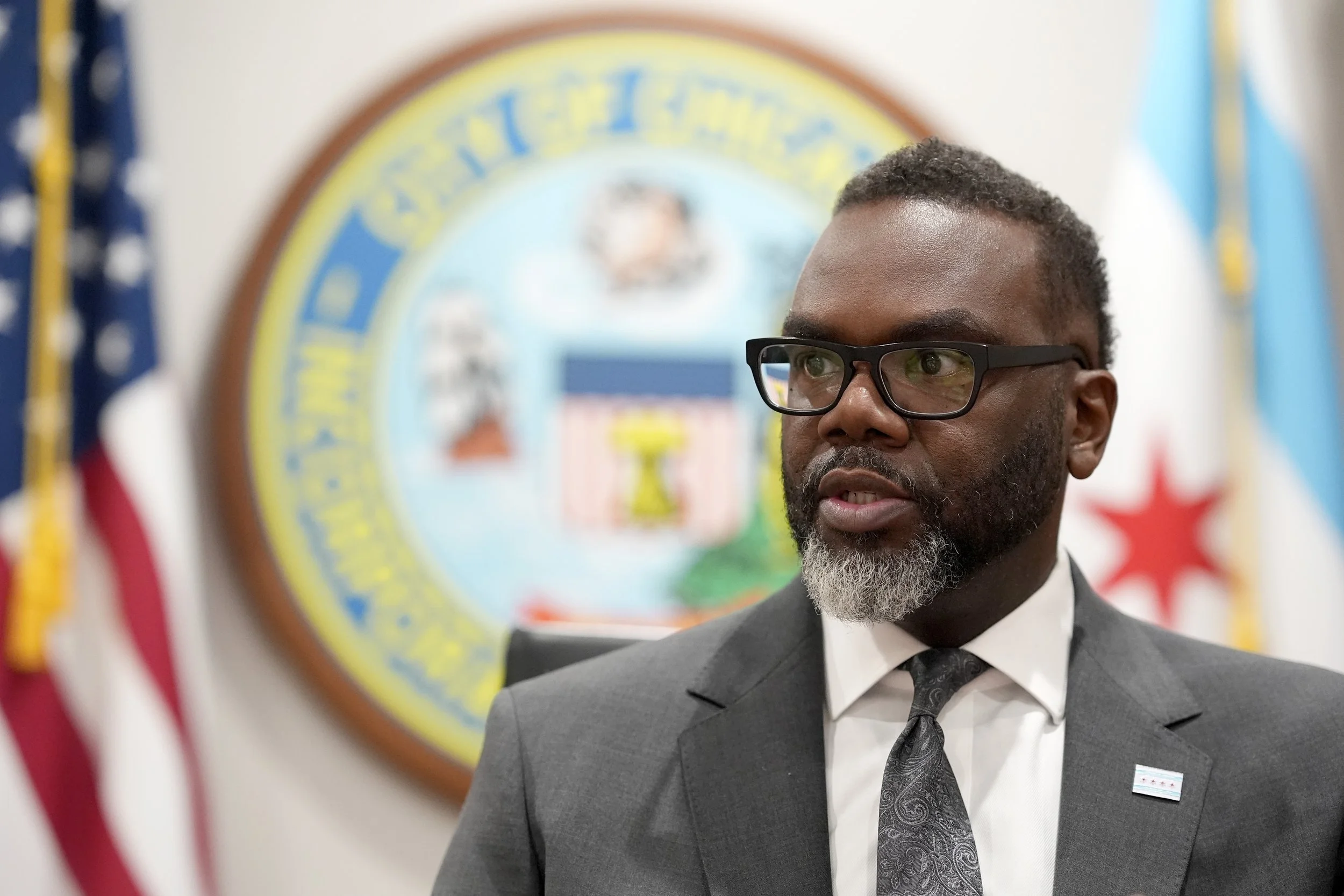
Mayor Brandon Johnson in 2024. (AP Photo/Charles Rex Arbogast)
Until this year, four CARE teams operated during limited weekday hours in a handful of police districts. City leaders are expanding it to all 50 wards and all 22 police districts, using the last of federal American Rescue Plan Act (ARPA) dollars to foot most of the bill until the money runs out. Then the city plans to use SMART to cover program costs.
But NetChoice, an association representing several internet companies, is suing the city to block the social media tax. That lawsuit is pending.
Officials have said they aren’t worried about the lawsuit, but the city has already collected millions from the tax and is outpacing its own projections for it, public records show. If a court scraps or limits SMART, there’s no obvious backup plan to continue CARE’s expansion.
Despite that uncertainty, organizers who made CARE a reality have seen a “seismic shift” in how the city is handling mental healthcare, said Ishan Daya, co-executive director of Institute for the Public Good. The nonpartisan organization proposed a social media tax Johnson’s office used to pitch SMART.
For the first time, the city detailed a plan to pay CARE salaries out of its own pocket. Officials instead used more ARPA money for 2026, but that plus gaining buy-in with SMART was “a huge step in the right direction,” Daya said.
“We have been fighting for years for the city to put some skin in the game and directly fund the CARE program through the Corporate Fund [the city’s general operating money],” Daya said. “For us as residents and as advocates for public mental healthcare, it was us seeing our demands continue to be met because of the organizing that people who need these services on the ground have been fighting for, for years.”
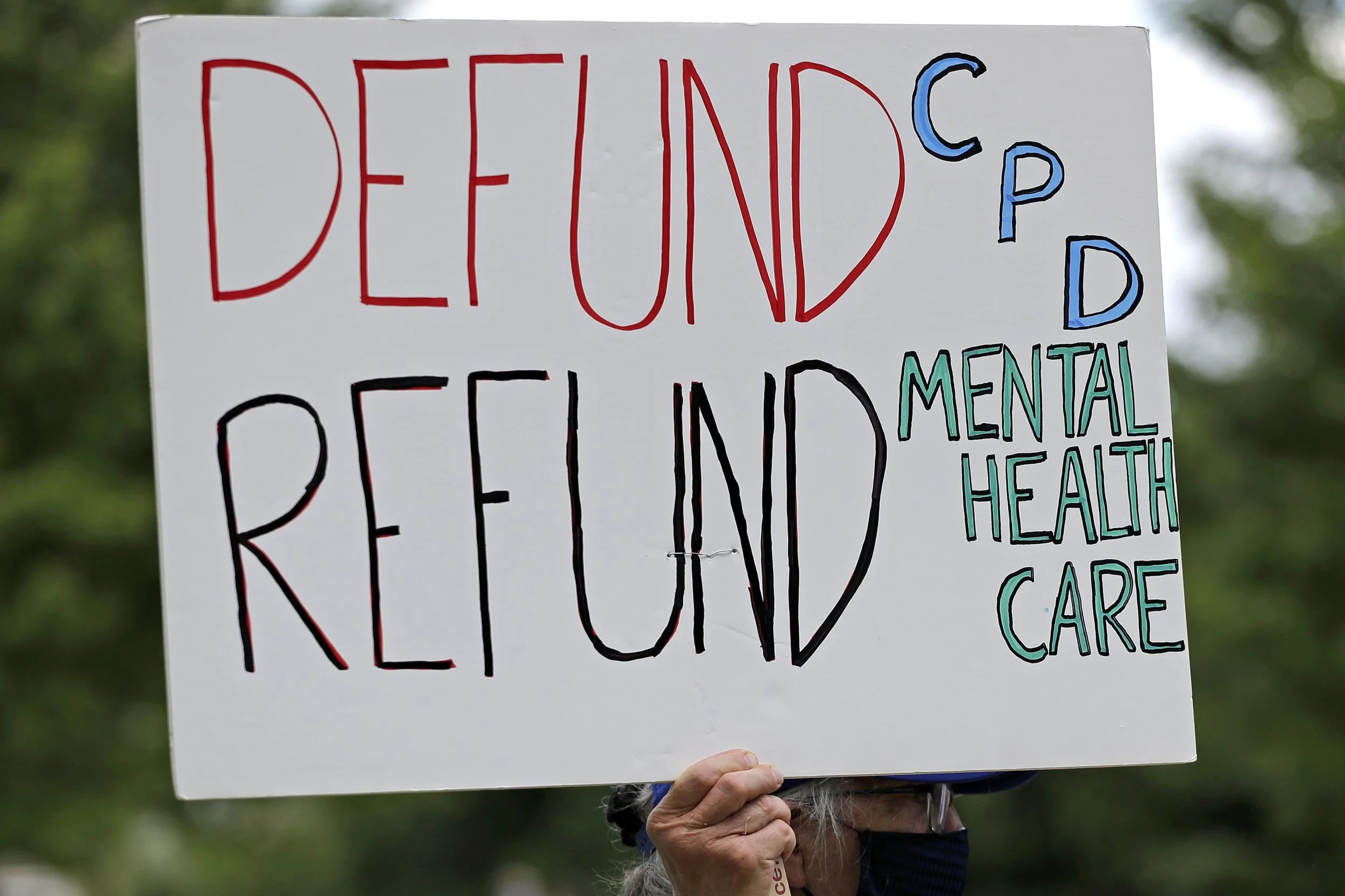
A person wears a face mask and holds a sign at a Health Care Justice demonstration in 2020. Chicago nurses, healthcare workers, and community activists united to protest racism in the healthcare industry and demand one excellent standard of care for all people. (AP Photo/Nam Y. Huh)
Before CARE, there was a gap
To understand what’s at stake, it helps to understand what needs CARE sought to fill.
Advocates, researchers, residents and even police leaders have long warned that armed officers were not the best choice to intervene in a mental health crisis. Such calls too often ended with officers taking someone to an emergency room; arresting and sometimes involuntarily committing someone for a psychiatric evaluation; or failed de-escalation where an officer tases or shoots someone.
Concerns about inadequate mental healthcare in Chicago have intensified for years, particularly when former Mayor Rahm Emanuel shut down half of the city’s mental health clinics in 2011. Nationwide protests after the murder of George Floyd sparked more scrutiny of policing and inspired funding for alternative approaches.
CAHOOTS in Eugene, Oregon, which ran from 1989 to 2025, was one of the first programs to de-emphasize police in favor of sending unarmed crisis workers and medics to help people in distress, becoming a model for other programs around the country.
Amy Watson, a professor at Wayne State University’s School of Social Work in Detroit, studies the intersection of mental health and the criminal legal system. Putting mental health at the forefront changes the “dynamic around what the response is,” she said.
“It can be very stigmatizing and very traumatic for someone who’s in crisis to have law enforcement respond, because they generally show up with law enforcement equipment, suggesting a crime has been committed. If you don't have a law enforcement officer there, you’re not gonna have an arrest,” Watson said.
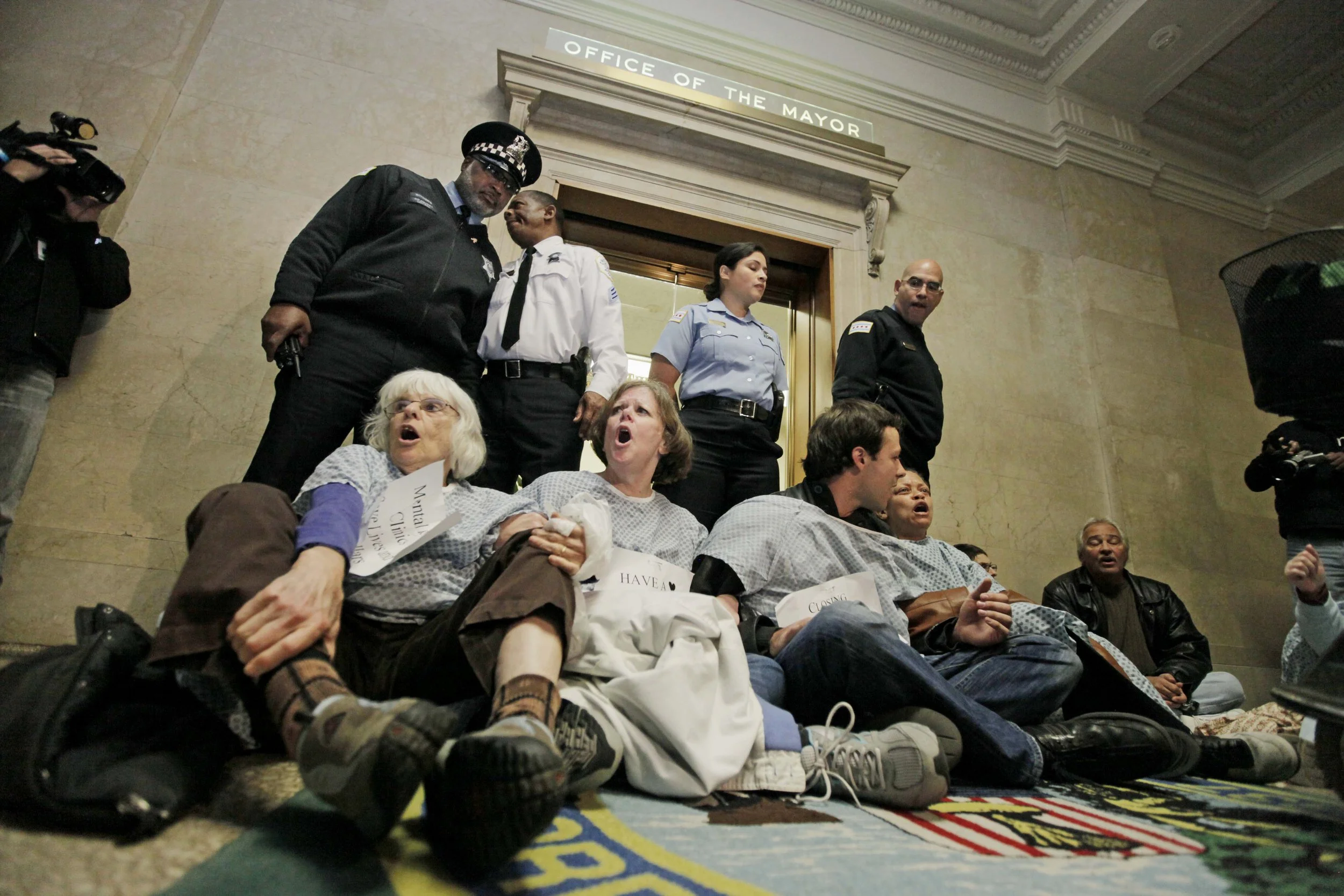
Chicago protesters with the Mental Health Movement stage a sit-in outside the office of then-Mayor Rahm Emanuel, Tuesday, Nov. 15, 2011. The protesters accompanied by several dozens more supporters from various groups opposed Emanuel's proposed budget, which closed six of the city's 12 mental health clinics. (AP Photo/M. Spencer Green)
In 2017, the Brighton Park Neighborhood Council launched the Collaborative for Community Wellness, bringing together youth, social workers, alderpeople, neighbors and community groups to evaluate mental healthcare in the city. In 2020, the group started Treatment Not Trauma, a public health model that would create non-police crisis response teams and reopen city-run mental health centers.
“We’ve seen also an uptick of privatization of services. Nonprofits, sometimes they have really long wait lists or they have some qualifications to get their services, whether it’s through insurance, which we don't always have, or co-payments. And co-payments can range from $20 to $50, right? It sounds fine, but once a week, it adds up,” said Any Huamani, the Treatment Not Trauma campaign coordinator and immigration defense coordinator for Brighton Park Neighborhood Council.
Chicago first tried to create a non-police crisis response system when Ald. Rossana Rodríguez-Sanchez (33rd Ward) introduced the Treatment Not Trauma ordinance in 2020, modeled after the coalition’s demands. That fizzled out as city officials under then-Mayor Lori Lightfoot introduced CARE as a co-responder pilot with and without officers. For the first time, a call for help could bring a combination of a trained behavioral health clinician, a paramedic, or a drug recovery specialist in addition to a police officer, depending on a person’s needs.
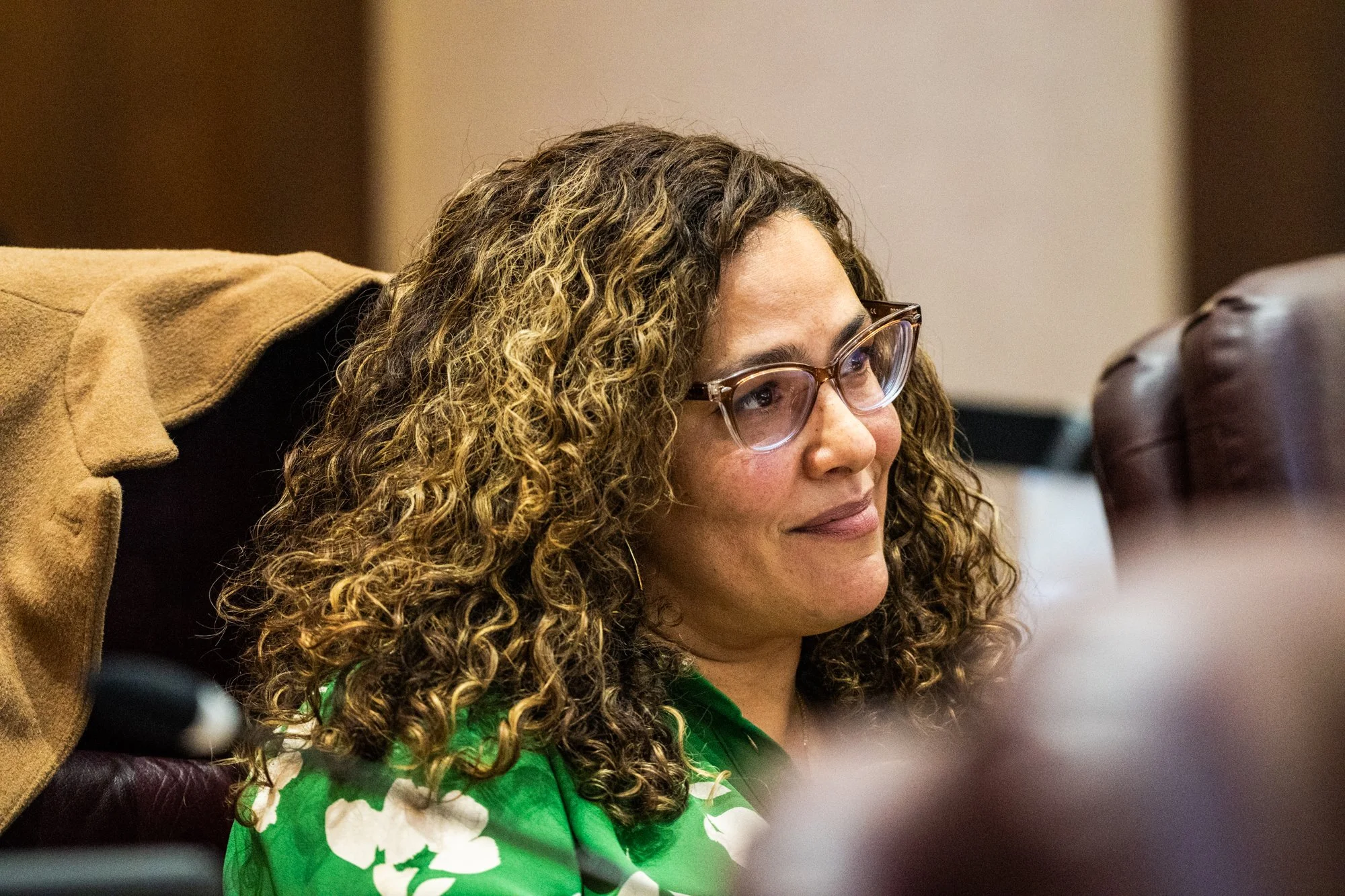
Ald. Rossana Rodriguez Sanchez (33rd Ward) during a City Council meeting on April 16, 2025. (Colin Boyle/Block Club Chicago)
Rodríguez-Sanchez and other progressive alders continued to push for a non-police model after Johnson took office in 2023. Police and Fire department staff were phased out of CARE teams in 2025, relying on mental health professionals and EMTs to respond to certain 911 calls for non-violent, non-medical behavioral health crises. CARE also was moved into the oversight and budget of the Chicago Department of Public Health.
“The fight for public mental healthcare and mental healthcare in general has become more culturally forefront,” Daya said. “It has become a baseline expectation of politicians that want to see support from [the] community, because we all know what access to public mental healthcare does for our communities: it makes them more thriving, it makes them safer, it makes them better.”
The program has been well received, but there have been persistent issues with operations, staffing and financial stability. Teams have operated during limited daytime hours Monday-Friday in police districts that cover parts of the North, Near West, Southwest and Far South sides. Bound by geography and by the clock, a 911 call can yield different responses and outcomes.
The city has been diverting fewer calls for help away from the police department amid “dysfunction and bureaucratic infighting,” Medill Investigative Lab-Chicago and MindSite News found.
“[CARE] officially transitioned to the public health department, but now those transitions mean other technical things, like how do we make sure they are getting 911 calls? There's definitely a lot of technical things that have to happen for such programs to be successful,” Huamani said.
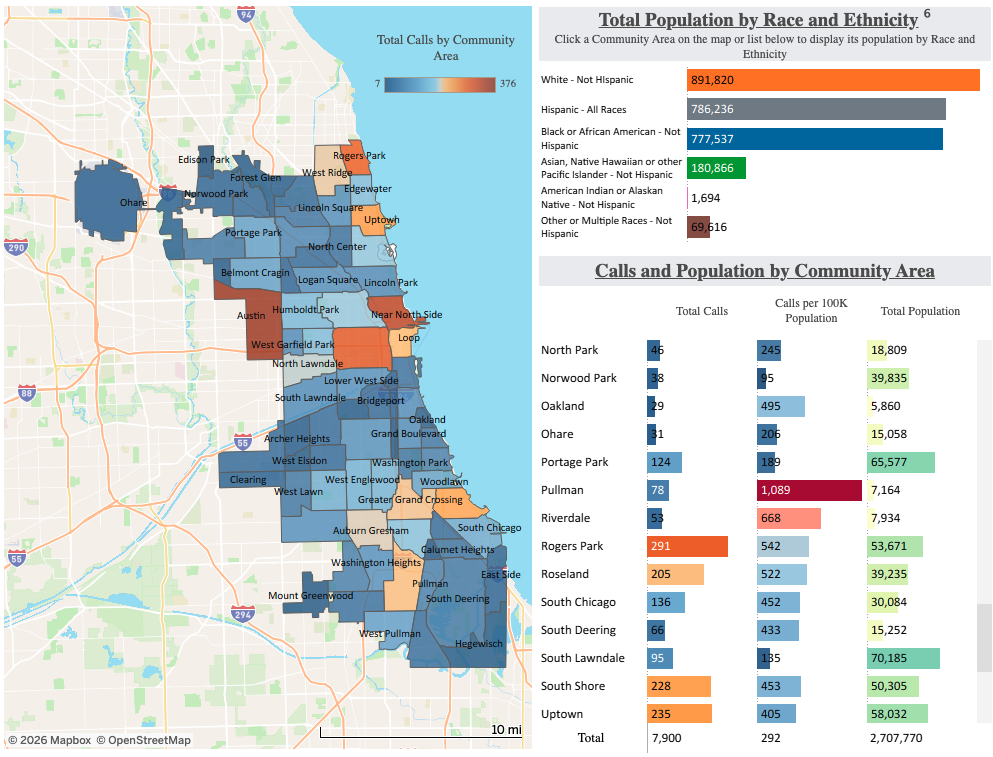
There have been around 7,900 total 911 calls related to mental health disturbances so far in 2026. The areas in orange and dark orange show a higher concentration of where those calls came from. Austin, Near North Side and Near West Side have the highest number so far this year. (Source: Chicago Office of the Inspector General)
In the citywide expansion, CARE teams will be able to respond to a larger range of mental and emotional health issues, and serve children as young as 6 and adults over 65. The hours are still limited to daytime on weekdays, according to the Sun-Times, but mayoral spokesperson Griffin Krueger said the city “is in the progress of hiring additional CARE response workers with the goal of expanding response hours to weekends.”
As of June, only one-third of the budgeted CARE jobs are filled, according to a city employee database. One of those vacant positions is a director of crisis services, which the city did not start hiring for until May, according to the job listing. The goal is to fill all vacant positions later this year, Krueger said.
To scale up, city leaders are betting heavily on the new social media tax.
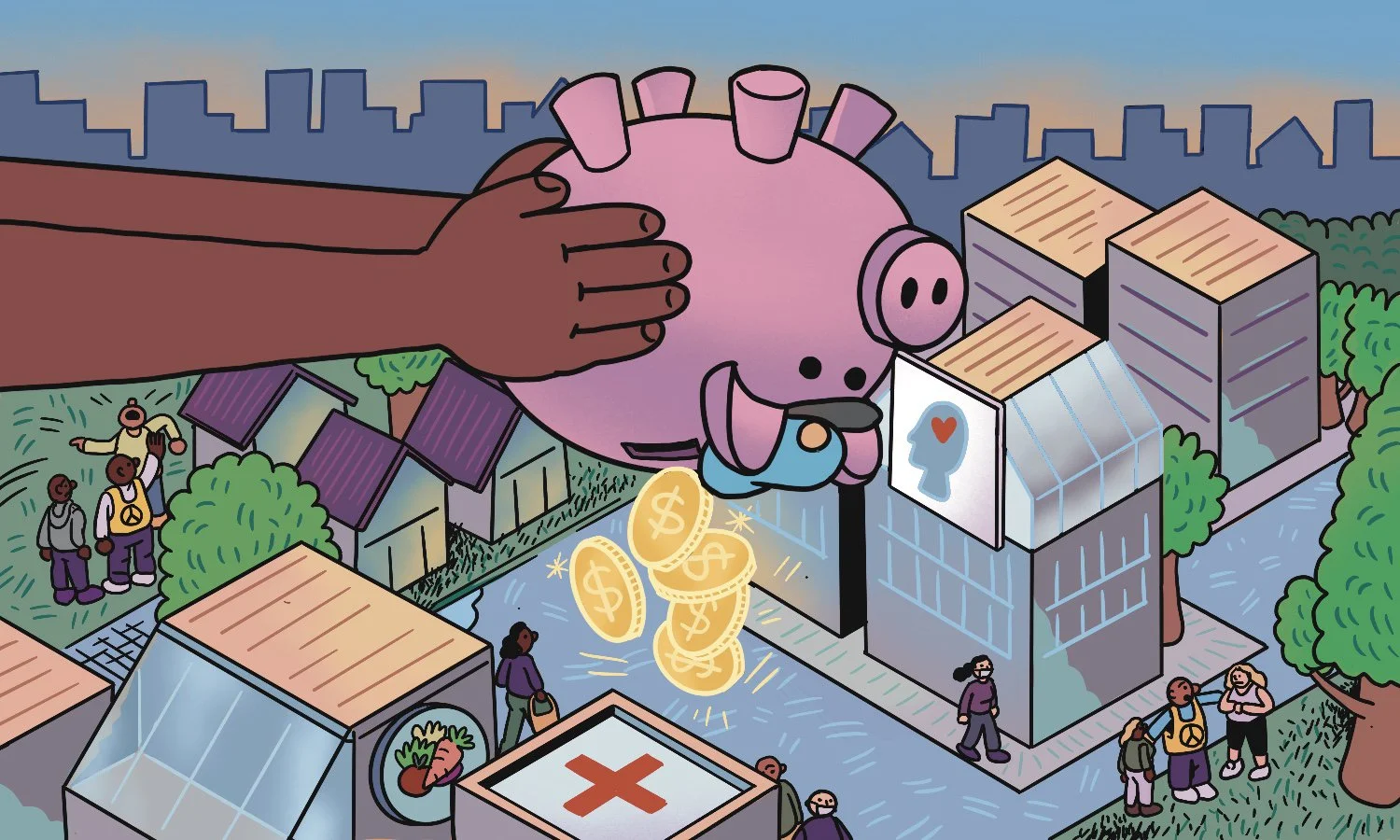
(Illustration by David Alvarado)
How does the money work?
A short primer on the city budget (or, find a longer one here).
It is split up among several major funds — think of these as buckets where we collect money from taxes, grants, fees, fines and other sources. The largest bucket is the Corporate Fund, which usually hovers around $6 billion. This is general operating money that supports nearly every aspect of city government. Grants are separate because the city must spend that money in specific ways.
From those buckets, the city sends money to our various departments — police, public health, transportation, housing, library, etc. — and the departments divvy up the money to cover salaries, benefits, programs and other expenses.
The city’s flow chart illustrates how the money moves around. This dashboard gives a clearer picture of where each department gets its money. The Public Health department, for instance, gets most of its money from grants. CARE has gotten most of its money through ARPA.
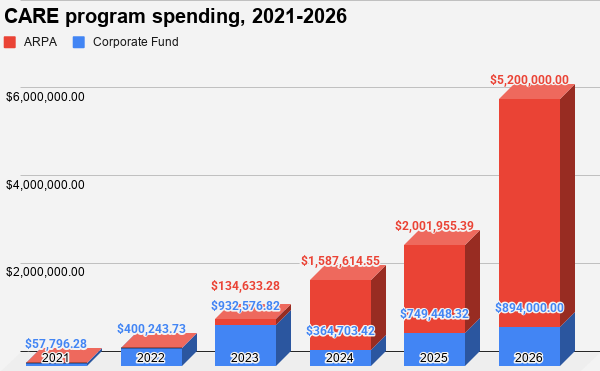
The city has leaned heavily on American Rescue Plan Act funds to support the CARE program in recent years. The numbers are lower in 2021 and 2022, in part because this is when Police and Fire Department staff responded to calls as part of their normal work. (Source: City of Chicago)
The city is spending about $6.1 million on CARE in 2026, Krueger said. Nearly all of it — $5.2 million — is coming from ARPA to pay staff salaries, he said.
That is different from the city’s budget documents, which showed the city was going to use general operating money to pay around $3.1 million in salaries, benefits and equipment for 45 full-time community intervention specialists, crisis clinicians and paramedics. Another $892,000 from the Corporate Fund also was allocated to the program, while about $3.1 million in ARPA was available to spend on the program by the end of the year, according to a city dashboard tracking ARPA spending.
City officials did not directly answer a question about the discrepancy in how they are paying for CARE this year, nor where the additional ARPA money came from.
The city must spend all its remaining ARPA money by the end of the year or return it to the federal government. So now we need a new source of money to pay for CARE and similar programs.
Enter the Social Media Amusement and Responsibility Tax.
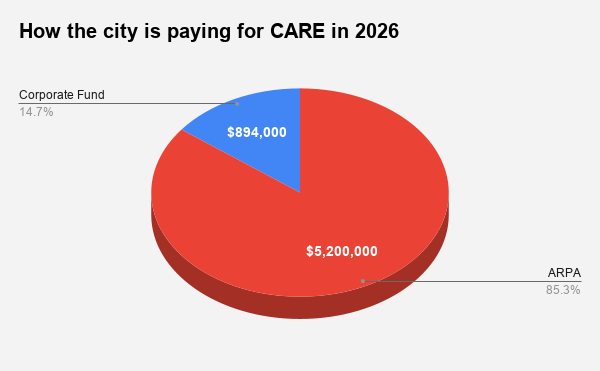
Most of the money for the CARE program this year also comes from COVID-era funds. That money must be spent by the end of 2026, or the city will have to return it to the federal government. (Source: City of Chicago)
Typically, amusement taxes go directly into the Corporate Fund. But the city is routing SMART dollars into the new Protecting Care Fund, setting that money aside “to support the transition of the CARE program post-2026 when the ARPA funding has expired,” Krueger said. The city is spending none of that money this year on any programs, Jung Yoon, Chief of Policy for the Mayor’s Office, told alderpeople at a June committee meeting.
The change is essential to CARE’s survival, the mayor’s office said.
The city already has collected $16.4 million from SMART through the end of April, Yoon said, more than 2 ½ times this year’s program costs. Should the city win the lawsuit and continue collecting taxes at that pace, it could mean more than $49 million for the year, far above the $31 million the mayor projected.
“If it were not moved to the corporate budget, and ARPA sunsets at the end of 2026, then what we're discussing here would have been the reality in which CARE sunsets also in 2026. And that was not something that the mayor was going to allow,” said Arturo Carrillo, acting first deputy mayor of health & human services. Carrillo previously was one of the original Brighton Park organizers behind Treatment Not Trauma and CARE.
A city attorney acknowledged the tax was unique to Chicago. It has been tried in other areas, but not approved, she said at a November budget hearing. Alders recently told the Sun-Times they are concerned about having a big hole in the 2027 budget if the tax isn’t successful in court.
“We can’t speculate about what could or couldn’t happen [about the lawsuit]. We’ll cross that bridge when we come to it,” Krueger told the Sun-Times. “We’re confident we have a strong [legal] position.”
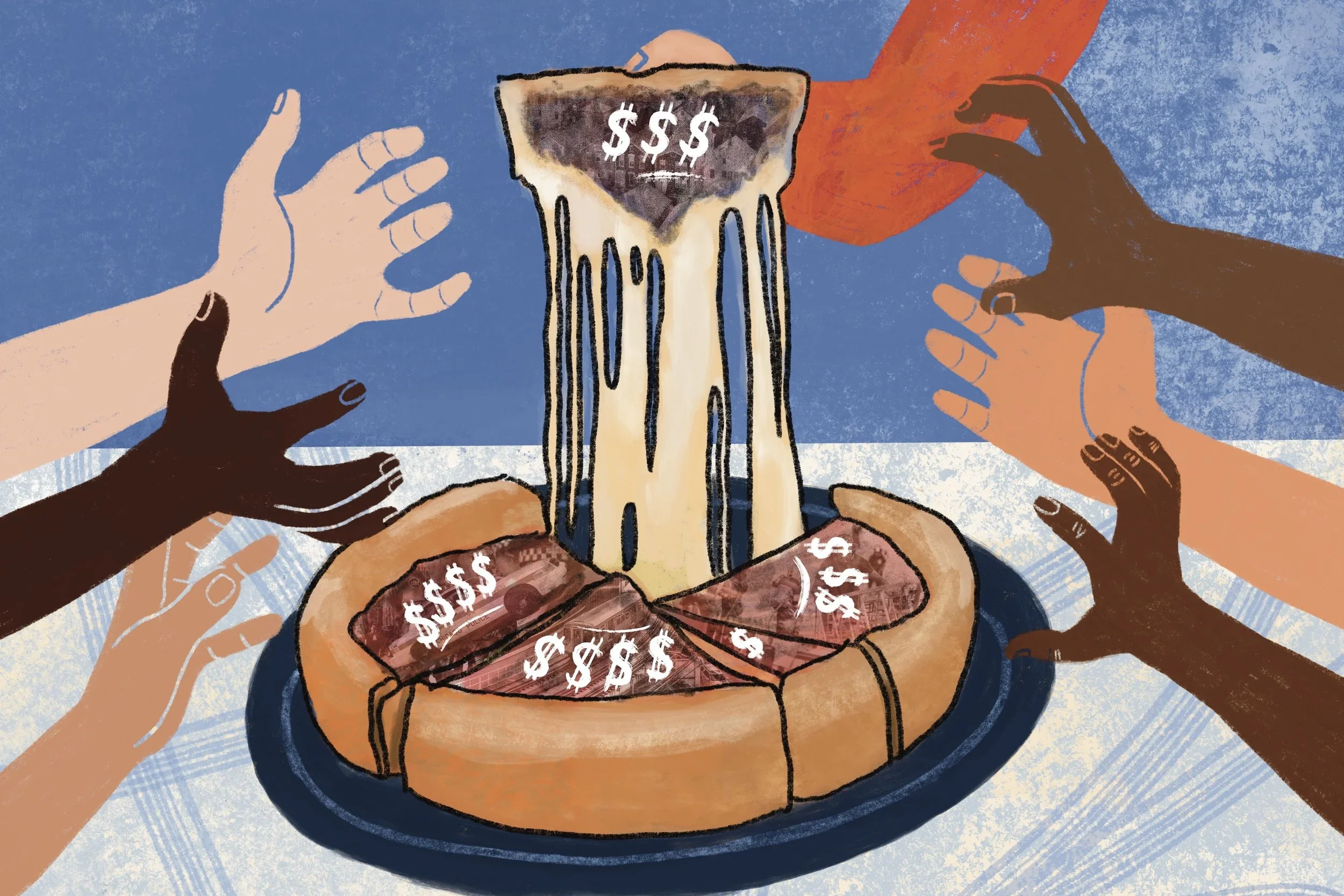
When it comes to the budget, Chicago’s mayor and City Council must divvy up the money to all departments, agencies and programs. With growing financial challenges, there’s only so much to go around while local leaders battle for the biggest possible slice. (Illustration by Gaby FeBland/for City Bureau).
A new budget season is already getting underway. The city will continue to face financial pressure with dwindling federal support, burgeoning debt and pension obligations, and competing priorities on how the city should generate and save more money.
For Carrillo and mayoral allies, the legal fight over SMART and the Protecting CARE Fund is as much about values as money.
“The social media companies are making billions of dollars with our data and impacting our own mental health, right? We see it as their corporate responsibility to make sure that they are able to sustain the funding,” Carrillo said.
Typically, long-term stability means a budget line or combining multiple funding sources, said Watson, of Wayne State.
“[When programs rely on temporary funding sources] it causes a huge sustainability problem,” she said. “ It makes it harder to attract staffing, too, because people are less attracted to things that have less stability. It's hard then to really get a foothold and have a program institutionalized.”
Ensuring stable and transparent funding is key for organizers, as well. With Johnson, organizers have found a much more willing partner in City Hall, Huamani said.
“When Lightfoot was mayor, we were ignored, the door was shut in our face,” Huamani said. “We weren't able to hold anybody accountable as to how the funds were being spread out. Because we became such a big wedge issue in the last elections, we were able to win that space at the table, and we've been able to fight it.”
The city’s alders have also responded positively to finding a solution, Daya said.
“We’ve seen that a majority of council members are in support of this, and we’re encouraged by that,” Daya said. “What we want to push council members to do over this next year is to find more ways to fund non-police crisis response programs. It's not good enough to just be in support of the most logical solution. They need to be willing to fund it through progressive revenue and through strategic redistribution of [Chicago Police] funds as the program starts to take more and more off of the shoulders of CPD.”
‘We’re not going to stop fighting’
The vision for CARE has always extended beyond a single 911 call, Huamani and Daya said. They want to see the program operate 24/7 and be the start of long-term support, including connecting people to the public mental health centers and resources they’ve fought to revive.
Other key parts of that include opening more spaces throughout the city where people in crisis can safely decompress outside of a jail or a emergency room; employing and unionizing peer support specialists to work in crisis response and public mental health centers; and creating a broad network of advisory groups to ensure mental healthcare responds to the communities it serves, Daya said.
“We think about this as being holistic rather than just a very pinpoint intervention, and that is how we want to see this evolve,” Daya said.
Organizers also are watching how City Hall handles a key leadership change in the public health department. Dr. Olusimbo Ige resigned as commissioner in May after less than three years in the role. Daya said they hope Ige’s replacement will be a strong proponent for transitioning CARE into a 24/7 program and reopening all of the city’s public mental health centers.
Things have been trending in the right direction, but there’s much more work to do.
“We are still fighting; we're not going to stop fighting,” Huamani said. “We're going to continue advocating to continue the funding, but also the expansion of CARE.”
If you need mental health support, here are some resources that may help.
For non-violent, non-medical mental health emergencies, you can call 911 and ask for a CARE team, which includes a behavior health professional and an EMT. As we explained, many factors and issues go into whether dispatchers send these crisis workers to a scene. But CARE teams can do mental health assessments, de-escalation and counseling before connecting someone to ongoing support.
Chicagoans also can email CAREprogram@CityofChicago.org to ask for a non-crisis clinician-only CARE response within 72 hours.
Call or text 988 to reach the National Suicide and Crisis Hotline 24/7. You can also chat with someone online.
Call or text “HELPLINE” to the NAMI Chicago Helpline at 833-626-4244. 9 a.m. to 8 p.m. Monday through Friday, and 9 a.m. to 5 p.m. Saturday and Sunday. You can also chat with a crisis worker online.
Call the Illinois CARES line at 1-800-345-9049 to reach an agent 24/7 who can help connect you with care. It is specifically for children and young people under 21, with or without Medicaid.
The Living Room at Thresholds: This is a peer-led, 24/7 mental health support center on the North Side where anyone experiencing a crisis can safely decompress outside of hospitals. Folks there also can help people connect with other support services for healthcare, housing, food and more. 773-537-3601.
Thresholds Mobile Crisis Response Team: A free, 24-7 service serving the North and Northwest Sides involving clinicians and peer specialists. 773-572-5464.
Cynthia Salgado is a proud Chicagoan, journalist and writer. Born and raised in Little Village, she spent summers learning about audio storytelling through Yollocalli Arts Reach, a former City Bureau partner. She studied communications and Spanish in college, worked in public policy, and is an active member of City Bureau’s Documenters Network.
Zainab Qureshi is a Pakistani-American journalist and storyteller from west suburban Aurora. She firmly believes that people should be able to share their stories with the world, and she hopes those narratives deter oppressive stereotypes of communities of color.
They were part of the Winter 2026 Civic Reporting Fellow team reporting on the city budget. You can support us by becoming a recurring donor.