Resources for affordable housing, eviction, homeless shelters, and daily needs for people facing housing insecurity in Chicago.
by Jerrel Floyd and Civic Reporting fellows
Introduction
This is an introductory guide to navigating Chicago’s resources for homelessness and housing insecurity. It includes where to go to find shelter, how to get help if you’re being threatened with eviction, and resources for families, youth, and mental health.
It was inspired by conversations between Bronzeville residents and City Bureau reporters about the type of housing information they were hoping to find. Resource providers also told us information is often fragmented across too many sources.
The information was gathered by engagement reporter Jerrel Floyd and Civic Reporting Fellows, as well as through reporting, research and follow-up conversations with resource providers into 2026.
We hope this guide can be a starting point to navigating this imperfect system.
Who are we?
City Bureau is a nonprofit civic media lab based in Bronzeville. For the past 10 years, we’ve been creating journalism resources for Chicagoans as they navigate issues such as migrant labor rights, police misconduct, and maternal health. Do you have feedback about this guide? Email us at civicinfo@citybureau.org.
Navigation links
Skip to: Key Terms | Emergency Shelter | Long-Term Housing | Specialized Resources | Map
Common issues: Eviction Resources | Getting a State ID | Daily Needs | Family Shelter | Domestic Violence | Mental Health | Youth and Young Adults
Emergency Shelter
I need a place to stay right now — where can I go?
Nearly all shelters require you to get placement through 311, SPARC or another Access Point, so we recommend starting there instead of showing up at a shelter that might be full. Placement can still take weeks or months, and you will likely need to find your own way to a shelter once you are placed. But here’s how to get started:
By Phone:
Call 311 or 312-744-5000.
The 311 operator should give you a Service Request Number (SR) that is important to keep track of (you can write it down in the back of this guide). Multiple organizations require an SR number to receive services. They should also ask where you want to be picked up if that’s an option. If you leave that area, you need to call 311 back to update your location.
If you have children and need emergency shelter, you should call 311, get your SR number, tell the operator there are children with you, then call Shield of Hope at 872-281-7610 to potentially get faster placement.
Shelter Placement and Resource Center (SPARC): 773-526-3707 or 708-219-6903
Call ahead to find out if capacity is available for walk-ins. SPARC is for single adults.
Ignite: If you are between the ages of 14-26, you can call 866-803-8336 or text 312-625-1858 any time, any day. ignitepromise.org
For youth: If you are under 18 years old, without your parents and need shelter, call the state’s Comprehensive Community Based Youth Services information and referral line 24/7 at 877-870-2663.
For longer-term shelter, call the Coordinated Entry System (CES) at 312-971-4178 or visit a CES Access Point (see directory for listings).
Online:
Computers can be accessed for free at Chicago Public Libraries. Find one closest to you by searching chipublib.org.
Homeless shelter directory: Search for U.S. homeless shelters by city. homelessshelterdirectory.org
Streetlight Chicago: Primarily intended for young adults ages 14-24, Streetlight posts locations of emergency beds, health clinics, drop-in centers and daytime shelters. You can also download a mobile app with searchable resources. streetlightchicago.org
In-Person
If you don't have a cell phone, visit the nearest hospital, fire station or police station and let them know you are looking for a place to stay. You can also visit these locations (see directory for addresses):
Shelter Placement and Resource Center (SPARC): The city’s 24-hour intake location for single adults seeking shelter placements and interim basic services including food and showers. It can hold up to 200 people awaiting shelter placement.
Shield of Hope: The Salvation Army and city of Chicago’s emergency homeless assessment and rapid-response center for families.
Ignite: Youth ages 10-26 can drop-in to Ignite’s community hub in the Grand Boulevard neighborhood.
City of Chicago Community Service Centers: Visit these spaces to learn about resources ranging from shelter referrals and placements to job training and domestic violence support. Some are also Access Points.
I arrived too late at a shelter, what can I do?
People can sometimes find safety at libraries and fast food restaurants during the day. For those trying to locate a drop-in shelter, call 311, or go to a hospital, fire station or police station and ask for shelter.
Long-term housing
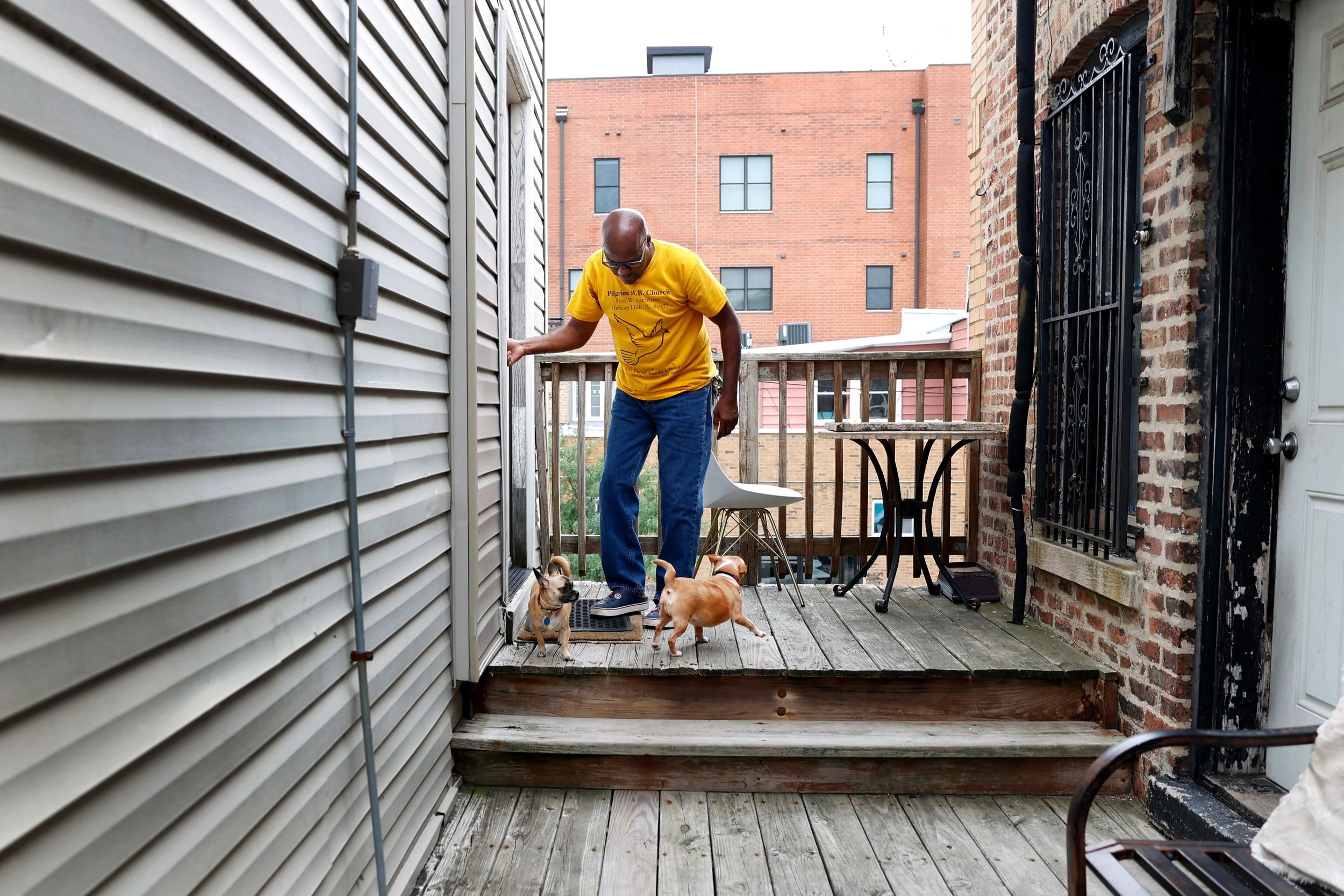
Thomas Wilkins lets out two of his chihuahuas on Friday, Aug. 21, 2026, at his apartment in Logan Square. Wilkins has been in a permanent supportive housing apartment through AIDS Foundation of Chicago for two decades. (Anastasia Busby/City Bureau)
How can I get help with a long-term shelter or permanent housing?
The city’s main service to provide long-term housing, support services and some emergency help is the Coordinated Entry System. This process has phone intake and in-person Access Points (see key terms) where someone can help assess needs and connect you with resources. This process can take several days, and you may have to call repeatedly to ask for help. You also need to update your application every three months.
9 a.m. to 3 p.m. Monday, Wednesday, Thursday and Friday; or 3-9 p.m. Tuesdays.
In-person: See directory for a list of Access Points to assist with Coordinated Entry System intake.
How do I get help navigating the Chicago Housing Authority (CHA)?
Building a relationship with a case manager at a shelter or resource provider can be a useful tool when trying to keep track of CHA information and learn about other options.
Most shelters and housing nonprofits have case managers who can help keep track of the multitude of steps that come with handling housing insecurity. If 311 connects you with a shelter, ask about case management or similar services upon arrival.
Case managers can help with subsidized housing applications and keeping track of CHA waitlist openings. A case manager can also assist with getting on CHA waitlists when they are open.
Sarah’s Circle: This organization mainly connects with community members through 311, but there is also a drop-in daytime support shelter for single, unaccompanied women over the age of 18. sarahs-circle.org
If not currently in public housing, apply online via the Chicago Housing Authority. For in-person assistance, visit the CHA Client Center at 60 E. Van Buren St. in the Loop. thecha.org
I’m facing eviction. What resources can help me?
These are legal assistance resources for eviction, building foreclosure, landlord discrimination or retaliation, and more.
Law Center for Better Housing: If you’re a renter facing eviction, legal issues with a landlord, building foreclosure, housing discrimination or an unresponsive landlord, reach out to this Chicago-based nonprofit law firm. LCBH focuses on low- to moderate-income renters in the private housing market. 312-347-7600; tenants in foreclosure helpline: 312-784-3507, lcbh.org
Rentervention: This virtual assistant connects Chicago renters with volunteer attorneys or other support. lcbh.org/get-legal-help/#rentervention
Cook County Legal Aid for Housing and Debt: Cook County residents can get free legal support for issues such as eviction and lawsuits over unpaid debt. 855-956-5763 (Monday-Friday, 9 a.m. to 4:30 p.m.), cookcountylegalaid.org
If you live in Chicago or Cook County, the Just Housing Amendment means landlords cannot consider past arrests or juvenile criminal records when you apply for housing. They can only consider criminal convictions from the past three years if they believe you pose a safety risk. Uptown People’s Law Center can help if you feel like you’ve been denied housing in violation of this law. 773-769-1411, housing@uplcchicago.org
Where can I go to keep updated on low-income housing in my area?
Case managers: If you are already connected with a case manager, ask them about assisting with finding and keeping track of low-income housing resources.
Public libraries: If you don't currently have access to a computer, Chicago Public Library locations offer access to computers during hours of operation. chipublib.org
ILHousingSearch.org: A free online resource and call center that allows people to search by address or ZIP code to find affordable and accessible housing in Illinois. 877-428-8844 (Monday-Friday, 8 a.m. to 7 p.m.), ilhousingsearch.org
Specialized Services
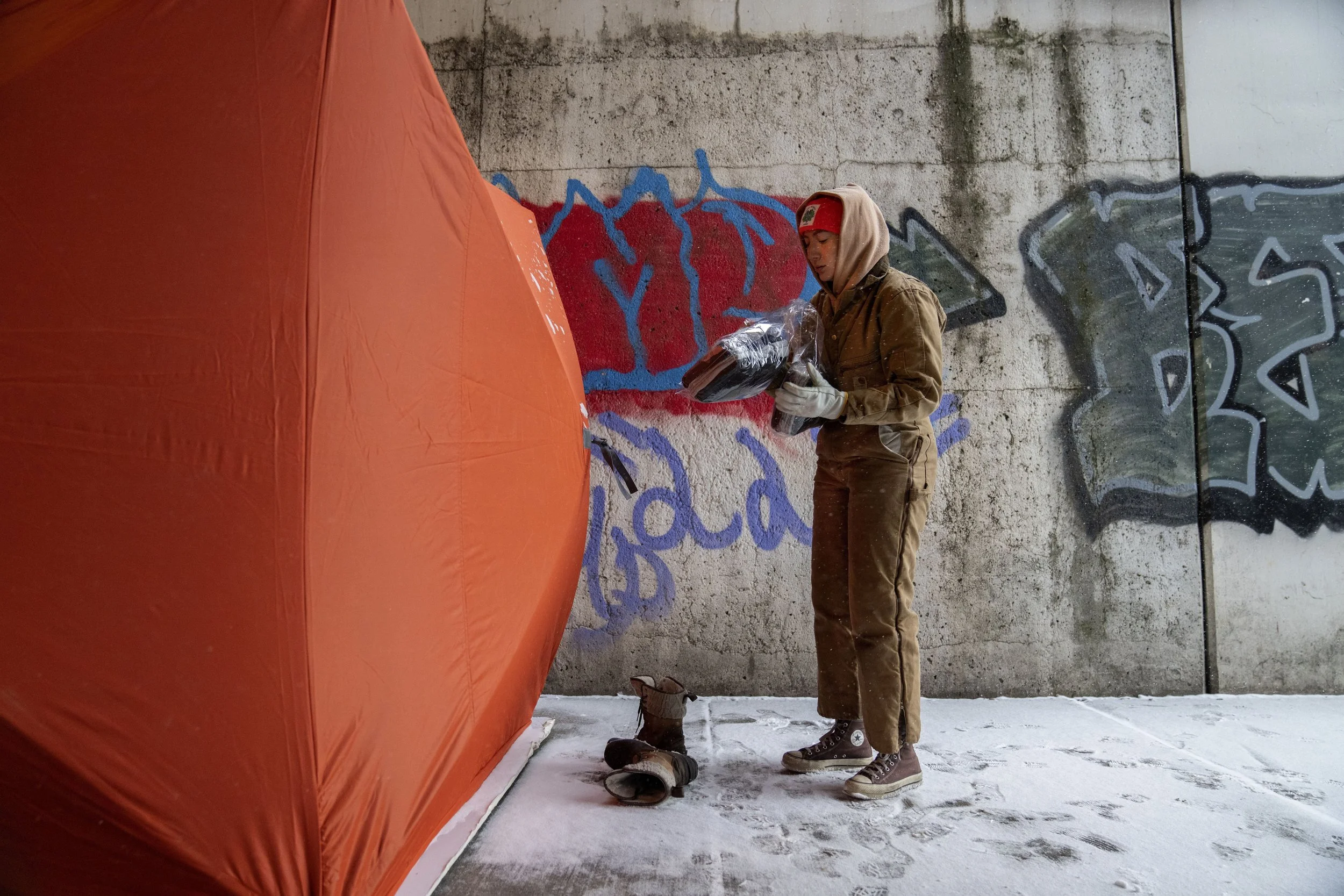
Orange Tent Project volunteer Morgan McLuckie opens a package of winter hats to give to homeless people Thursday, Dec. 22, 2022, in Chicago. (AP photo)
What resources are out there for families and single parents, including single fathers?
Calling 311 is the recommended — and often required — avenue for emergency shelter, but here are a few resources for single parents, including single fathers. Additionally, the Access Points included in the directory also work with families.
The Salvation Army Shield of Hope: The nation’s first emergency homeless assessment and rapid-response center, Shield of Hope works with families facing homelessness by providing personalized support and services. Call 311 to be connected with Shield of Hope, or see the directory for more info.
The Night Ministry: Services are typically designated for young adults, ages 14-24, but the Night Ministry will help adults, including single parents, access case management, healthcare resources and more. 773-372-3953 (for non-immediate support), thenightministry.org
Maria Shelter: Based in Englewood, this interim shelter is primarily for women and their children in need of housing and part of Margaret’s Village.
Believe Shelter: Run by Margaret’s Village, this South Chicago shelter serves families with two parents and families headed by single fathers.
Unity Parenting & Counseling Inc.: Based near Pilsen, this social service agency has multiple housing programs, including ones serving young parents and pregnant people, homeless youth with HIV/AIDS, youth seeking emergency shelter and long-term housing and support services. 600 W. Cermak Road, suite 300; 312-455-0007; unityparenting.org
Cornerstone Community Outreach: Based in Uptown, this organization has shelters for single mothers with children, families with two parents, and single men and women. It recommends calling 311 for shelter placement. 4628 N. Clifton Ave., 773-271-8163, ccolife.org
La Posada at Casa Central: This Humboldt Park organization offers interim housing for families experiencing homelessness, along with case management and education including English as a Second Language. It requires placement through 311. 1343 N. California Ave., 773-645-2300, casacentral.org
What housing is out there for domestic violence survivors?
One resident spoke to us about how experiencing domestic violence made their housing situation even more unstable. Here are some available resources that could help others in similar situations. See more listings in the directory.
WINGS: Provides services, education, advocacy and housing to help end domestic violence. 847-221-5680 (24-hour hotline), wingsprogram.com
Connections for Abused Women and their Children (CAWC): A nonprofit organization committed to ending domestic violence through services and advocacy. 773-278-4566 (24-hour hotline), cawc.org
Illinois Domestic Violence Hotline: This hotline offers safety planning in times of crisis, as well as referrals for emergency housing and support services.877-863-6338 (24-hour call or text hotline)
In emergency or life-threatening situations, calling 911 is strongly recommended.
Are there mental health resources for people facing homelessness?
Primo Center: The center offers therapy, case management and mental health interventions to families facing homelessness, along with interim/short-term housing for families. primocenter.org
The Bobby E. Wright Comprehensive Behavioral Health Center: A nonprofit providing mental health care, addiction treatment and disability services on Chicago’s West Side, along with case management to Chicagoans experiencing both mental illness and homelessness. bewcbhc.org
Pilsen Wellness Center: A treatment services provider offering mental health counseling and substance abuse treatment in Pilsen, Little Village, McKinley Park, South Chicago, Brighton Park, Gage Park and Chicago Lawn. Appointments can be scheduled online or via phone, or at its South Chicago drop-in center. 2938 E. 89th St. (South Chicago drop-in center), 872-228-0080; 773-579-0832 (admin office); 773-820-9003 (mental health crisis care line); pilsenwellnesscenter.org
What about resources to help me with daily needs?
Showers: Many day shelters and drop-in spaces throughout Chicago offer access to showers. Call ahead and ask about shower resources, and check the directory for listings. ShowerUp is a service that offers showers via its mobile shower trailer. ShowerUp provides a clean towel and toiletries and often has clean socks and underwear. Check the online calendar for locations and availability. 888-210-0777 (call or text), showerup.org/chicago-calendar.
Healthcare: The Night Ministry addresses immediate health needs with its Health Outreach Bus, equipped with a nurse’s office. The bus travels around the city five days a week. Visit its website for updated schedule and locations. thenightministry.org/get-help
Financial assistance for housing: The state’s Homeless Prevention Program provides financial assistance for things like rent, mortgages, and utility bills for those at immediate risk of eviction, foreclosure or homelessness; or those who are currently homeless. dhs.state.il.us/page.aspx?item=30360, email: dhs.ohs.hp@illinois.gov
Basic living supplies: The Orange Tent Project offers Chicagoans tents, hot meals, hygiene kits, care packages, outdoor gear, heaters and more. Volunteers can help refer people to help with addiction support, employment and housing. orangetentproject.org
Food: The Greater Chicago Food Depository maintains a searchable map of food pantries and meal programs. Love Fridge Chicago’s map lists almost two dozen free community fridges where people can access food and toiletries. chicagosfoodbank.org; thelovefridge.com
How can I get a state ID to access housing, jobs and other resources?
A valid identification card can be an invaluable resource when it comes to accessing public benefits, starting a new job or signing a lease.
In order to acquire an Illinois ID while experiencing homelessness, you must provide a homeless verification letter. The letter officially affirms that you do not have a permanent address, but live in Illinois. It also entitles you to a free state ID card.
A shelter, social worker or agency must fill out the letter application on your behalf. Most case managers can help. You’ll also usually need a birth certificate and Social Security card, which they can also help with.
Chicago Coalition to end Homelessness Law Project: Find detailed steps on how to access birth certificates, Social Security cards and other vital records to help with identification for adults, families, and youth ages 14-24. 800-940-1119 (9-5, M-F), chicagohomeless.org/need-help/law-project/getting-an-id
Are there housing and job resources for young adults?
Find a list of shelters and resources for youth in the directory on pages 18-20 or through the StreetLight app. Also note that most of these shelters do NOT require referrals and can be visited directly.
Ignite Community Housing Program: Youth ages 18-24 live independently in apartments for 2-5 years while maintaining access to Ignite’s services, including a dedicated case manager. Participants contribute to savings, rent and apartment expenses while working on career and education goals. 866-803-8336, 312-625-1858 (text line), ignitepromise.org
Chicago Urban League: CUL’s Workforce Development Center works to raise Black employment and income levels through job training and placement services, career advancement support, seminars, coaching and long-term retention strategies. It also offers youth workforce development to 18- to 24-year-olds. chiul.org/program/workforce
Chicago Women in Trades: Chicago Women in Trades offers three programs focused on training Illinois women in high-wage construction and building trades, including welding, carpentry, plumbing and pipefitting. All CWIT community members have access to job coaching and placement services. cwit.org
Jane Addams Resource Corporation (JARC) Chicago: An organization that offers skills training and services to support low-income and unemployed workers in reaching self-sufficiency. Training programs in Chicago include welding, manufacturing and computer numerical control. It also has training resources for basic reading and math skills, digital literacy, professional certifications and financial coaching for ages 18 and above. jarctraining.org
Youth Guidance: An organization primarily for students, with services includes counseling, after-school programming and career planning. It also offers workforce preparation and job placement for out-of-school young adults. youth-guidance.org
Youth Job Center: A job placement and workforce development agency serving 14- to 25-year-olds that offers support in career pathways, including culinary, healthcare, automotive, retail and information technology. Support resources include resume building, interviewing and financial literacy. youthjobcenter.org
The Chicago Cook Workforce Partnership: A nonprofit organization overseeing Cook County’s and Chicago’s federal workforce development funding. This includes a citywide network of American Job Centers, a resource supporting job seekers (including youth). With this program, residents can access employment resources and information around job training. (See directory for listings) chicookworks.org
More Resources
Aubrey Dvorak, social worker at Uptown People’s Law Center, maintains the Chicago Resource Bank (scan QR code below). The vast, regularly updated spreadsheet includes referrals for basic needs, housing, domestic violence, employment and legal services.
Call 211 or visit 211metrochicago.org for additional resources. Callers to 211 can get live assistance with needs such as: food, counseling, employment, healthcare, and services for specialized populations such as the elderly and people with disabilities.
Key Terms
Access point: A designated space or phone line where you can begin the process of getting immediate housing assistance.
Case management: A service where you can receive help with housing needs. This can range from help navigating the CHA, to sharing job training opportunities.
Chicago Housing Authority: A local government agency overseeing public housing within the city of Chicago, including affordable rental housing opportunities.
Day shelter: These are shelters that typically do not offer overnight resources or beds. They will sometimes include cooling/warming spaces, food, job training, housing resources and case management.
Drop-in center: A space that provides resources without requiring an appointment in advance.
Emergency bed: A shelter space for an immediate place to sleep.
Interim housing: Short-term and temporary accommodations for shelter and support services. It is often a first step toward longer-term housing for those experiencing homelessness or displacement.
Service Request Number (SR): When someone calls 311 seeking service, this 10-digit code is given as a reference number to get onto the virtual waiting list for services. Immediately write it down or commit it to memory, as some service providers will ask for it before offering services.
Waitlist: The system used by shelters and social services when demand for space or other help outpaces availability. These lists are often not first-come-first-served; rather they are determined by need, with vulnerable populations served first.
Acknowledgements
Community feedback: Uptown People’s Law Center, North Side Housing and Support Services, Aubrey Dvorak and Isabella Mancini
Civic Reporting fellows: Jasmine Barnes, Amaris Edwards, Troy Gaston, Nicole Jeanine Johnson, Mare Ralph, Reema Saleh, Ahmad Sayles and Alonso Vidal
Lead reporter: Jerrel Floyd
Designer: Taia Leituala
Copy Editor: Jaclyn Jermyn
Editors: Harry Backlund, Ariel Cheung and Dawn Rhodes