
The Challenge
We are living through the collapse of trust in common facts, the rampant spread of misinformation, the rise of fear-based politics, and the steady erosion of democracy.
People struggle to navigate and influence their local civic systems, making meaningful participation feel nearly impossible.
Without capacity and infrastructure for neighbors to share information and build collective power, social fragmentation, isolation, and inequality will continue to grow. The underlying financial motives of commercial media concentrate money and information among the powerful and systematically fail marginalized communities. Technology, social media, and AI companies also have their own interests in monetizing attention, and are rapidly transforming how we create, access and share information.
Fundamental assumptions about journalism—what it is, how it's done, and who should make it—have limited our horizons and contributed to the problem. Traditional journalism treats people as consumers rather than active participants in civic life, and is failing to meet the information needs of communities, particularly marginalized ones. Existing journalism practices cannot provide the foundation of civic information our democracy needs.
To meet this moment, we need to radically reimagine journalism as an everyday civic act rooted in communities and practiced by everyone.
Our Solutions
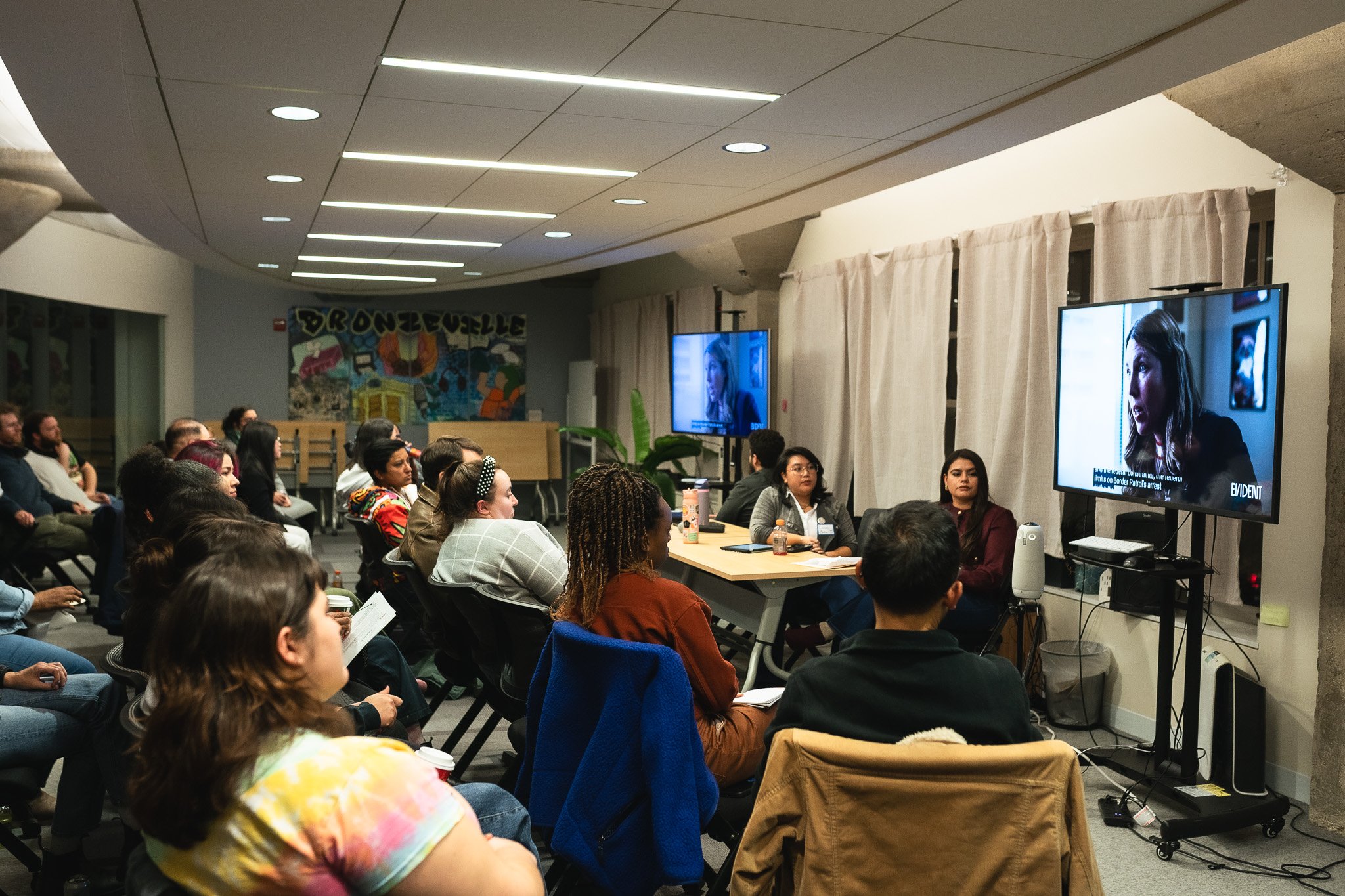
To build toward a more equitable information system, City Bureau develops alternative approaches to journalism that
Equip people with civic skills
Directly meet people’s information needs
Support mutual information sharing and dialogue to strengthen communities
We do this by
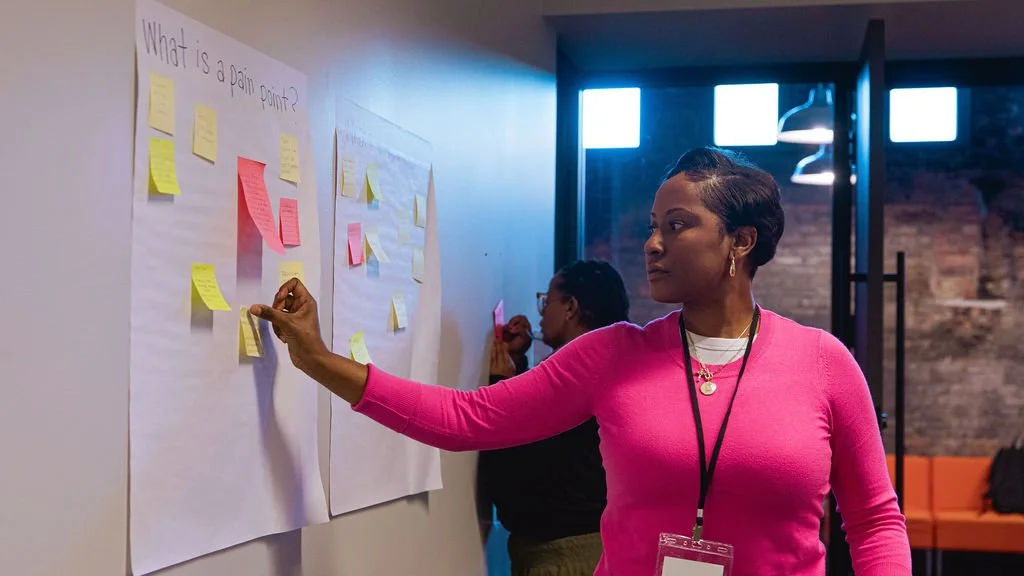
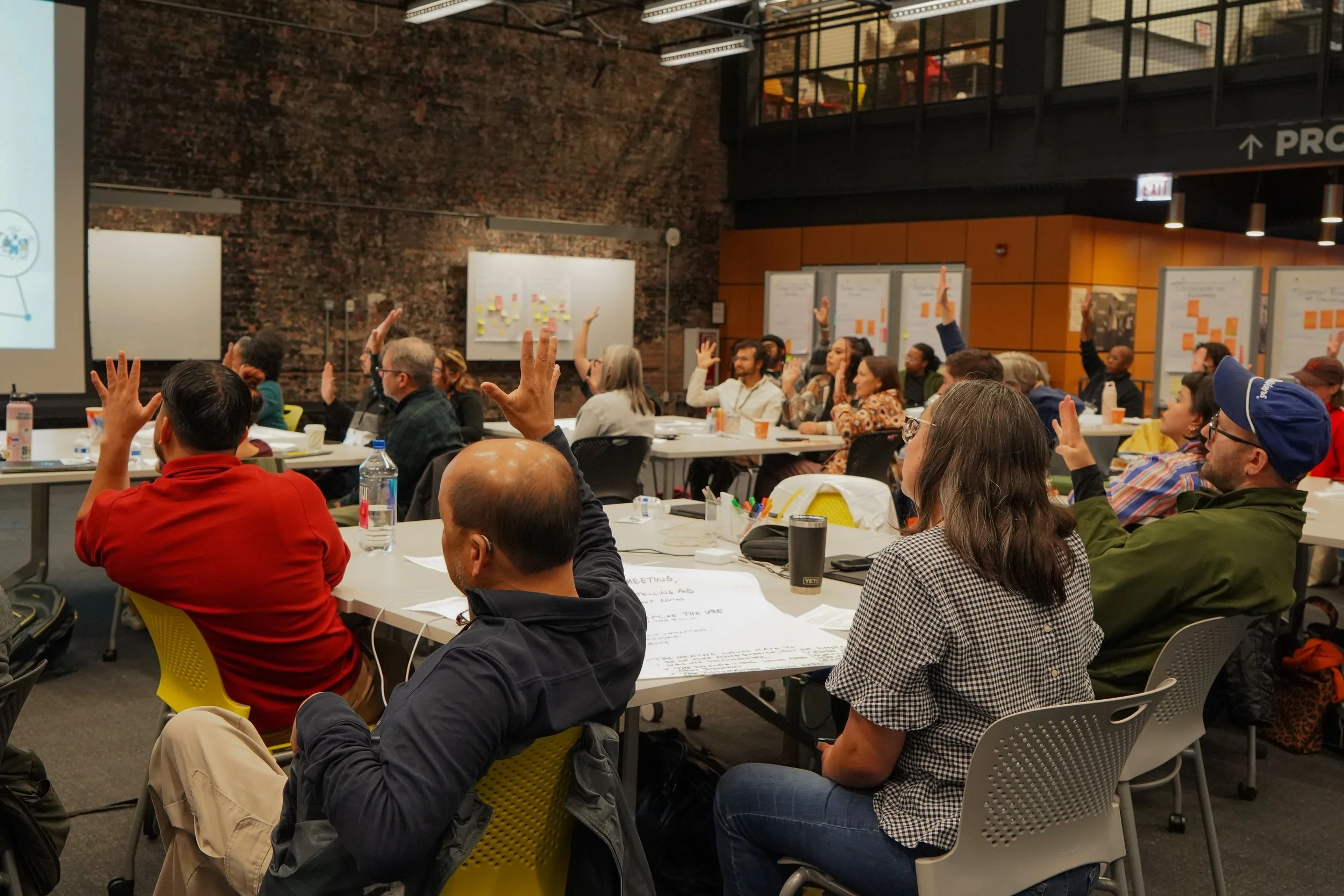
Designing, prototyping, and testing new people-powered journalism practices
Cultivating networks to collaboratively test methods of scale and replication for these practices and to support their adoption and adaptation
Creating the conditions for everyday people-powered journalism to become a new feature in the landscape of U.S. democracy
We work with communities and partners in Chicago to design and operationalize bold ideas that change the local information system and model broader systems change. And in partnership with people and organizations locally and nationwide, we work towards replicable practices that can be adopted and adapted across contexts.
This dynamic relationship between our local innovation and national field-building work enables a productive reciprocity that is crucial to continuous learning and systemic change.
Outcomes
We work toward systems change on three levels:
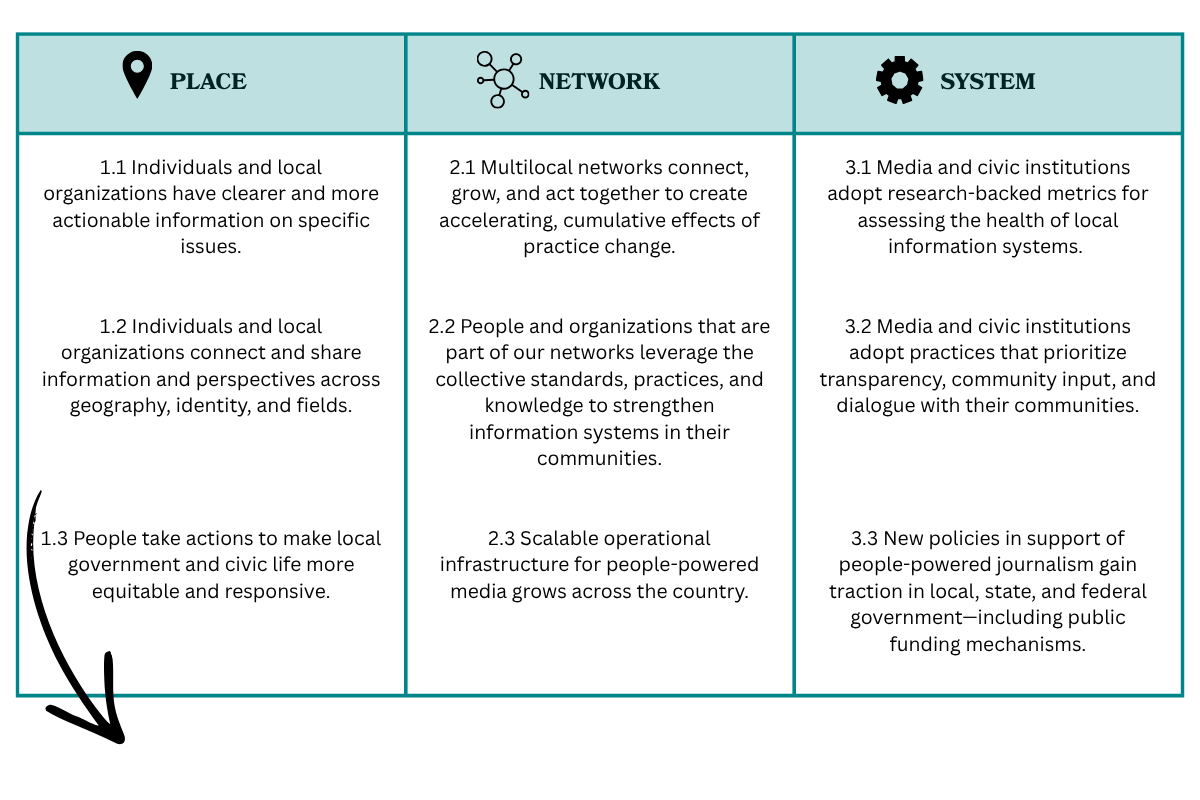
Taken together, this results in:
People-powered journalism practices are a new dimension of how people contribute to their communities every day in Chicago and across the U.S.
We will know this is working because:
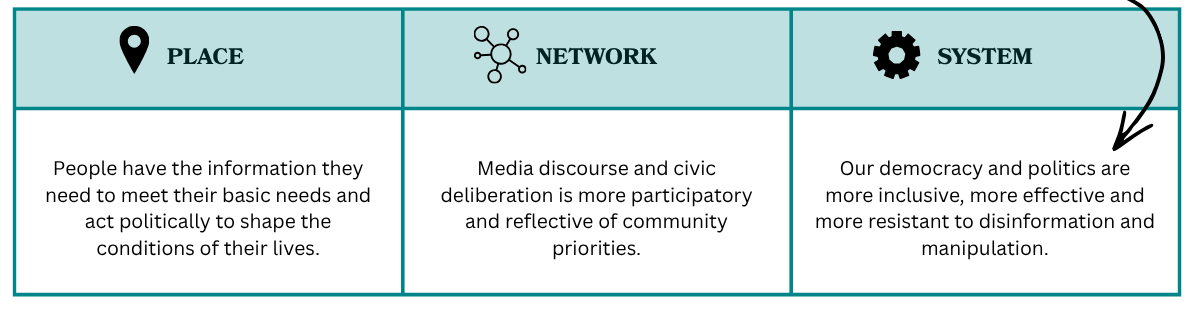
Ultimately, this will work towards: