
Neighbors at our Public Newsroom about Chicago’s lead pipes problem wanted to know more about finding the best water filter for their homes. You asked; we answered.
By Sophia Kalakailo

A person holding clear drinking water. (Engin Akyurt/Unsplash)
Lead pipes are everywhere in Chicago, but filtering your drinking water is one of the best ways to protect yourself from the toxic material.
The city offers free water filter sets to eligible residents. But when it comes to finding water filters on your own, it can be overwhelming to choose — and not all water filters reduce lead.
“It honestly takes some leg work,” said Pauli Undesser, CEO of the Water Quality Association (WQA), an Illinois-based accredited third-party organization that certifies water filters.
There is no safe level of lead exposure. Chicago has the most lead service lines in the country — around 412,000 — and officials don’t plan to finish replacing them all until 2076.
City Bureau spoke with Undesser and Eric Yeggy, WQA’s technical affairs director, about how to choose between the different types of water filters and how to keep yourself safe.
For more information on the dangers of lead and other ways to protect yourself, check out our resource guide: How Chicagoans Can Stay Safe From Lead Pipes
You can also search your address and find out if you have a lead service line at your home.
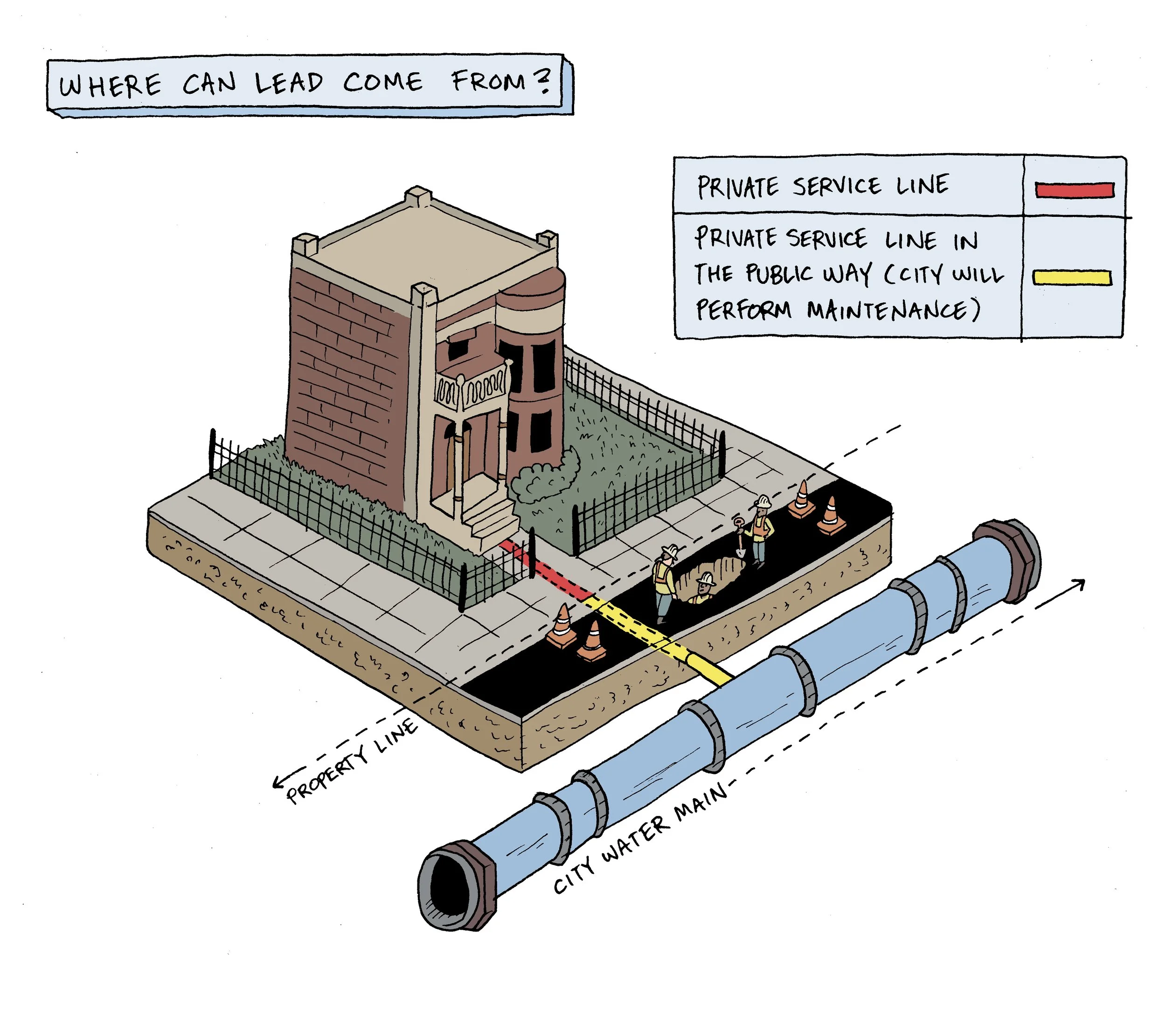
Illustration by Jean Cochrane
How do I use my water filter?
Only use cold tap water when filtering water for drinking and cooking. Hot water can dissolve lead more quickly. Boiling water does not remove lead.
Follow the instructions provided by the filters manufacturer closely.
How can I tell if a water filter reduces lead?
Look for the certification marks.
There are multiple third-party certification bodies accredited by the American National Standards Institute that evaluate filters’ ability to reduce lead in drinking water. Some filters might be certified by more than one certification body, which include the National Sanitation Foundation (NSF), Water Quality Association (WQA), IAPMO R&T, UL Solutions, and CSA Group.
You can see what these certification marks look like using the EPA’s guide to finding lead-reducing water filters.
Check near the mark for text stating the product is certified against NSF/ANSI Standards 42 and 53
Make sure the product’s label explicitly states it’s certified to reduce lead levels in water. Not all filters reduce lead. A filter can be certified to remove other contaminants but not lead.
You can double check that the water filter is certified to reduce lead by searching for the product on these certified product listing directories:
What kinds of filters are there?
There are many types of water filters that are certified to reduce lead, such as pitchers you manually fill with water that drips through a filter.
You also can install filters at the point where you use the water, such as on a kitchen sink or shower head. These “point-of-use filters” act as a “final barrier,” Undesser said. That means even if lead is getting into your water through a service line or your internal plumbing, the water you’re getting from that faucet is filtered. These filters include:
Faucet mount: These treatment systems mount onto a faucet and use a diverter to direct water through a filter.
Counter-top treatment systems connected to an existing sink faucet through a hose or tubing.
Plumbed-in systems are installed under a sink to a separate tap or kitchen sink.
Refrigerator filters typically dispensed through the refrigerator door
How do I choose?
Pitchers tend to be the most affordable types of water filters with plenty of options under $50 while those installed under a sink can cost hundreds of dollars. But all water filters certified to remove lead will protect your health, Undesser said.
Each filter also requires regular service and maintenance, such as changing filter cartridges, Undesser said. One of the biggest considerations is where you want to do that maintenance, she said. For instance, if you install a filter under your sink, you have to keep going back under your sink to service it, per the manufacturer's instructions.
If you live with children, that may also influence your choice, Undesser said. Young children may sometimes ingest water in bathtubs or in other areas of your home they aren’t supposed to.
“And that's not necessarily what we like them to do, but they do anyways,” Undesser said.
Lead is harmful to anyone, but children under six are particularly vulnerable to adverse health effects. If you live with young children, you might want to consider a whole-house system or installing point-of-use filters.
You should also be on the lookout for counterfeit or uncertified products, Undesser said. You might be able to spot these counterfeit products through faulty packaging or unusually low prices.
“If it seems too good to be true, it probably is,” Yeggy said.
Many big box stores won’t sell water filters unless they are certified, Undesser said. That isn’t always the case for third-party sellers like Amazon, especially when it comes to refrigerator filters, Undesser said.
If you’re buying online, you can avoid counterfeit products by buying directly from the brand’s website. You can also protect yourself by shopping from authorized retailers often listed on the brand’s website, shopping only from “approved sellers”on sites like Amazon, according to Consumer Lab.
Undesser starts by visiting her regular store, looking over what water filters are available and then makes sure it’s certified to remove the contaminants she’s looking for, she said.
A person filling a plastic water cup. (LuAnn Hunt/Unsplash)
How do I maintain my water filter?
The cartridges in water filters need to be replaced regularly. How often varies according to the product. You should follow the manufacturer's instructions closely.
How do I find the right replacement cartridges?
Get replacement cartridges from the original manufacturer that were specifically designed for your water filter, rather than looking for a generic brand or trying to find the cheapest replacement filters, Undesser and Yeggy said.
“The thing to keep in mind is the system was originally certified with a specific replacement filter in there that came from the manufacturer,” Yeggy said.
That means when you use generic or otherwise off-brand refills inside your water filter, that filtration system is no longer certified to remove lead or other contaminants, he said.
Why do filters need to be changed?
Many filtration systems use carbon, charcoal or a blend of material to reduce contaminants, according to the NSF.
Some contaminants are filtered mechanically, meaning the particles are large enough to be trapped in the pores of the filter. But eventually the filter will become so clogged with debris that water can’t move through effectively. Other contaminants adhere or are absorbed to the surface of the filter. Over time the surface area of the filter is filled and no more contaminants can be absorbed.
What about bottled water?
Bottled water isn’t necessarily safer than tap water. It can contain up to five parts per billion of lead, according to the U.S. Food and Drug Administration. Some bottled water is just tap water, according to the FDA.
Single-use plastic products such as water bottles also pollute ecosystems, and microplastics in bottled water pose risks to human health. A person consumes an average of 39,000 to 52,000 particles of nano and microplastics annually, experts say. However, people who solely drink water from single-use plastic water bottles may ingest 90,000 more microplastics per year than tap water consumers.
When should I call a professional?
Anyone can install a faucet mount or learn to use a pitcher filter, Yeggy said. For more complex treatment systems like treating water in an entire building or home, he recommends working with a water treatment professional.
You also can hire a professional at any time if you have the means and want expert help to find and install water filters.
The WQA offers a search tool to search your ZIP code and find certified water treatment providers in your area. Some providers offer free water testing and estimates.
Sophia Kalakailo is a Report for America corps member covering Chicago’s South and West sides. She focuses on holding public officials accountable to their communities, covering civic happenings, and building resources and guides with solutions related to housing, public services and other political issues. Before joining City Bureau, Sophia reported on the Ypsilanti, Michigan area for MLive.
Support City Bureau’s work by becoming a recurring donor.
Grist, Inside Climate News and WBEZ are reporting on Chicago’s lead pipe crisis. Read more from their series here.