City Bureau, Video Consortium Chicago and Evident Media hosted journalists, free press advocates, and community members to discuss the impact of the Trump administration’s immigration raids.
By Jasmine Barnes
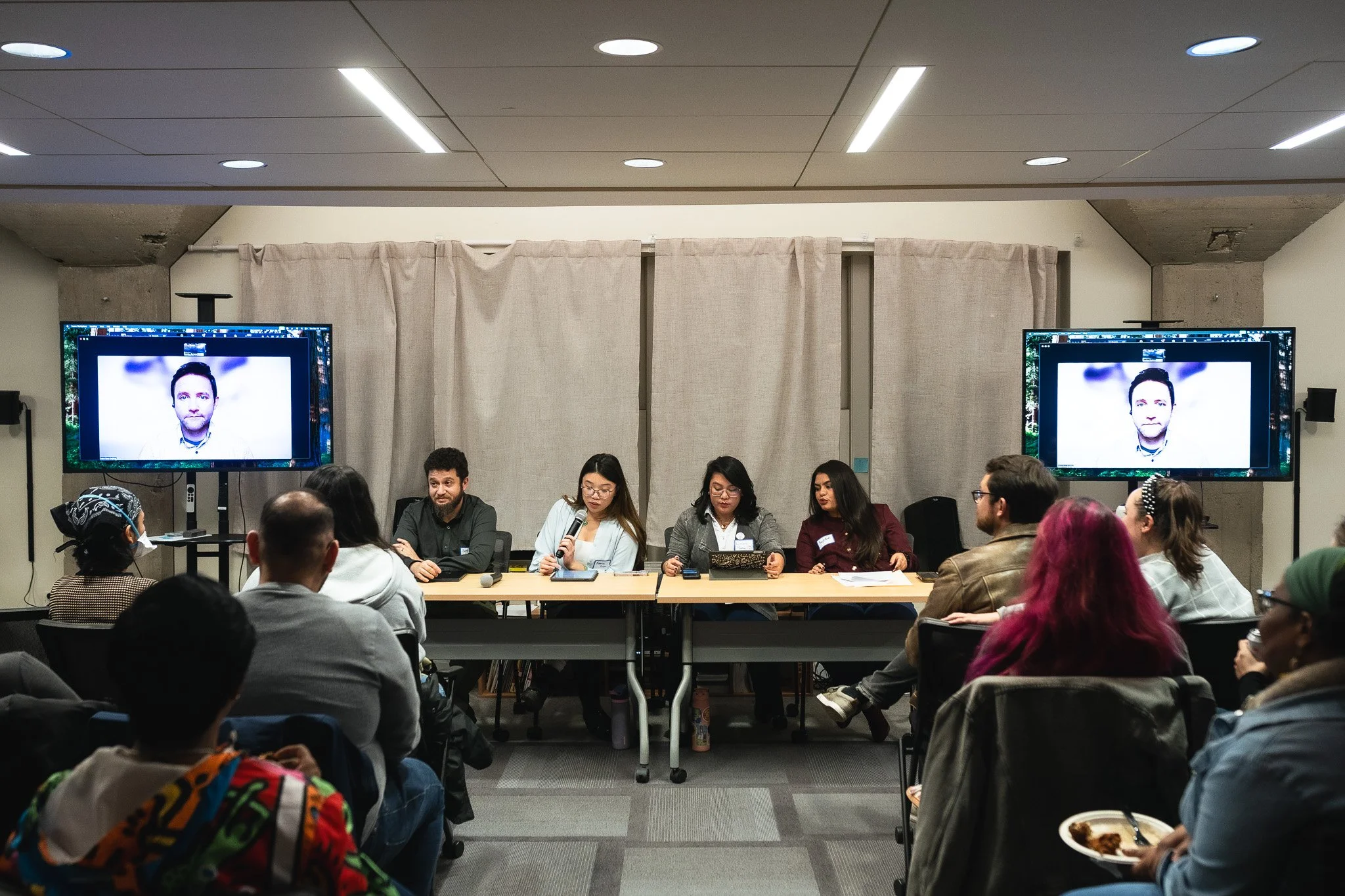
Panelists and attendees watch a screening of “Operation: Return to Sender” at City Bureau’s Bronzeville office on Nov. 13, 2025. The film, which explores federal immigration raids in California, was part of a Public Newsroom to discuss the impact these raids have had on civil liberties. (Jordan Esparza-Kelley/for City Bureau).
As federal immigration crackdowns hit Chicago in the second half of 2025, agents also targeted and threatened journalists, neighbors, elected officials and protesters who tried to document raids and arrests.
City Bureau invited community members to its Bronzeville office Nov. 13 for a Public Newsroom in partnership with Video Consortium Chicago and Evident Media. Attendees watched a screening of “Operation: Return to Sender,” and joined a panel discussion about legal protections for journalists and the role of objectivity in reporting.
The panel included the Video Consortium team: Casey Mendoza, Katrina Pham, and Sajedah Al-Khzaleh; Seth Stern and Adam Rose from Freedom of the Press Foundation; and Kevin Clancy of Evident Media.
The film was created in collaboration with Bellingcat, an open-source reporting collective, and CalMatters, a California-based nonprofit newsroom.
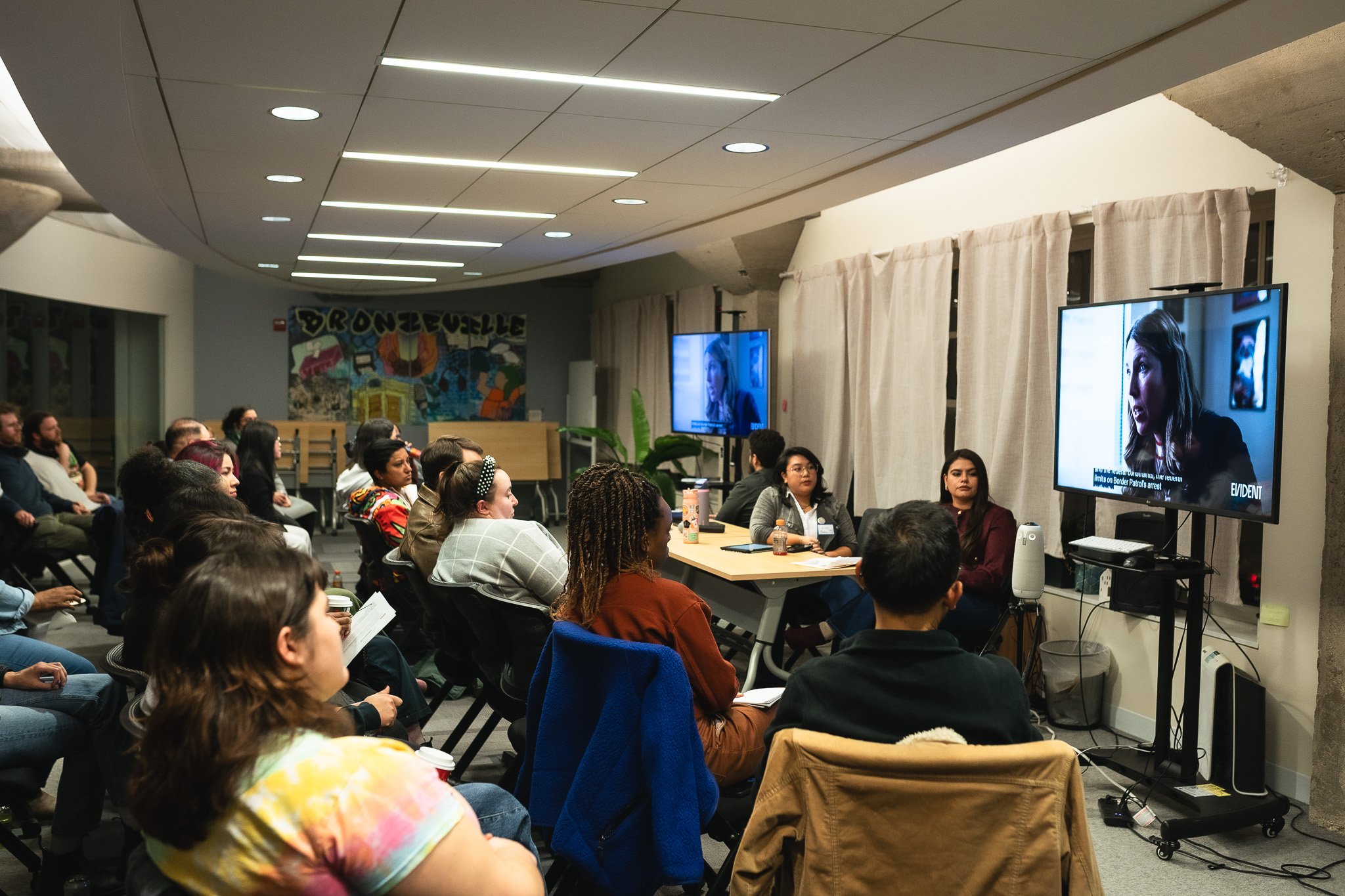
Panelists and attendees watch a screening of “Operation: Return to Sender” at City Bureau’s Public Newsroom at its Bronzeville office on Nov. 13, 2025. (Jordan Esparza-Kelley/for City Bureau).
“Operation: Return to Sender” filmmakers reviewed 50 videos taken by civilians and interviewed witnesses to expose major discrepancies in the official accounts of the three-day Customs and Border Patrol (CBP) raids in Bakersfield, California, in January. It also includes a rare interview with CBP Commander Gregory Bovino, who later gained notoriety in Chicago as the head of Operation Midway Blitz. Filmmakers interviewed Bovino in El Centro, California, where federal authorities were based during area raids.
The California operations, which CBP claimed were “highly targeted,” resulted in the arrests of 78 people, only one of whom had previous criminal history.
The tactics first used in Bakersfield would soon be replicated in major cities like Los Angeles and Chicago, filmmakers said. In Chicago, reporters also exposed discrepancies in official statements and detailed how the feds used propaganda to further narratives about the enforcement. In Operation Midway Blitz, fewer than 3% of hundreds of arrestees had criminal histories.
“It was pretty clear from when we were [interviewing Bovino] in El Centro, the tactics that he was going to use to kind of ascend within the ranks of the Trump administration,” said Clancy, the co-founder and creative director of the film. “He had a very clear plan that he executed from January on to now.”
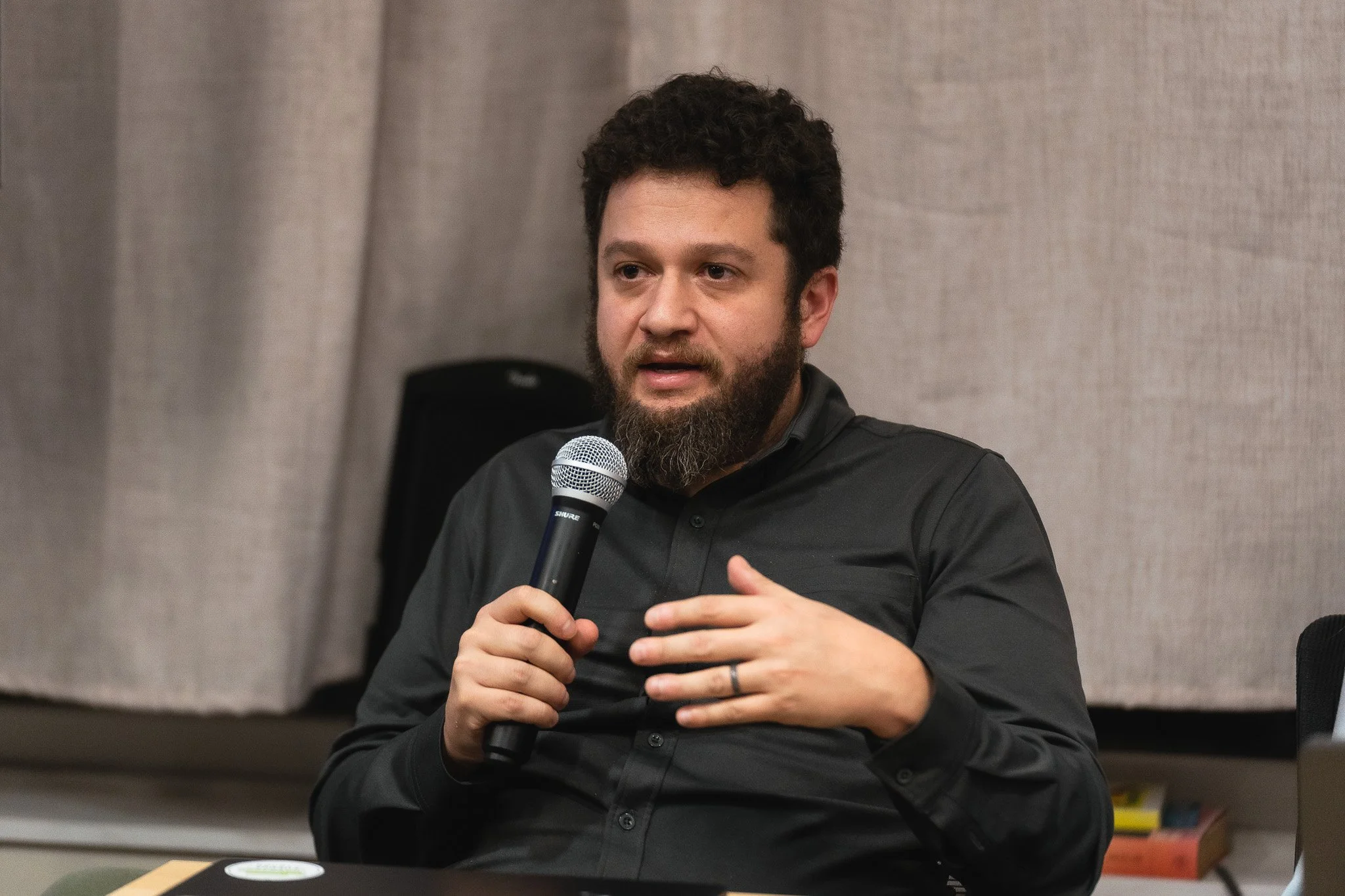
Seth Stern from the Freedom of the Press Foundation said recent attacks on journalists covering immigration raids are “chilling.” (Jordan Esparza-Kelley/for City Bureau).
During the panel discussion, Rose and Stern focused on the negative impact of excessive force by law enforcement on civilians and reporters, especially during protests. Reporters from several local organizations faced tear gas and pepper bullets, or were detained while reporting on arrests, protests and more. A group of media organizations dropped an excessive force lawsuit in December, a case in which a federal judge also said federal authorities repeatedly lied about their use of force.
It is not uncommon that “journalists get arrested, assaulted, and otherwise have their personal rights violated” during protests, but the unpredictable and unprecedented actions from the feds were “unconstitutional and chilling for journalism,” Stern said.
It is important that journalists receive personal protective equipment for this type of reporting, and that judges and courts enforce laws that protect journalists and sanction officers who don’t follow them, panelists said.
“If journalists are afraid to go out, if they're changing their plans, they're injured, or if they're in detainment, they can't do their job,” Rose said.
Mendoza and Al-Khzaleh expanded on the additional challenge of covering these stories when your own identities and communities are under attack. Traditional journalistic practices of maintaining objectivity often “has been used against journalists of color, against women, particularly if they are reporting on their identities,” Mendoza said.
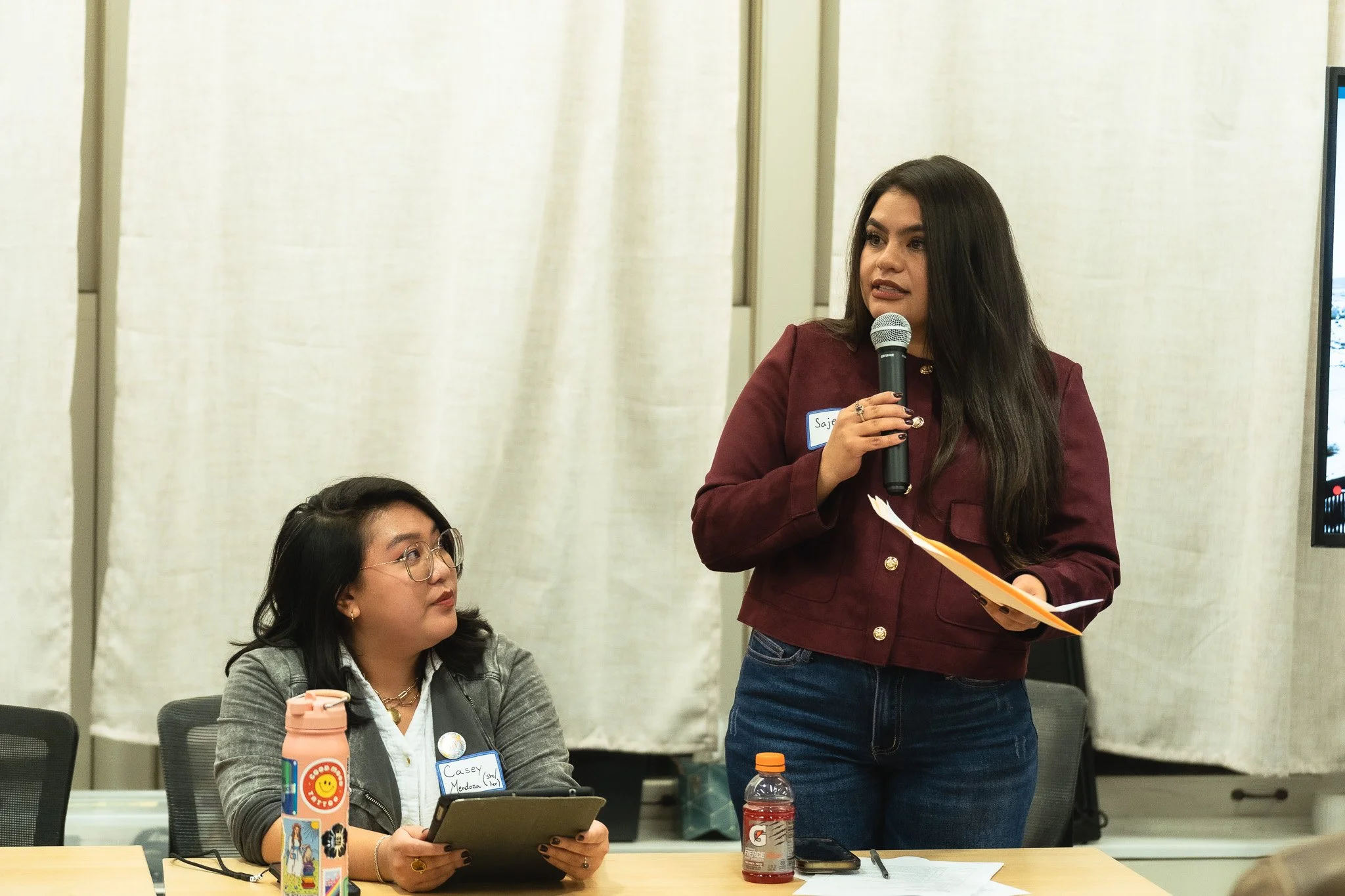
Casey Mendoza (left) and Sajedah Al-Khzaleh, members of the Video Consortium Chicago team that co-hosted the event, respond to a question during the panel discussion. (Jordan Esparza-Kelley/for City Bureau).
Asked if the work of journalists makes a difference, Rose and other panelists reference the long-term legal changes journalism has inspired over the past year and the immediate impact of getting timely, accurate news to civilians who would otherwise be uninformed and vulnerable.
“We're not trying to protect some sacred class of journalists so much as the sacred act of journalism,” Rose said. "It's important to recognize that [informing the public is] what this is all about, and that any citizen can participate in that.”
Panelists praised the resiliency of the journalism community in the face of daunting conditions.
"It's really been inspiring to see how the media has so quickly adjusted and repositioned itself and collaborated with citizen journalists and with each other,” Stern said.
For more information on upcoming Public Newsrooms, visit our Events page.
Jasmine Barnes is a writer and journalist. Originally from Detroit, Barnes is a contributor, writer and photographer for South Side Weekly. She also does consulting with organizations on diversity, equity and inclusion. Barnes was a City Bureau Civic Reporting Fellow in winter 2025.