Here’s what you need to know as Bank of America steps in to help sell off at least $1 billion worth of vehicle debt to a private collector. People whose debt is sold will no longer qualify for city-run debt relief programs.
By Sophia Kalakailo

Heavy traffic is seen at O'Hare International Airport in Chicago, Monday, April 15, 2024. (AP File Photo/Nam Y. Huh)
Chicago is tapping Bank of America to carry out its unprecedented sale of city-owned debt, a city spokesperson said.
The deal with the San Francisco-based bank is one step forward in the city’s plan to sell at least $1 billion worth of vehicular debt such as unpaid parking, speeding and red light camera tickets, in hopes of earning no less than $89.6 million. That’s roughly 9 cents on the dollar.
Officials have been working toward the debt sale since the City Council approved the plan in December. Over Mayor Brandon Johnson’s objections, a coalition of alders added the debt sale proposal to this year’s budget as a way to prop up the city’s struggling finances.
A sale of this magnitude has not been done before, officials say. That’s why they’re relying on outside expertise.
The city selected Bank of America, the second-largest banking institution in the United States, as the debt sale facilitator June 5. Company officials declined to comment.
A Bank of America location, Wednesday, June 24, 2026, in Boston. (AP File Photo/Charles Krupa)
Bank of America is not buying the debt. Rather, it will be the intermediary to figure out many of the details, including finding potential buyers, which types of vehicular debt to sell, which debt has the most money-making potential based on how old it is, and how much the city could expect to earn, according to city documents.
The city issued a request for proposals to secure a placement agent in early April. Besides Bank of America, it received just one other proposal.
The city did not say who else vied for the job, but said an evaluation committee independently reviewed and scored each submission under criteria established in the RFP. Its decision was based on the applicants’ experience selling similar government or private debt, work with the city and proposed plans for selling the debt.
Bank of America was the “highest-ranked” between the two proposals. It was not immediately clear who was part of that committee.
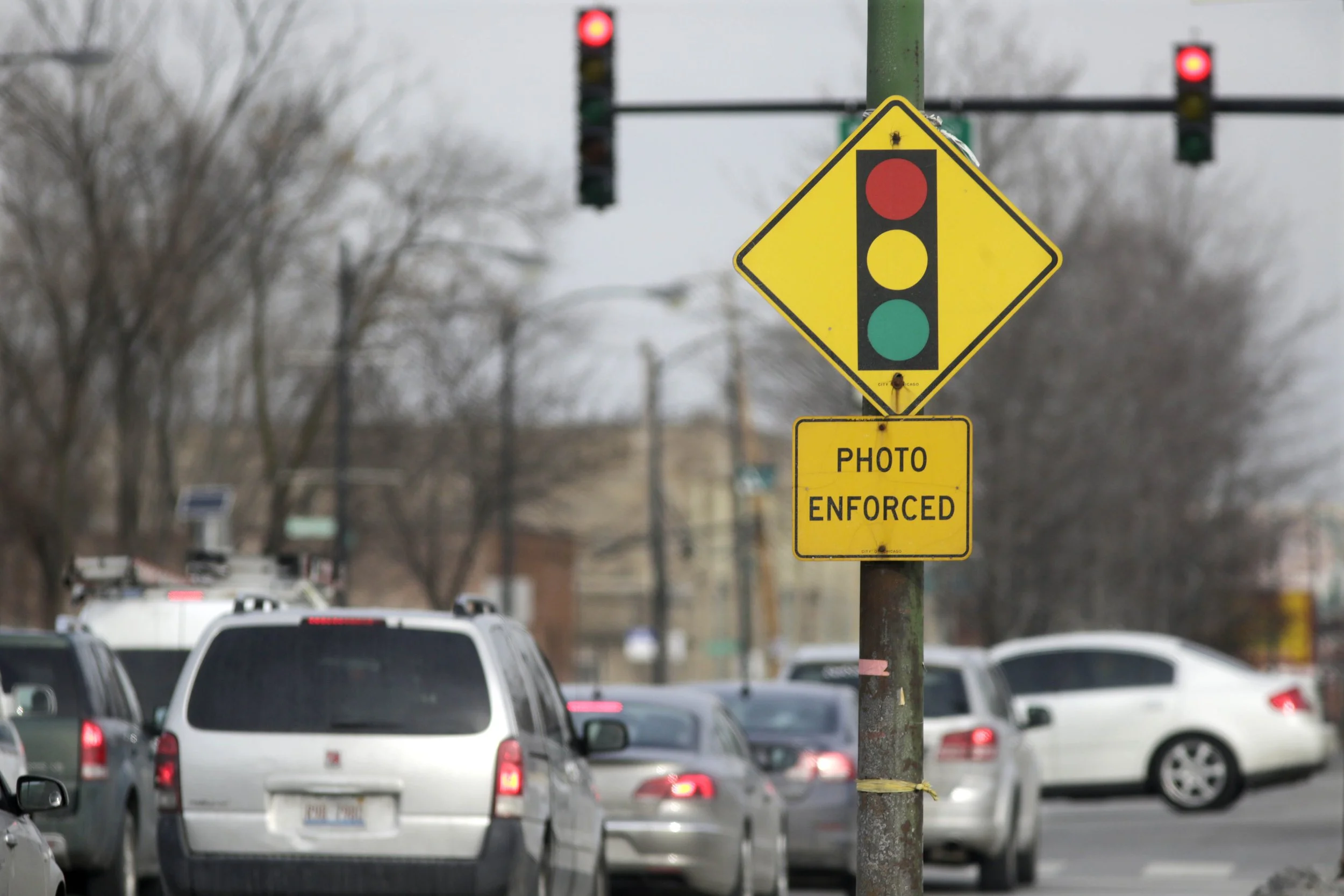
A sign warns motorists of the presence of a red light camera in Chicago. (AP File Photo/M. Spencer Green)
Sold debt ineligible for city-run relief
There are still a lot of unknowns about the process but one thing is clear: City-run relief programs will not apply to sold debt because it would no longer be owed to the city, Department of Finance officials told City Bureau.
That means if you owe debt to the city, and they sell it to a private collector, you would no longer qualify for city-run relief programs — including the Clear Path Relief or Fresh Start Debt Relief — since you would owe that debt somewhere else.
It won’t be clear how collections enforcement will change until there is a buyer. The methods a third party would use to collect debt can vary, from phone calls to lawsuits.
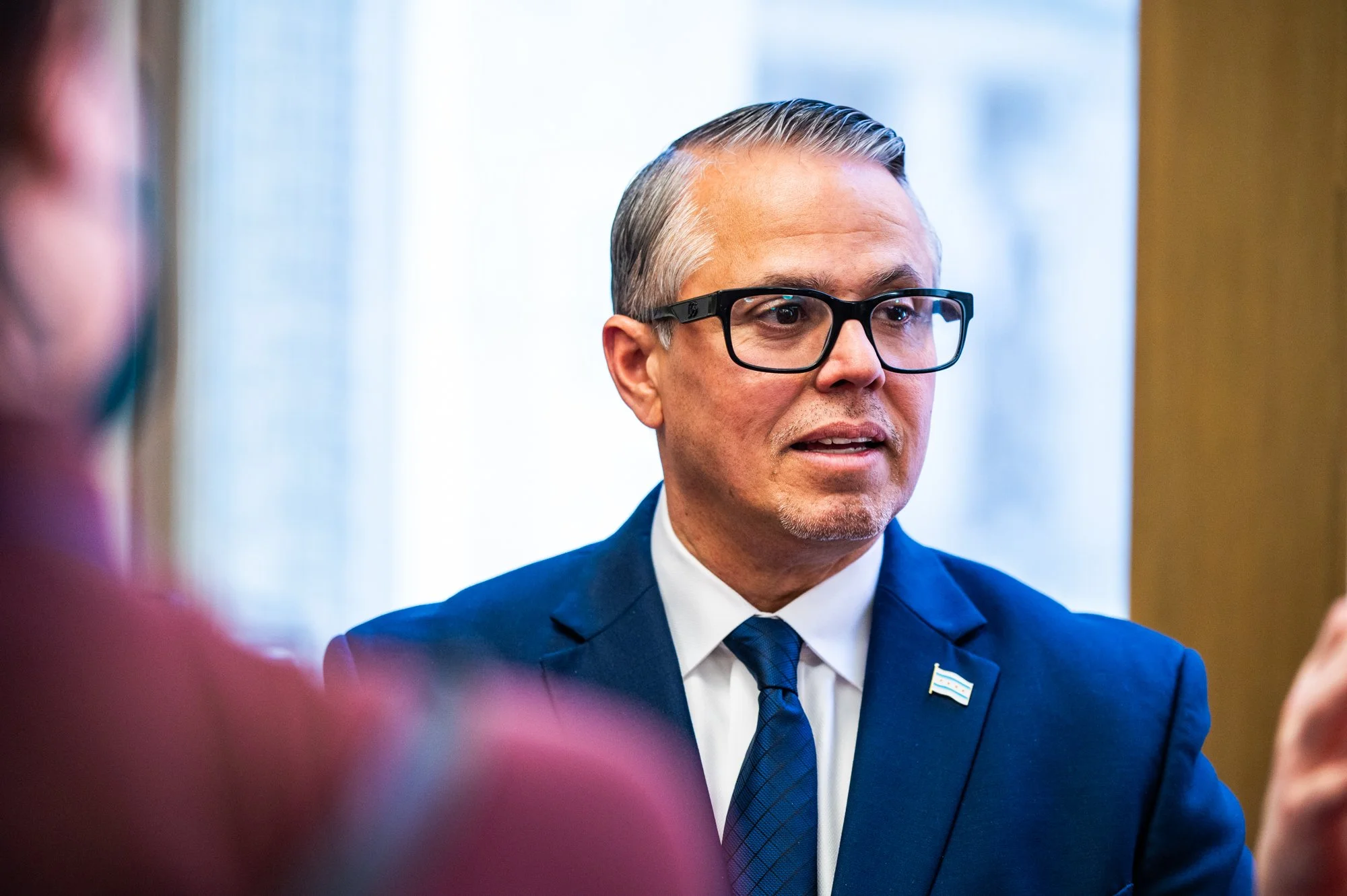
Ald. Gilbert Villegas (36th Ward) in 2025. Villegas is one of the alders spearheading the effort to sell $1 billion of city vehicle debt to a private collector to recoup money to plug budget deficits. (Colin Boyle/Block Club Chicago).
The city will make sure there are guardrails in place, said Ald. Gilbert Villegas (36th Ward), who championed the debt sale plan during budget season.
“What we don’t want is people being harassed,” he told City Bureau in April.
However, Department of Finance officials said a third-party buyer of the debt may use “any available general debt collection methods to collect as governed by state law.” That includes contacting you by phone, mail and at work — unless they know your employer prohibits it. They can also contact other people in an effort to locate you. Agencies can report your debt to credit bureaus, but they have to contact you first.
Collectors can also sue you, which can result in a debt judgment. That opens the door to possibly garnishing your paychecks or bank accounts, and seizing and selling personal property and real estate, according to Illinois Legal Aid.
We want to hear from you
If you have unpaid parking, red-light or traffic tickets, have ever had your car booted or are unsure whether you owe money to the city, we want to hear about it.
City Bureau will be reporting on the debt sale in the coming months. We’ll share resources to help you deal with your vehicle debt and other types of debt.
Contact us at civicinfo@citybureau.org.
How we got here
As the city stared down a projected $1.2 billion budget gap for 2026, a coalition of alders put together an alternative budget to oppose the mayor’s proposed corporate head tax and change other aspects of his original plan.
City Council was looking for “creative ways” to close the budget gap, Villegas said. The idea of selling outstanding debt came about as one way to avoid raising property taxes again, he said.
The alternative $16.6 billion spending plan passed in late December. It also included a shopping bag tax increase, a new retail liquor fee, a small property tax hike and the sale of city debt.
Johnson has called the sale of debt “predatory” and “immoral.” He blasted alders for forgoing the tax that would have charged a monthly fee to companies employing a certain number of full-time workers in Chicago. He signed an executive order in December barring the city from selling off ambulance and emergency medical debt as part of the deal.
“What I said from the very beginning [is] it was a bad idea,” Johnson said about the sale. “I didn’t want to be right about this situation, but the City Council had a decision to make: We could have taxed the top 0.5% of corporations in the city of Chicago to generate $100 million, or what they did, which was to sic debt collectors on working people. I thought it was the wrong the decision; I still think it’s the wrong decision.”
Despite that opposition, the city “worked diligently” to carry out the sale mandated by the budget ordinance, a city spokesperson said in a July 2 email.
Villegas previously said it would be up to Johnson to ensure the debt sale plan does not target low-income people.
“We have billions of dollars of unpaid debt. The city government needs to make a decision. Are we going to collect this debt or not?” he said at a press conference in December as alders pushed the plan forward. “There’s other people that can afford to pay that we haven’t targeted.”
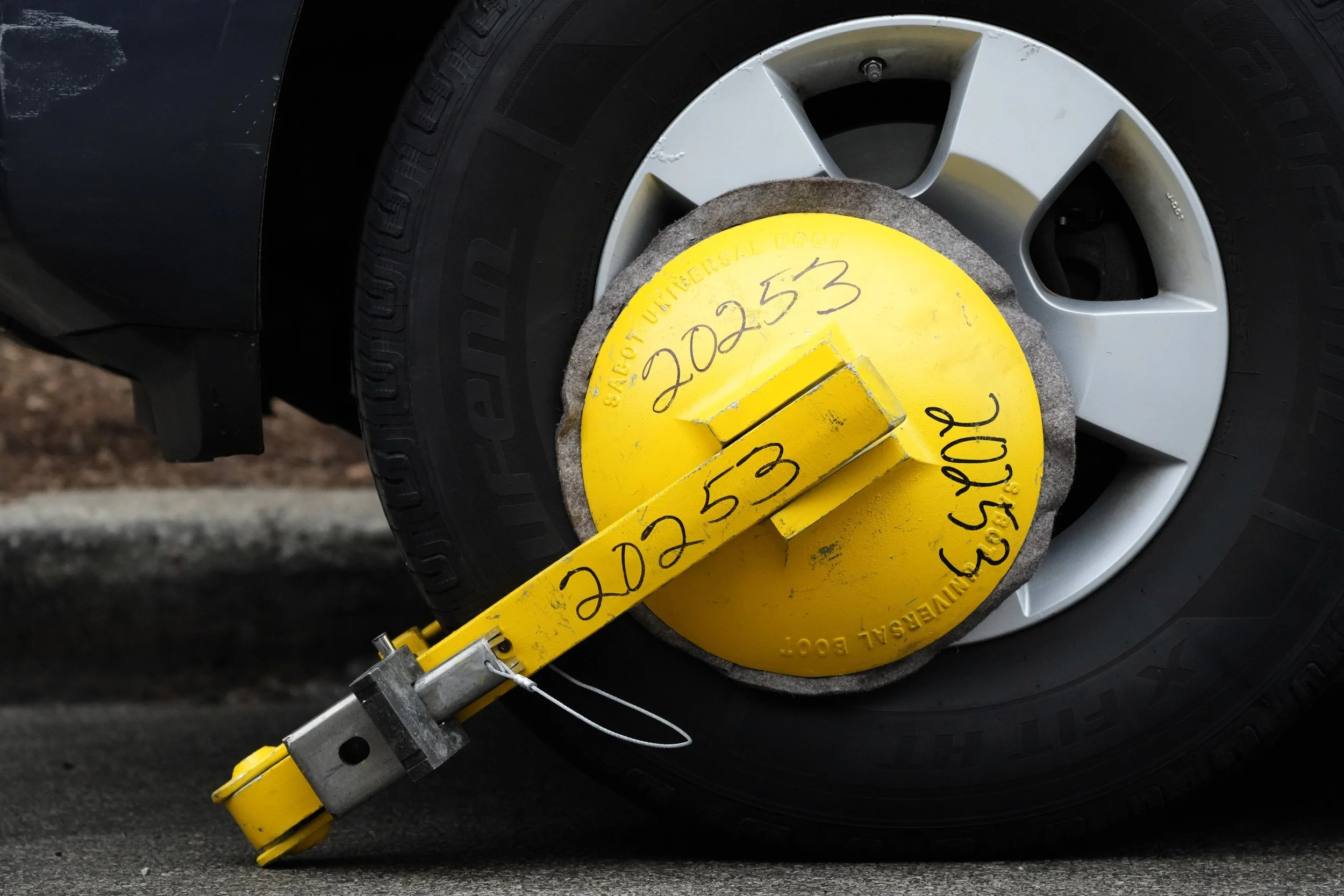
A car with a boot is seen in Chicago on Feb. 7, 2022. (AP File Photo/Nam Y. Huh)
The city has over $8 billion in outstanding debt. Why?
A recent audit by Chicago’s Office of Inspector General criticized how the Department of Finance tracks, manages and collects on city debt.
The department’s work relies on “decades-old practices” and does not have a unified plan. Debt collection is “fragmented across several databases, processes, and vendors,” which prevents the city from maximizing revenue collection or designing its collection efforts to address equity concerns, the report states.
The $8.1 billion in outstanding debt managed by the department is “almost certainly a floor to the true amount.” That would include debts recorded in other city payment systems the department does not manage.
Debt owed to the city has risen by $1 billion throughout Johnson’s term, the Sun-Times reported.
Owing debt to the city disproportionately impacts economically vulnerable residents, the audit states. The OIG’s audit found that people living in poverty — mainly on the South and West sides — tend to have more utility, administrative hearing and vehicle debt, according to the audit.
“This uneven distribution suggests that city debt may place a greater financial burden on communities already struggling to meet basic needs,” the report states.
Respondents to a survey by the OIG also said they found it confusing to navigate the city’s various repayment programs, according to the audit.
“If the city is not able to comprehensively identify or consistently manage debt as discussed […] it may be unable to tailor collection efforts to address equity concerns,” the report states.
Experts, officials question ethics of the sale — and if it’s possible at all
Comptroller Michael Belsky and his Department of Finance are charged with making the sale happen — now with the help of Bank of America. However, Belsky has voiced doubts about how attractive the sale will be to private debt collectors as far back as February, according to a memo he sent to City Council.
The Johnson administration “has repeatedly made clear that such a plan has never been guaranteed to succeed,” the city spokesperson said July 2.
Sophia Kalakailo is a Report for America corps member covering Chicago’s South and West sides. She focuses on holding public officials accountable to their communities, covering civic happenings, and building resources and guides with solutions related to housing, public services and other political issues. Before joining City Bureau, Sophia reported on the Ypsilanti, Michigan area for MLive.