In late April, Documenters across our network gathered virtually to create pod maps and discuss how this tool can help us show up for our communities.
By Navjot Heer
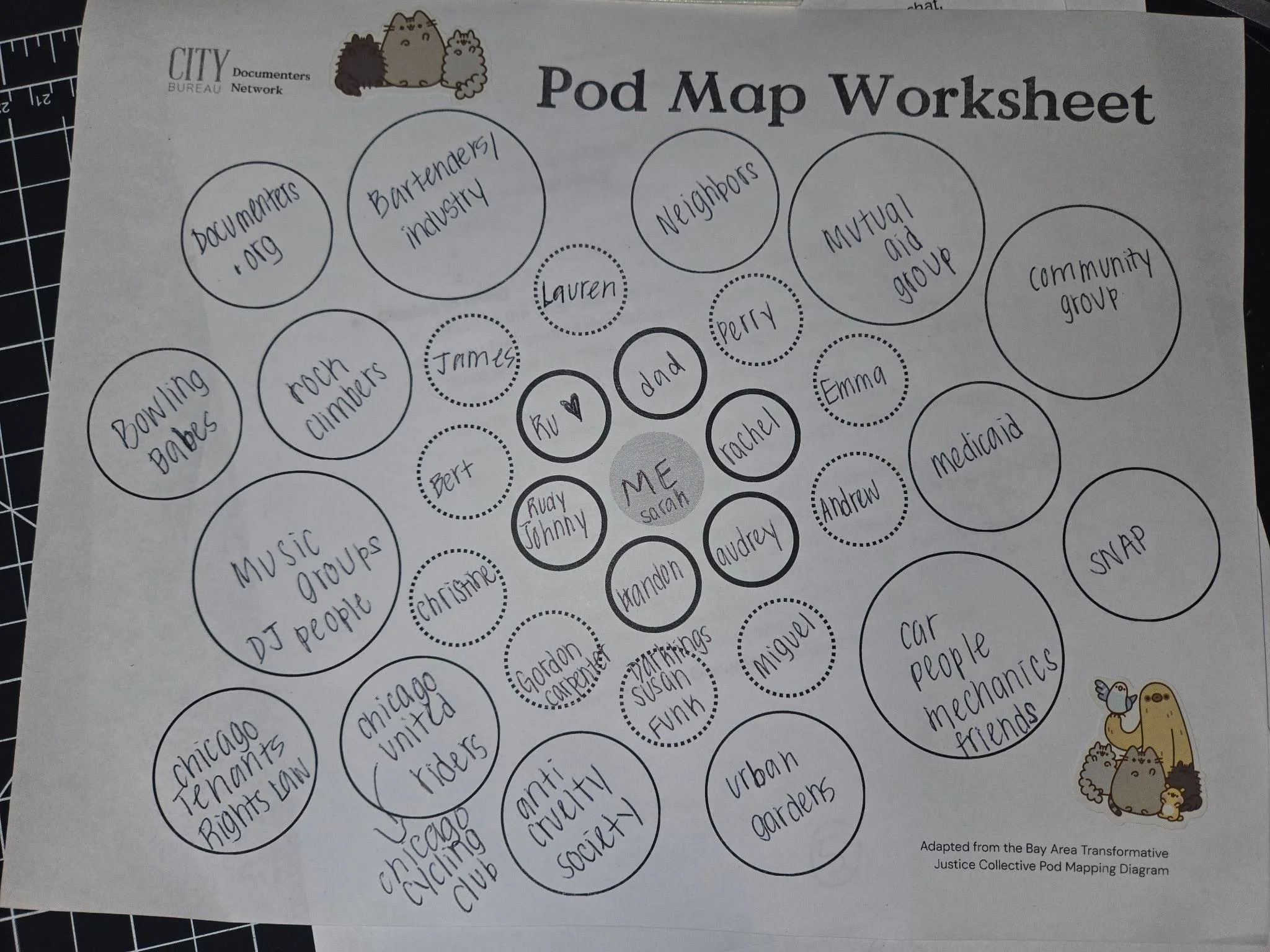
Pod map created by Chicago Documenter Sarah K.
At City Bureau, we know that strong relationships and community connections are essential building blocks of a healthy democracy. Our Documenters Network members work across twenty-plus cities and community areas in the U.S., attending local public meetings and taking notes to share critical information about what decisions are being made and how those impact their neighbors.
As we continue to invest in this important work of sharing information from public meetings, we’re also committed to offering tools that Documenters can use with their family, friends, neighbors, and broader networks to care for and support each other. A well-informed, connected community is a safer, more prepared community.
In late April, we hosted a pod-mapping workshop where we learned about and practiced creating our own pod maps with Documenters. More than 30 participants from across the U.S. came together to explore the origins of pods as a tool for mutual aid and community care.
The Bay Area Transformative Justice Collective (BATJC) began using “pods” in their transformative justice work to describe the relationships people rely on for support around experiences of violence, harm, and abuse, whether as survivors, bystanders, or people who have caused harm. During the workshop, the group discussed how pods are used in mutual aid work, among family and friends, and in many other contexts. We also discussed how the concept of pods has existed for centuries in black, brown, and other historically systems-impacted communities as a way of surviving and caring for one another. Folks shared examples of how they’ve used pods in their own lives, and the group learned some tips and best practices for creating a pod map that meets their needs.
Pods are made up of “pod people,” folks we are in relationship with who we can trust and rely on for support and care. Pod maps help us identify and visualize who these people are to better understand and access our support systems when we need them.
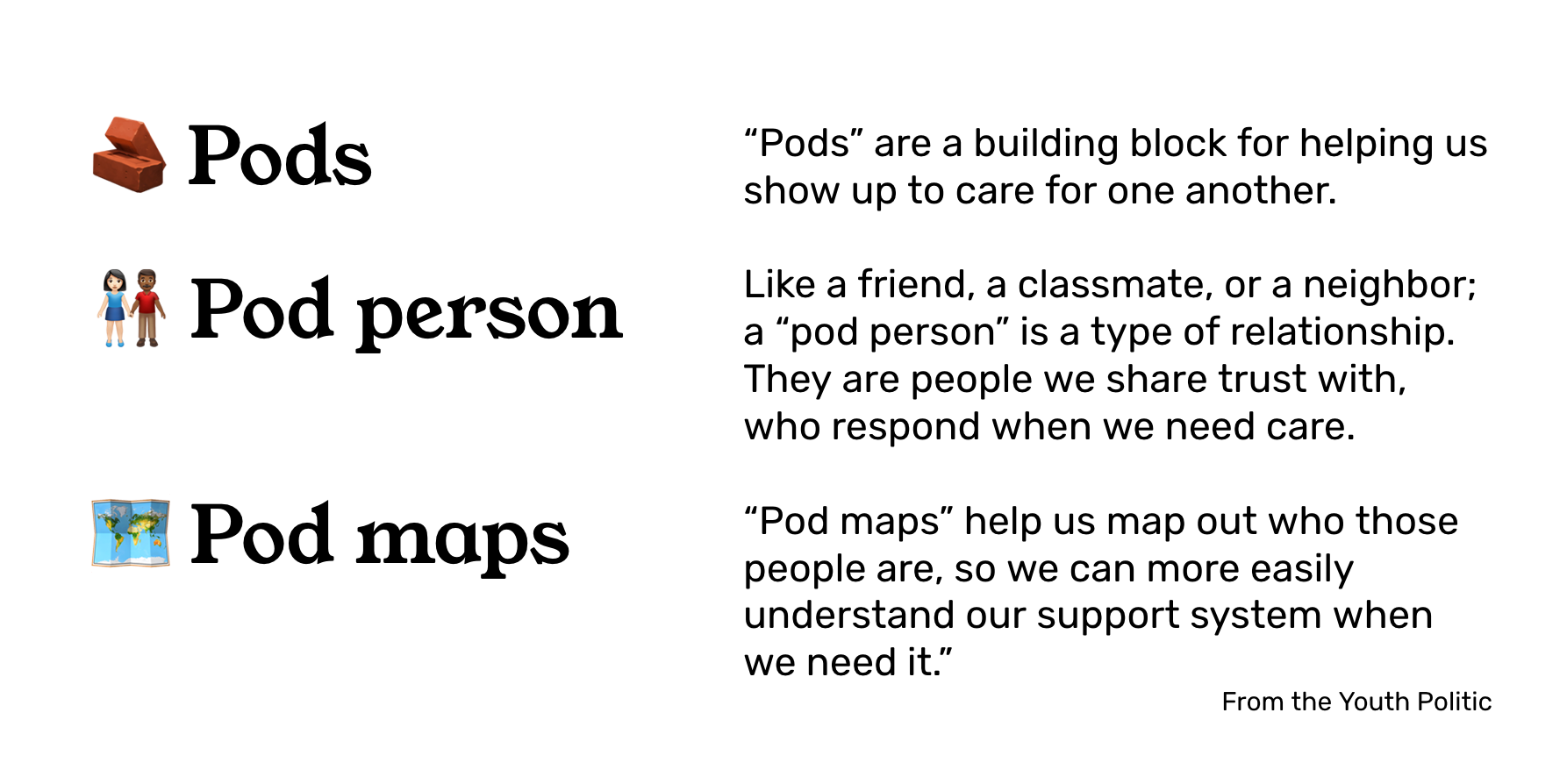
Slide from Pod-Mapping Workshop.
We have a bias toward action at City Bureau, which means this workshop included dedicated time for participants to put their learning into practice by creating their own pod maps! Starting from the innermost circle and building outwards, folks were able to map out who they can currently turn to for support and care (pod people), who they would like to build more trust and deepen relationships with (moveable people), and what resources, organizations, groups, and networks they can reach out to locally for help (community support).
We encourage everyone to use this template, based on BATJC’s original pod-mapping worksheet, to map their own pods and share the exercise widely with others! Some Documenters, like Sarah from Chicago, shared their completed pod maps with us (pictured below). Dallas Documenter Tiffany even used her skills to create an interactive website that anyone can use to build a digital pod map.
As Mia Mingus of BATJC shared, “pods are a critical building block for creating caring, accountable, connected communities.” As our communities continue to grapple with decisions made at the local and federal levels that impact individual and collective safety, access to necessary resources, affordability, livability, and more, we want to continue sharing community-based, relational tools to meet the needs for care and support.
By discussing pods and going through the process of creating personal maps, the group practiced using a survival tool to get through this current crisis and the next and expanded their personal and collective networks of care. We hope these network-wide workshops, where we flex our mutual aid muscles and put tools into practice, helps to build stronger, more connected communities.
If you have any questions about the Documenters Network, or if you’re interested in learning more about our network-wide workshops and events, please reach out to Navi at navjot@citybureau.org.