Gaining the storytelling skills to make information meaningful and actionable for all
By Navjot Heer and NaBeela Washington
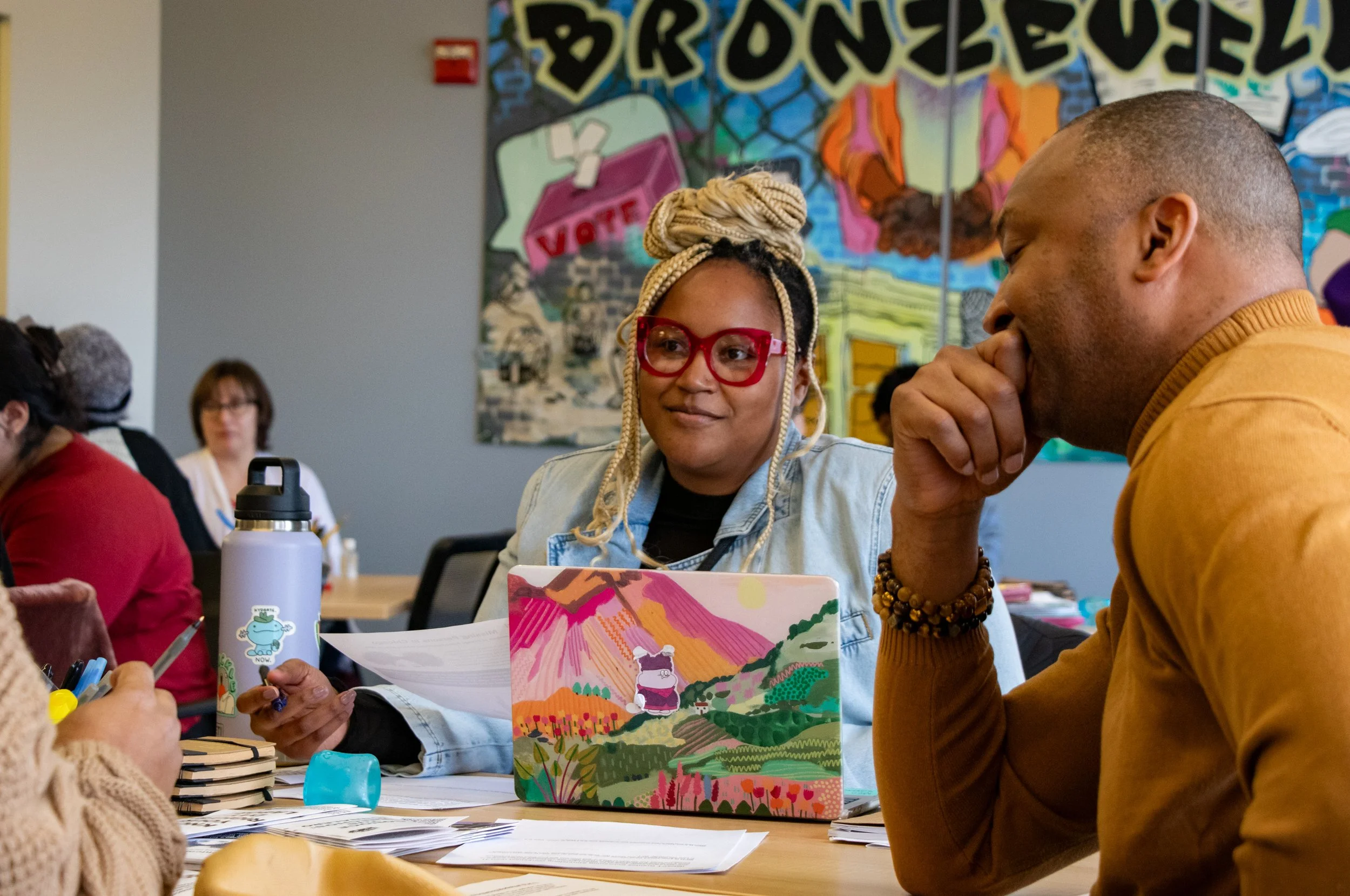
NaBeela Washington represents 15West / Lucky Jefferson at a City Bureau and Cook County Digital Equity convening. (Yasmin Zacaria Mikhaiel/City Bureau)
Take a doomscroll through the internet and the question “is that AI” might cross your mind more than once. Clickbait. A deepfake that’s strikingly realistic. A quote that sounds made up. Media literacy, or the ability to assess what’s credible and trustworthy, has never been more important. And for communities whose stories are often distorted or ignored altogether, this skill can be a lifeline.
That’s why City Bureau, in partnership with 15 West, is hosting a three-session workshop series for Documenters who want to engage with media more critically and move from note-taking to byline.
This series transforms everyday residents, netizens, and Documenters into critically media-literate journalists who can identify reliable sources, analyze bias, and tell local stories that connect to the whole reader. You’ll gain practical skills to amplify neighborhood voices and hold local institutions accountable through shorter-form, community-driven journalism.
For Documenters specifically, this series transforms you from civic record-keepers into community journalists who can bridge the gap between government proceedings and neighborhood impact. You’ll maintain the rigor and accuracy of documentation while gaining the storytelling skills to make that information meaningful and actionable for residents.
Session 1: Foundations of Media Literacy (June 17th from 5-6:30pm CT)
By the end of Session 1, participants will be able to:
Understand media as constructed channels of information created for specific purposes
Identify bias, misinformation, and reliable sources using frameworks, including evaluating claims and narratives presented during public meetings
Identify barriers to digital access, and understand how this impacts whose voices get heard and how this shapes representation in public discourse
Learn how media ownership influences news coverage and how your notes can fill gaps created by traditional media
Session 2: Storytelling & Community Reporting (July 22nd from 5-6:30pm CT)
By the end of Session 2, participants will be able to:
Understand the democratic function of notetaking and community journalism, and how Documenters directly impact government transparency and civic participation in their communities
Understand the basic principles of conducting ethical interviews with community members
Identify potential story ideas in their notes that highlight solutions by drawing from public meeting coverage and Documenters’ observations
Use notes to identify where communities are already proposing or experimenting with solutions
Apply journalistic ethics and principles to the practice of documenting
Session 3: Publishing Local Voices (September 9th from 5-6:30pm CT)
By the end of Session 3, participants will:
Learn the basics of how to build news stories using ideas and themes from public meeting notes, shaping them into solutions-oriented narratives
Determine the best story formats (Q&A, explainer, investigation, etc.) to distribute information to their community, grounded in representing their voices ethically and authentically
Begin to explore ways to use social platforms to share what you document
Become familiar with how to craft pitches to submit to spaces like 15 West
ABOUT 15 WEST:
15 West is a resident and volunteer-powered community newsroom serving 600,000+ residents across Chicago's West Side and near west suburbs, communities routinely ignored by mainstream media. We’re making the news easier to understand.
If you have any questions about the Documenters Network, or if you’re interested in learning more about our network-wide workshops and events, please reach out to Navi at navjot@citybureau.org.
Plus, sign up for our webinars at citybureau.org/events