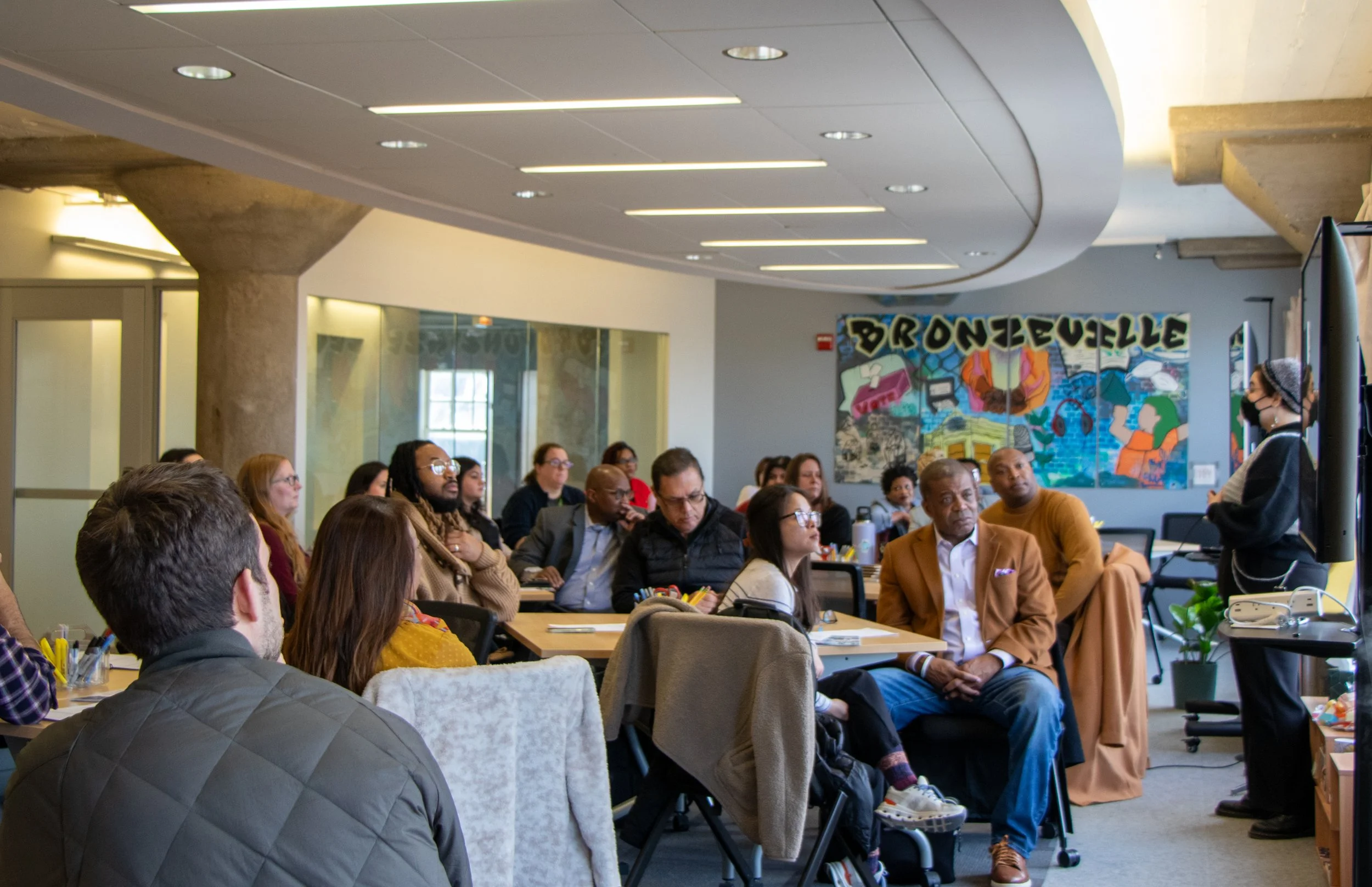
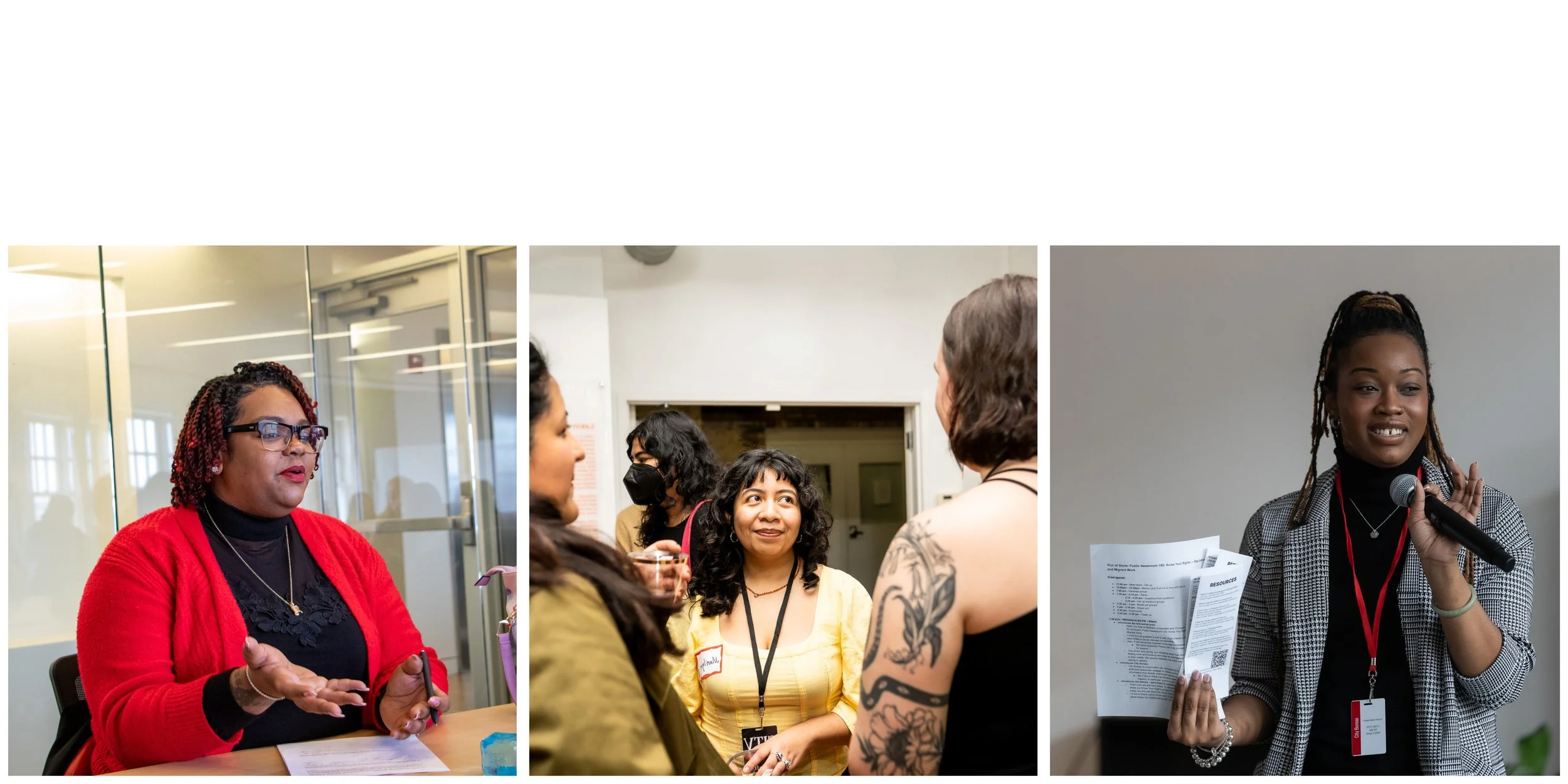
In order to build a more equitable information system, we recognize that our work must operate at multiple levels: from individuals to communities to broader national networks.
In practice, this means that we will continue to work with people in Chicago who are activated by specific community issues and ready to take action, but need skills, pathways, and resources to navigate civic life and advocate for their communities. We also support trusted neighborhood leaders like block club captains, mutual aid organizers, and other connectors. By strengthening their capacity and facilitating connections among them, we reach the broader networks of people they serve—families, neighbors, and community members who trust them. This approach allows us to strengthen Chicago’s local information systems, particularly in neighborhoods experiencing systemic disinvestment and where formal institutions have historically failed to meet people’s needs.
Locally and nationally, we partner with forward-thinking leaders and organizations reimagining approaches to journalism and building new community-centered practices. And we work with researchers, funders, and policymakers whose investments and decisions help shape the civic journalism field, providing learnings and frameworks that demonstrate how equipping more people with journalism skills impacts democratic participation.
By building relationships at these different levels, we create the conditions for systemic change in how information is created and distributed, and how it serves communities—particularly those who have been systematically excluded from civic power.