
Dominic Pacyga, an urban historian and author, has researched immigration history for decades. As ICE raids hit local communities, he sees parallels to how different groups have mobilized around a common cause.
By Jorge Iván Soto
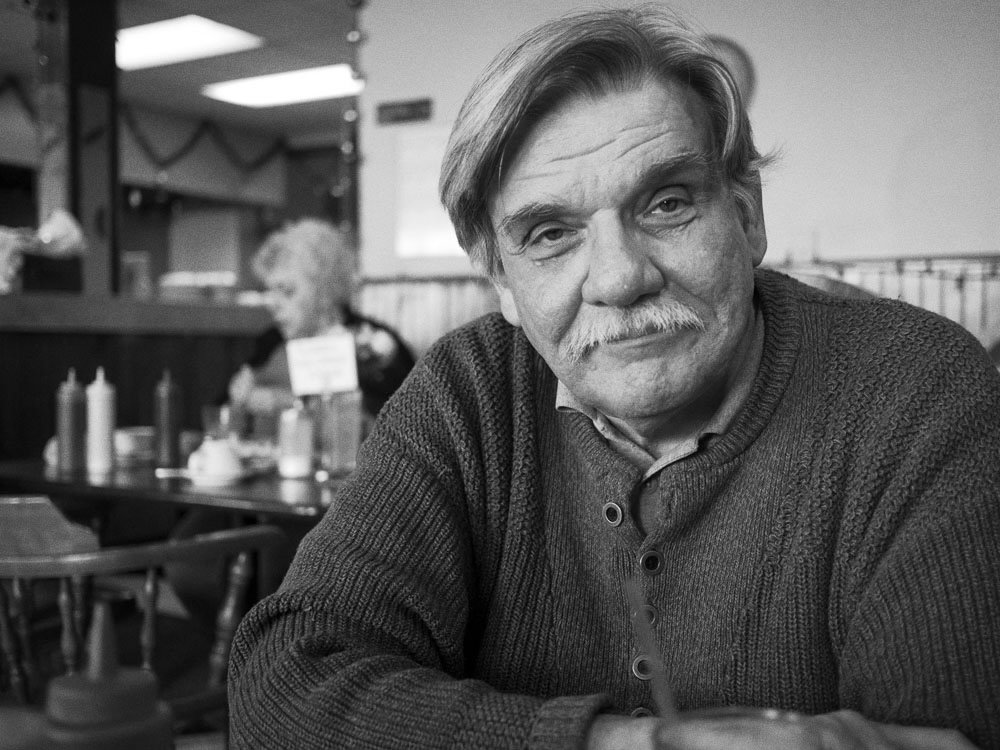
Dominic Pacyga is a historian, author, researcher and professor. His work focuses on immigration and ethnic groups on the South Side of Chicago. (Provided)
Dominic Pacyga grew up in a Polish family within a multicultural, multilinguistic Back of the Yards.
His upbringing of living, learning and working among various ethnic groups deepened his interest in Chicago, studying history at University of Illinois Chicago. His research focuses on immigration and ethnic history, particularly that of the Polish diaspora. He’s written several books on the topic, taught history at Columbia College Chicago and Newberry Library, and has developed neighborhood historic guides and tours.
Labor movements in Chicago historically helped forge connections across races, languages and ethnicities, he said. Union efforts in the meatpacking industry, which drew “massive numbers of immigrants” along with the steel industry, brought together Lithuanians, Poles and Mexicans, as well as women to resist union-busting attempts to play these groups against each other. Chicago as a city has welcomed and protected immigrants, refugees and oppressed people, Pacyga said.
As the current political climate threatens to divide, Pacyga spoke about how the need to unite is more critical than ever.
This interview has been edited and condensed for clarity.
What was your interest in exploring Polish immigrant communities?
I grew up in the Back of the Yards, and I worked in the Stockyards for about two and a half years. I grew up in a neighborhood that was very diverse.
I was very much a part of my grandmother's family; I spoke Polish as a kid. She was here [for] 55 years, she never spoke English. There was always Polish radio, Polish newspapers, I went to a Polish parish, and I went to a Polish grammar school. Most of my generation was pretty assimilated, but there were newer immigrants that came in from Poland in the 60s and late 50s, and I became friends with them.
My interest in Chicago began to grow. At UIC, I was a history major, and I had every intention to teach high school, but then got caught up in graduate school. My interest in Chicago is part of my development intellectually. I’ve always been interested in neighborhood people, working people; people of different ethnic groups and backgrounds.
How do people form relationships or communities across identity?
They form it through work, living together, religion, and the labor movement.
I grew up with no African American friends. I met my first African American friends working together in a store and going to high school. De La Salle High school was the first Catholic school to integrate. We became friendly because we had classes together, we had common interests, and belonged to different student organizations. With Mexicans, it was living in the neighborhood; we knew each other.
If you get to know people, you don’t hate them anymore. You don’t say, ‘He’s trying to take my job.’ We’re both working on the meatpacking floor, we both have to organize a union — let’s just get this done, let’s make a better life for both of us.
What gets in the way of forming those relationships?
Communalism is an intricate web of friendships, of relationships. American individualism has always been at odds with communalism. Individualism is the dominant culture, and as you become assimilated, you become more individualistic. That breaks the community down.
I want to hear your reflections on the ICE raids.
My friend, [former Metropolitan Water Reclamation District Commissioner] Dan Pogorzelski, was talking to a group in Little Village about how his father, an immigrant from Poland, lived in Little Village. [He was] saying that many Polish immigrants were arrested in the Northwest Side and on their way to being deported. Talking in front of a Hispanic group, he says, ‘We have to get together, we have to be brothers. We have to work this out.’
This is a very dangerous time for people. I grew up in the ’60s during the Vietnam War. I never thought I’d see what I’m seeing now: jack-booted Gestapo in the streets of Chicago, picking up people, raiding places like shopping centers in Little Village.
Like in the labor movement, you need to have unity. We all have these roots. We’re all immigrants. We just have to keep arguing. We have to keep fighting. We have to keep demonstrating. Black, white, Brown.
Have you seen people becoming allies historically in ways similar to what we saw with ICE raids?
The labor movement is part of that communalism. The labor movements that are successful tap into those communal roots and get beyond race and beyond ethnicity.
In the meatpacking industry, they used to bring in new groups to break up unions. They would bring women in, but then women started joining the union. Then they brought the Lithuanians to break a Polish union; Poles to break an Irish union; Mexicans to break a white Anglo-Saxon and white ethnic union. That caused a lot of hostility, but then [there was] a lot of, ‘Hey, wait a minute. You know, we're all in this together.’
Jorge Iván Soto is an Indigenous Mexican-American advocate and musician. In his Iowa hometown, they began writing op-eds and speaking on local media to advocate for the local factory workers affected by the COVID-19 outbreak. He sketches buildings, bikes and advocates for housing and public transit. He plays league soccer and DJs at local gigs. They are part of the Civic Reporting Fellowship cohort for fall 2025.
Support City Bureau’s Civic Reporting fellowship by becoming a recurring donor.