
Chicago moms navigate numerous challenges to balance parenthood with securing stable work and housing for their families. It’s an uphill battle, but through grit — and community — these moms are finding a path forward.
By Amaris Edwards
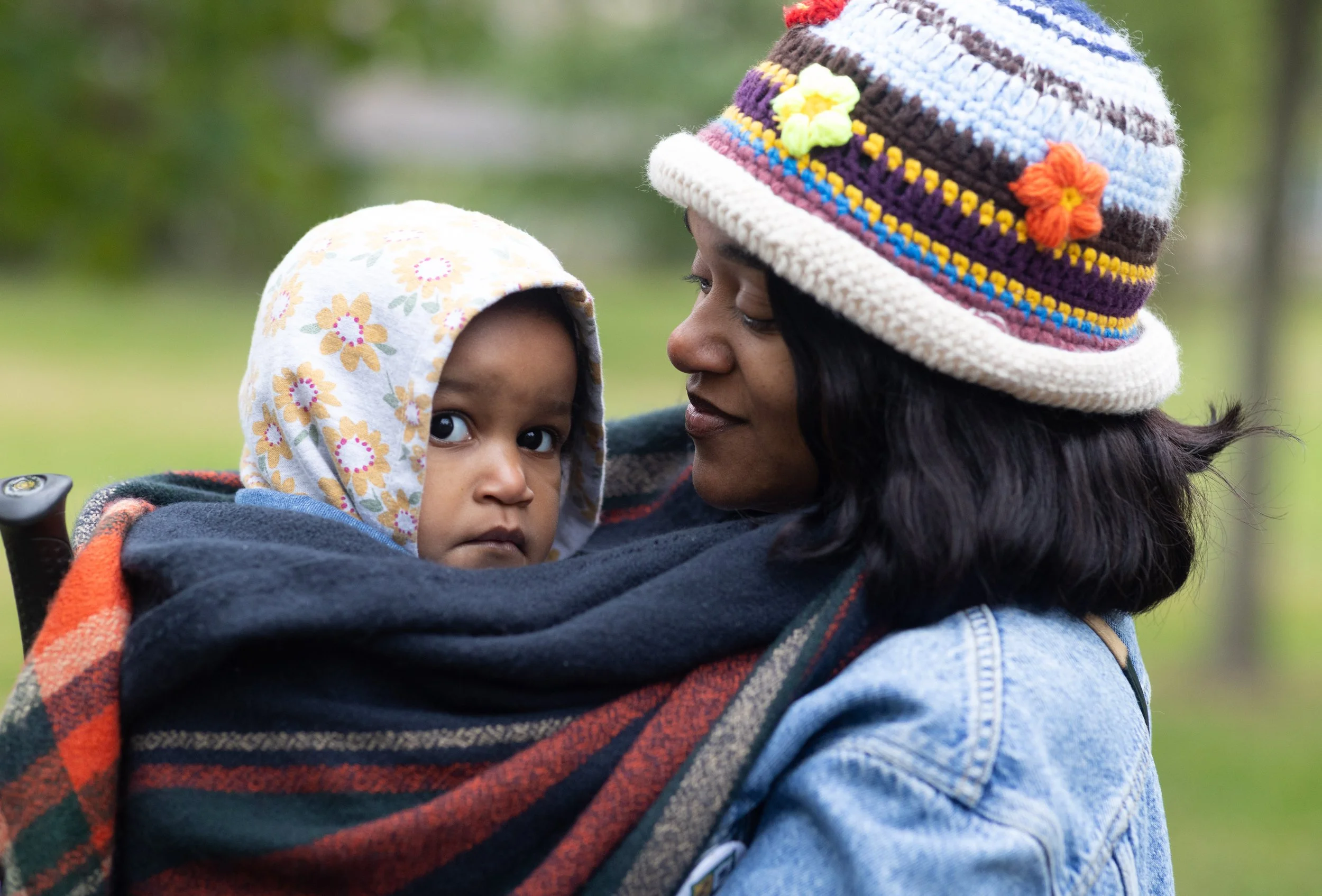
Medina Griffin looks at her daughter, Rumi, while on a walk at Rainbow Beach in Chicago’s South Shore neighborhood on Tuesday, Oct. 21, 2025. (Talia Sprague/for City Bureau)
Editor’s note: This story contains mentions of mental health struggles and suicidal ideation. If you are struggling, contact the free and confidential National Alliance on Mental Illness HelpLine or the 988 Suicide & Crisis Lifeline.
As 25-year-old Medina Griffin greets the Chicago sunrise, the only sound is the soft breathing of her 2½-year-old daughter in the room they share.
The little girl will stir between 5 and 6 a.m., before it’s time for day care and work. The toddler gets a quick snack to keep her happy for the next hour, then Griffin steals back a precious hour-long nap for herself while her daughter plays in the living room.
When the hour is up, the morning routine gears up in earnest — teeth are brushed, faces are washed. Griffin dresses her daughter and makes a quick and nourishing breakfast to power her playing. With their stomachs full and her daughter’s backpack slung over Griffin’s shoulder, the pair are out the door, hand-in-hand.
For many new parents, the overwhelming routine of feeding schedules, sleepless nights, and constant attention feels like a marathon with no finish line. It has taken time to adjust to being a mom, but “I’m finally starting to feel like myself again,” Griffin said. “Motherhood has presented its own set of challenges, but at the same time, it was very transformative.
“I honestly feel like I died at birth and was kind of reborn, and I'm still trying to figure out who I am and where I’m heading. [Motherhood] gives you an opportunity to do the things that you wanted done for you and show up in the ways that you would have liked to be shown up for [in childhood].”
Chicago mothers navigate deep systemic hurdles to balance the demands of parenthood with the struggle of securing stable work and housing for their families.
Young parents and pregnant people face higher rates of homelessness and housing insecurity. Homelessness also is a risk factor for pregnancy: many young people experiencing homelessness are pregnant or parenting, which leads to poor health outcomes, for both parent and baby. But many housing programs don’t serve young parents, research shows.
Single mothers experience higher-than-average poverty rates and lower incomes. Nearly half of Chicagoans in deep poverty are in single-mother-led households.
One in five mothers are affected by mental health conditions before, during and after childbirth.
Griffin and Jonquil McCray, 24, struggled with some of these issues. Griffin’s mental wellbeing wavered after she became a parent, while McCray had a tough time finding housing for her and her daughter.
Both got critical support by tapping into a network of local resources, including groups such as New Moms and Nita’s Love Train, as well as friends and family. Those resources help Griffin, McCray and parents like them get help to bolster their mental health, secure housing, and fulfill their families’ basic needs.
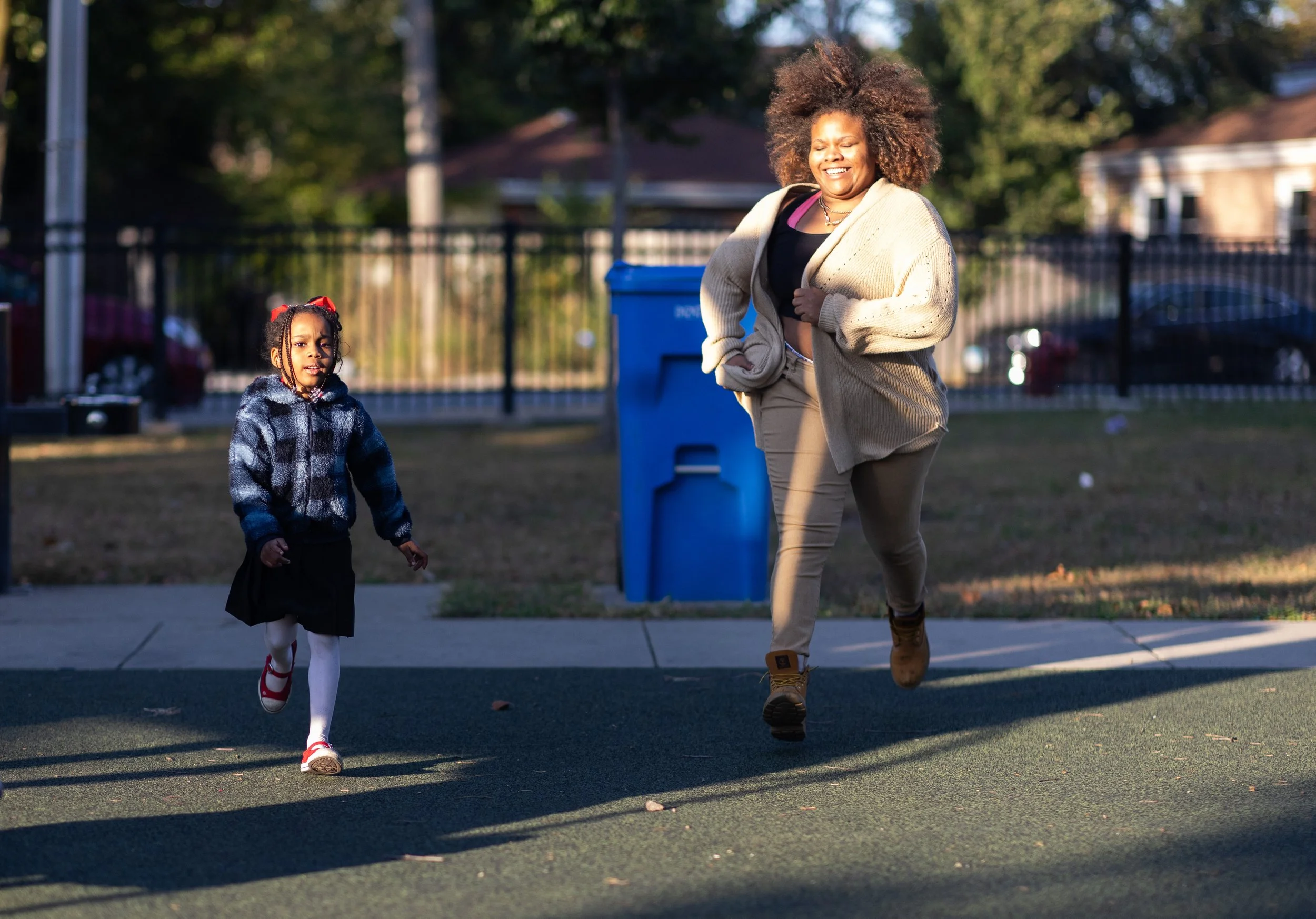
Jonquil McCray races her daughter, Jīovanni, around a playground at Rosemblum Park in Chicago’s South Shore neighborhood on Thursday, Oct. 16, 2025. (Talia Sprague/for City Bureau)
‘Once I started to understand community … I felt supported’
Griffin and her friend from high school were pregnant at the same time, delivering their babies just two days apart. Going through that experience together helped her feel understood, she said.
She was proactive about preparing for parenthood, but looking back, there was a disconnect between the physical and mental reality. She had no major physical complications during and after childbirth.
“I try to persevere and be resilient,” she said. “Right after I had my baby, I didn’t really feel like I had had a baby. It’s me already having that mindset going in — I kind of force myself to be OK. I was moving around, doing stuff, cleaning up. You don’t feel like you just had a baby, but on some spiritual, emotional and mental type of time, I needed that rest.”
Mental health conditions including anxiety and depression are the most common mental health issues parents face before, during and after childbirth, affecting hundreds of thousands of pregnant people in the United States each year, according to the Maternal Mental Health Leadership Alliance. Depression significantly affects low-income women of color.
More research in the past decade has focused on the effect on postpartum parents. In 2020, 63% of pregnancy-related deaths occurred in the year after parents gave birth. Overdoses and suicide are the leading causes of death for birthing parents during that period. Sometimes called “therapeutic orphans,” at least 75% of pregnant people who have mental health issues never receive care. What treatment there is often occurs after a pregnancy, even though prenatal mental health care can reduce the risk of postpartum anxiety and depression.
Griffin struggled with postpartum depression. Even if she had known at the time that she had needed more rest, Griffin lacked an emotionally supportive community that could have helped. She began experiencing suicidal ideations.
“A mom was born [when I had her], and I wasn't allowing myself time to sit in that,” Griffin said. “My child's father was working, and I was at home with the baby. My mom hadn't met my baby; I was alone. Things got pretty dark. I was trying to persevere through that, like, don’t let this consume you.”
Finding community has been a huge factor in improving Griffin’s mental health, she said. Beyond her family, her support structure included friends, neighbors, online groups, and fellow parents. Having other parents around — not necessarily to help but simply to be present — makes a big difference.
Now that her daughter is 2, Griffin said she “feels like a person again.” She is in a better mental space and continues to heal from those early days of motherhood.
“I feel like community really changed the game for me,” Griffin said. “Once I really started to understand community, and I started to build a community, I felt more supported than I did when I first had my baby. I came in contact with some really dope people that were helpful and loving.”
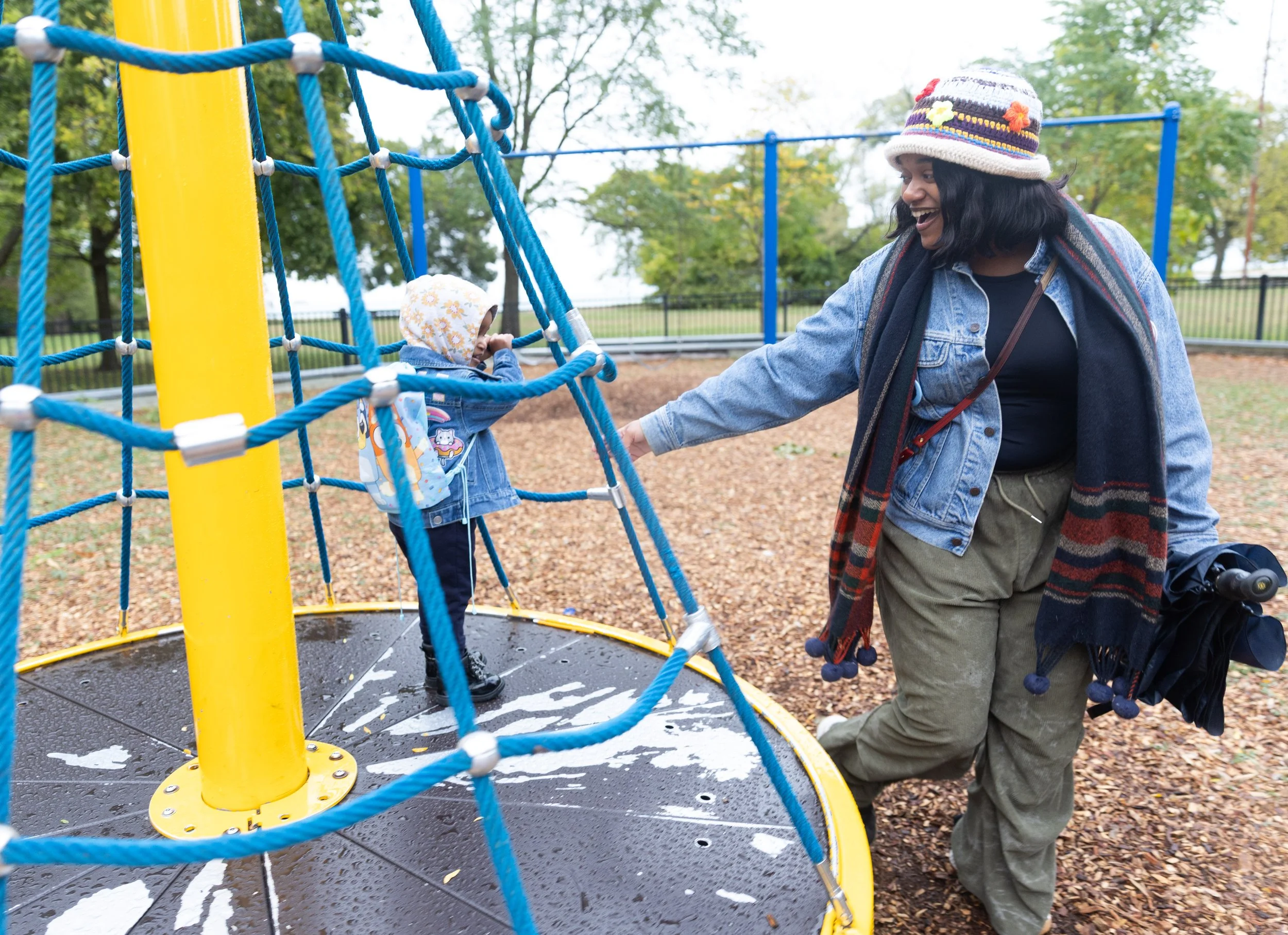
Medina Griffin spins her daughter, Rumi, around on a playground turntable at Rainbow Beach in Chicago’s South Shore neighborhood on Tuesday, Oct. 21, 2025. (Talia Sprague/for City Bureau)
Community also made the difference for McCray, a single mom, as she looked for a home for her and her daughter, now 5.
She wanted an affordable two-bedroom apartment so she and her daughter could have their own spaces — she envisioned a winter wonderland theme for the little girl’s room. But finding housing has been “so very difficult,” so she stayed with family and friends while she looked for her own place. She also crowdfunded to make ends meet. This all helped her save the money for the right home.
Still, finding the right space was challenging. Section 8 and public housing wasn’t feasible because of the long waitlists. In other cases, people were reluctant to rent to a young parent.
“I've tried applying to some apartments, and then they find out you have a kid, and they’re like, ‘I don't know,’” McCray said.
Ultimately she made some traction going through private landlords instead of apartment complexes. She credits a former girlfriend for taking the lead, connecting her with a real estate agent and setting up parallel apartment viewings.
“Community definitely helped, because ... I literally just used the same Realtor that she had,” McCray said.
New mothers like McCray are not only dealing with challenges like postpartum issues that can last “through toddlerhood,” but some are also still coming of age themselves, she said.
“I was literally 18 [and] popping out a baby,” McCray said. “I wish more resources within housing for young moms also provided mental health facilities. I wish there was more access for more moms ... We just need more community. People need to be softer to new moms.”
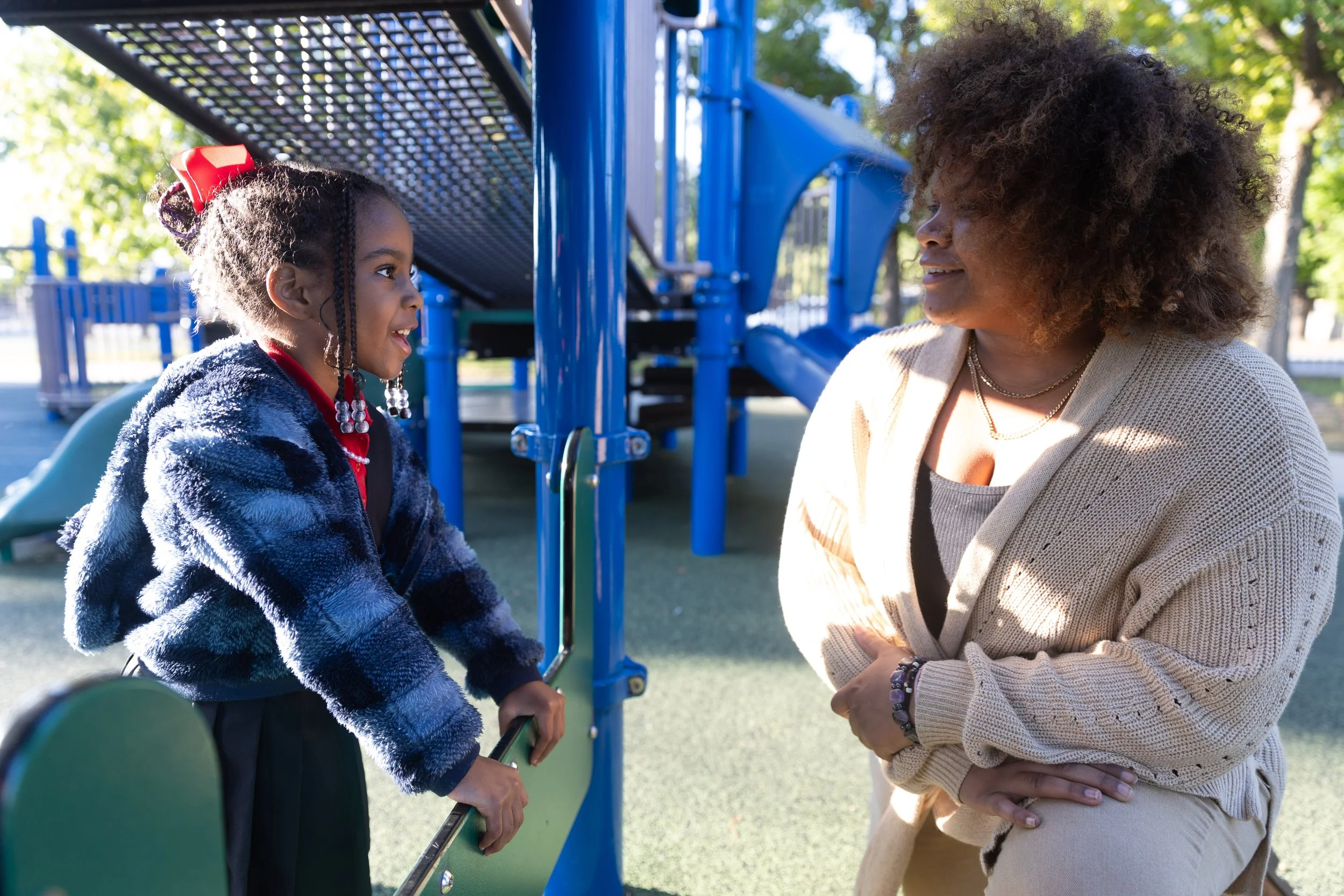
Jonquil McCray and her daughter, Jīovanni, play “drive-thru” on a playground at Rosemblum Park in Chicago’s South Shore neighborhood on Thursday, Oct. 16, 2025. (Talia Sprague/for City Bureau)
McCray’s experience is not unusual among young parents.
In interviews with leaders of housing organizations, University of Illinois Chicago researchers found that the majority of them offered services that did not meet the housing needs of their clients. Only half the groups surveyed had support programs specifically for pregnant and postpartum people, according to a 2024 report.
For parents and pregnant people, 84% of the 25 people interviewed said navigating the housing system and homelessness resources were the most frequently cited barriers to finding stable housing. Some of the most common factors that led to those parents and pregnant people struggling with housing included their pregnancy causing conflict, clashing with family members, losing a job or fleeing abuse. Doubling up, frequently moving around and alternating among different housing also is common, the report states.
Young parents need more housing programs to meet their needs, particularly when they are pregnant or postpartum, researchers say. They also need support or wraparound services that may reduce their risks for homelessness and improve health outcomes, such as education and employment, substance use treatment and health care, counseling and benefits programs.
“They [mothers] need an environment for their child that’s not only safe, but that’s also going to promote good child development,” said Amy Dworsky, a Chapin Hall senior research fellow.
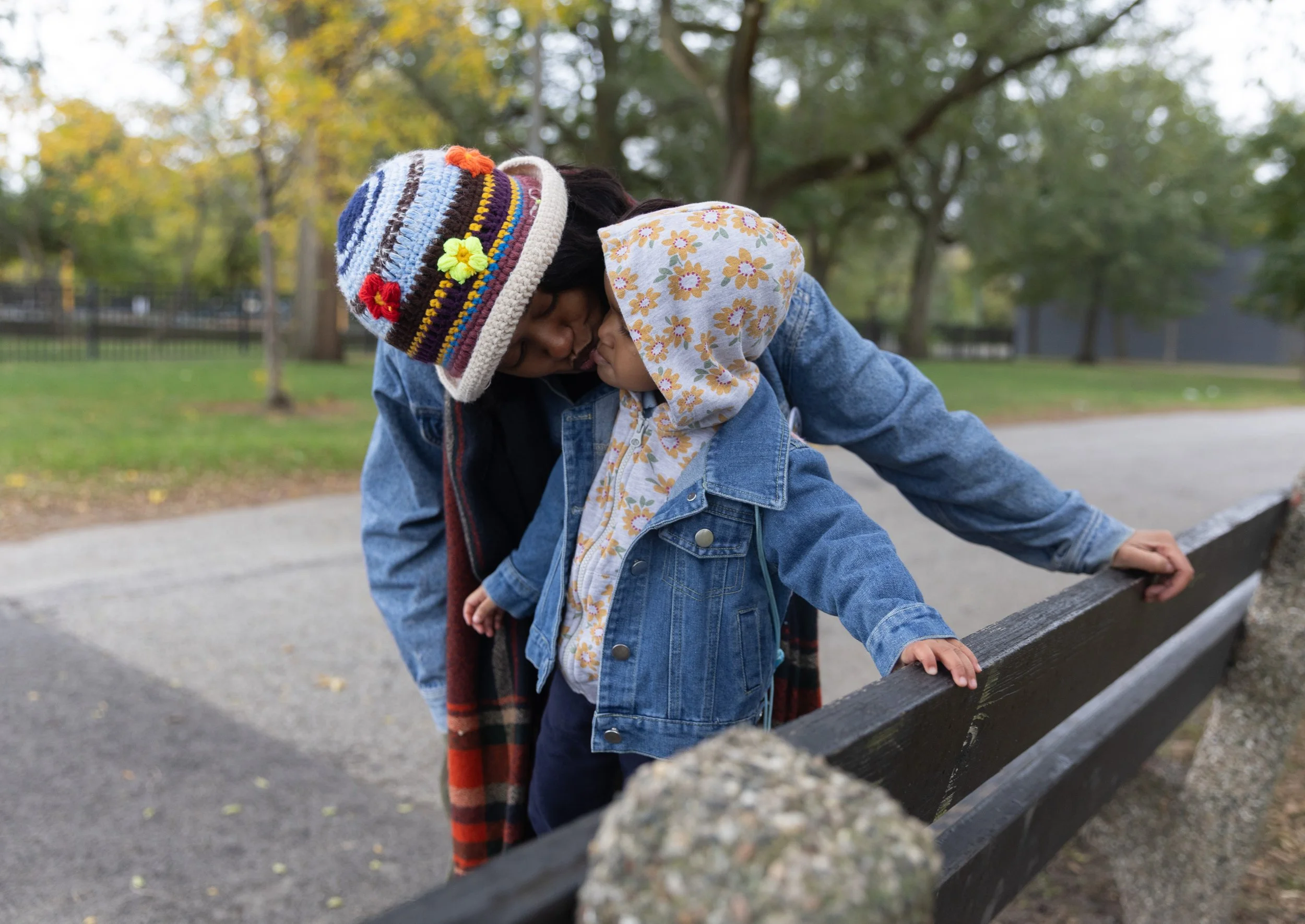
Medina Griffin kisses her daughter, Rumi, while on a walk at Rainbow Beach. (Talia Sprague/for City Bureau)
‘She just asked me what I needed’
Some groups are stepping up to provide essential resources and community support to help young parents.
Nita Tennyson launched Nita’s Love Train in mid-2020, providing mutual aid in the thick of the COVID-19 lockdown.
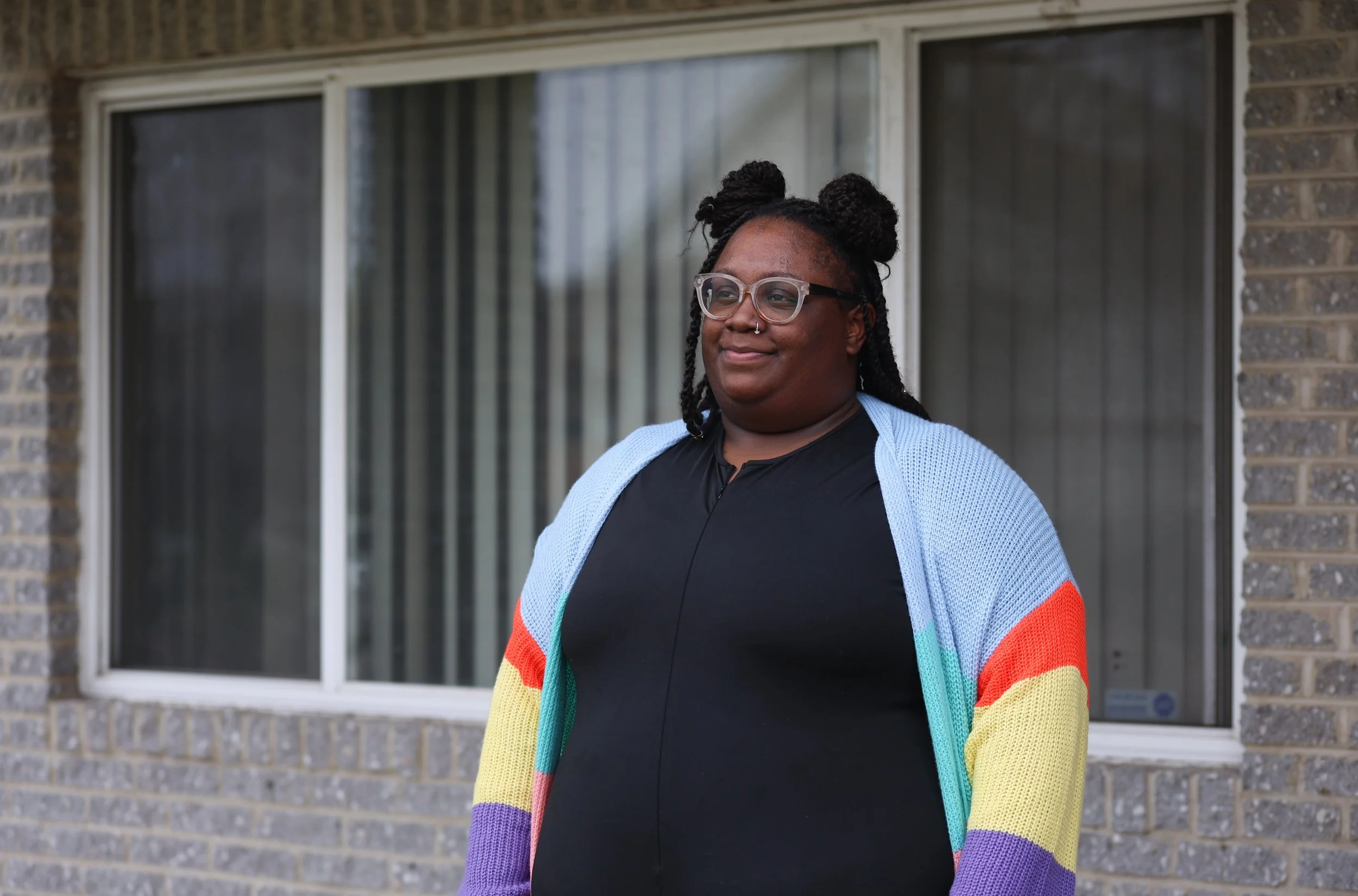
Nita Tennyson poses for a portrait prior to Nita’s Love Train in Calumet City on Saturday, April 19, 2025. (Talia Sprague/for City Bureau)
The Love Train provides donated baby essentials, hygiene products, household supplies and more through pop-ups and contactless “love deliveries” to Black and brown parents and families around Chicago. The organization also collects financial donations called Love Funds to help struggling parents pay for living expenses, groceries, or other essential needs.
The Love Train takes a direct approach to helping families; parents can DM Tennyson on X or Instagram to explain their current needs.
As a mother to a toddler, Tennyson understands the obstacles of finding work and housing. Many who receive support are single-parent families.
“A lot of people [who] receive help from the Love Train are people that are very humble, so you wouldn't even expect them to need that type of help,” Tennyson said. “I try to help them find resources if I can't help them, but even with the love deliveries, at least for [a little while], you’re covered with baby stuff, so you don't have to worry about it for that week.”
Miracle Boyd, a prominent local organizer, partnered with Nita’s Love Train for years in their previous role at GoodKidsMadCity. Boyd then turned to Tennyson for a newborn Love Delivery during her own pregnancy.
“She had delivered items to my doorstep for my little one, and so it didn't take much time at all,” Boyd said. “There was no specific process. She just asked me what I needed, and she delivered those items and more. She is always so giving and helpful toward the community of moms and fathers. She doesn’t just help single parents.”
Boyd has seen Nita’s Love Train grow drastically over the years, going from having minimal supplies available to having “a ton” of supplies to give out, and as community members show up for her through donations.
“I feel like that speaks to her importance in the community. I hope that she gets some type of funding so that she can do this work for longer,” Boyd said.
Tennyson is working to secure nonprofit status for Nita's Love Train, which will allow the organization to apply for grants, expand its reach and potentially rent a space to create a community resource center.
If she could advise funders who might want to support young mothers, Tennyson said money to help with rent and housing costs would be a great place to invest.
“If I don't pay my rent, me and my baby have nowhere to go,” she said. “That’s something that people really need support with that I don't think people understand.”
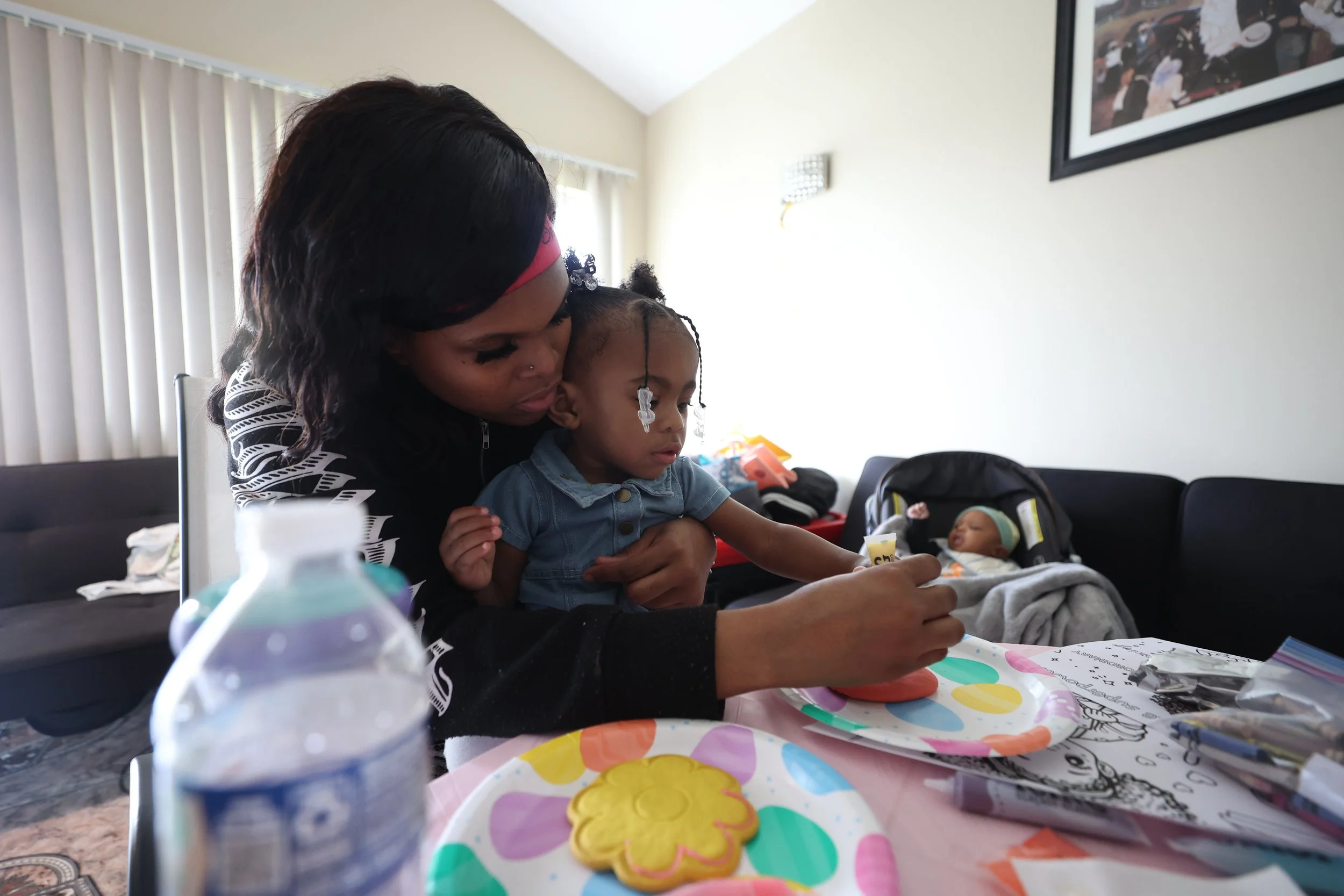
Perisha Madlock, age 24, and Pre”Asia Dennis, age 1, frost Easter egg cookies during Nita’s Love Train Easter event in Calumet City on Saturday, April 19, 2025. (Talia Sprague/for City Bureau)
New Moms, based in the Austin neighborhood, helps mothers 24 and younger navigate and thrive in motherhood through job training, housing resources, mental health support and more, all with the goal of offering paths to stability and success.
Melanie Garrett, chief program officer, said the organization’s objective is “reminding moms that they do matter.” New Moms provides therapy services for families to support crucial mental wellness, she said.
The group’s behavioral health team is composed of three therapists: two who provide one-on-one therapy for mothers, and a third who focuses on parent and child therapy.
That support gives new parents better skills to cope with the challenges of parenting, manage stress and better connect with their children, Griffin said.
“[With] the parent-child therapy, that's really about supporting parents and building good, positive relationships with their children,” Garrett said. “Learning how to manage those challenging behaviors that all kids have. [Navigating] that social-emotional regulation as a parent, it’s so hard. When we're taking care of ourselves and we're feeling better, it's a lot easier to parent.”
They also are trained in practices such as Eye Movement Desensitization and Reprocessing therapy (EMDR), a psychotherapy technique designed to help individuals process and reduce the emotional impact of traumatic memories. Earlier this year, New Moms also began hosting a psychiatrist from Rush University Medical Center twice a month for crucial on-site assessments and medication management.
Despite the daunting financial and logistical challenges they face, young mothers like Griffin, McCray, Boyd and Tennyson are finding innovative ways to navigate the system, relying on both community and their own resilience to forge a more stable future for themselves and their children.
“It’s really just community. It helps so much with growing your career, trying to find housing, trying to take care of your mental health,” McCray said. “[But it can also] lift your spirits and get you to better places in life for you and your child.”
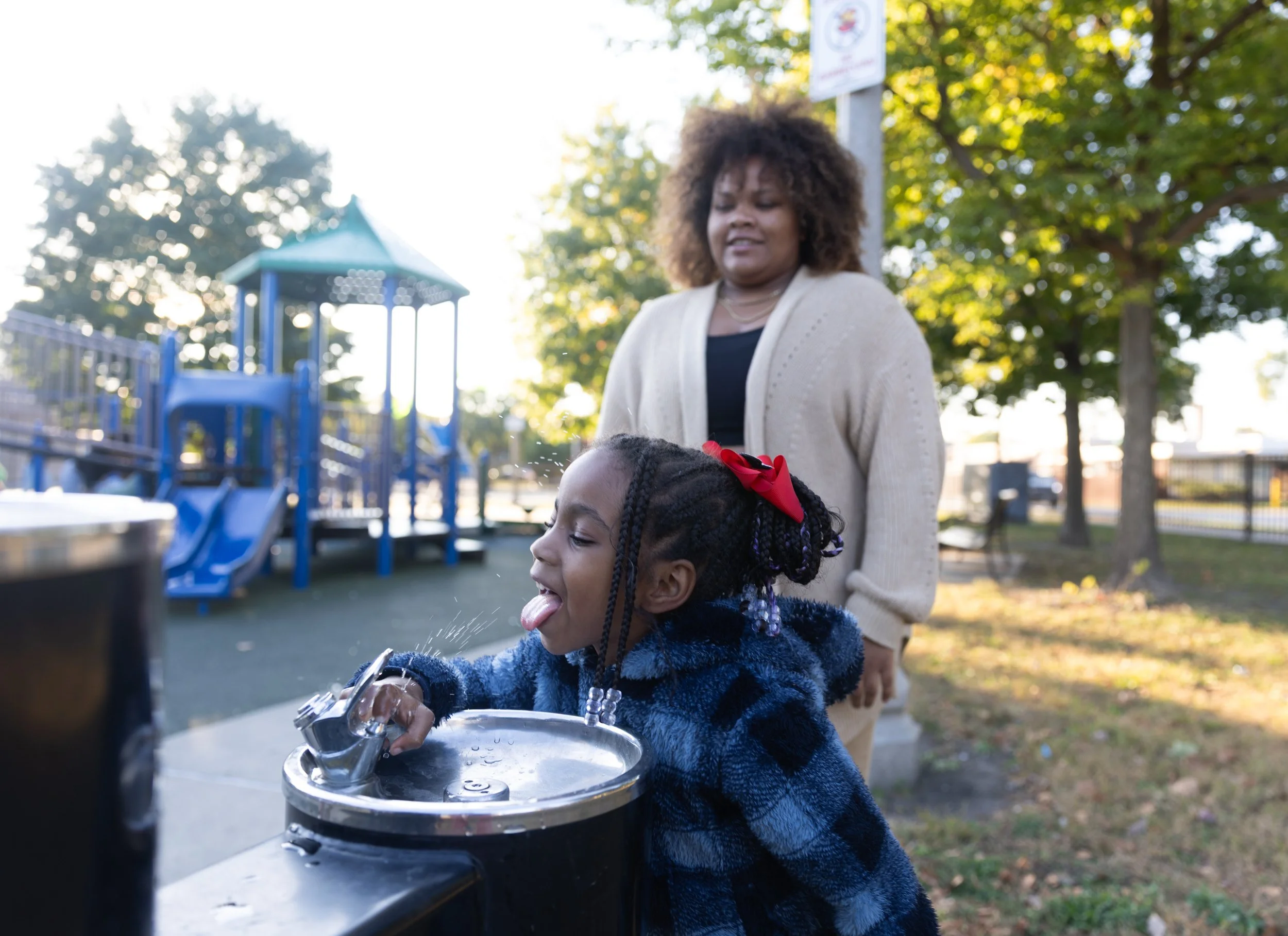
Jonquil McCray watches as her daughter, Jīovanni, attempts to drink from a water fountain at a playground at Rosenblum Park in Chicago’s South Shore neighborhood on Thursday, Oct. 16, 2025. (Talia Sprague/for City Bureau)
Resource list
If you or a young mom in your life needs support, check out City Bureau’s database of birth resources in Chicago. There you’ll find birth workers, mental health and maternal health service providers, many of whom focus on the unique needs of Black and Brown parents. This database was created as part of The Cord, a 2019 City Bureau project tackling issues of racial inequity in maternal and infant health and telling stories of community solutions and resilience.
In addition to New Moms, other local programs that offer housing support and referrals for women and parents include:
The Night Ministry — The Wicker Park-based nonprofit provides homelessness intervention, emergency shelter and more for teens and young adults. Its Parenting with Purpose Program offers young mothers and their children a safe, stable housing environment for up to two years. 773-784-9000 or check its website.
Sarah’s Circle — The Uptown-based nonprofit offers trauma-informed housing support to women over 18 with an aim to end homelessness among women. Check its website on how to ask for help.
Housing Opportunities for Women — The Rogers Park-based organization operates 62 units of housing throughout the city, using a housing-first model to focus on homelessness prevention, affordable supportive housing and wraparound services. The organization received referrals through the outside partners. Find out more here.
The Chicago Coalition to End Homelessness also offers tips and guidance for where to find housing support.
Amaris Edwards is a freelance journalist. A South Sider, Edwards performed as part of Louder Than a Bomb, Young Chicago Authors’ youth poetry slam, before attending Columbia College Chicago. They participated in City Bureau’s Civic Reporting Fellowship in Winter 2025.