
Welcome to Newswire — your weekly guide to Chicago government, civic action and what action we can take to make our city great, featuring public meeting coverage by City Bureau’s Documenters.
Quote/Term of the Week
ARPA / noun
The American Rescue Plan Act of 2021 — ARPA — helped to prop up municipal budgets during the COVID-19 pandemic, providing state and local governments with $350 billion in funding. The final deadline to spend allocated ARPA money before it is lost is Dec. 31, leaving municipal governments with a significant gap in funding.
Ex: Local governments used ARPA money to cover expenses such as infrastructure investments, salaries for essential workers and other economic recovery.
Have you made a public comment at an Illinois Commerce Commission meeting (either online or in-person) after reading Newswire? If so, let us know! Email grace@citybureau.org with your story.
Perfect Storm
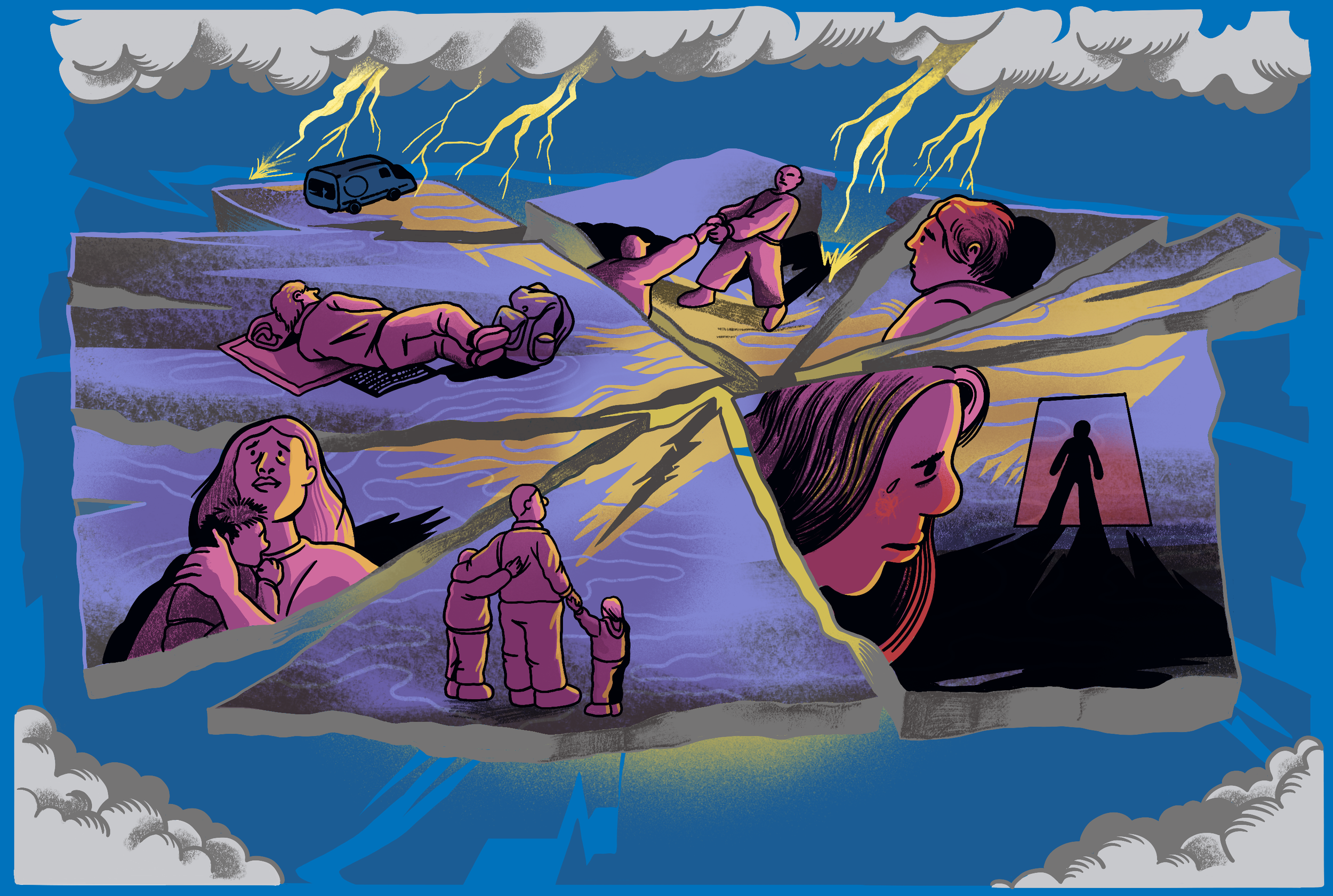
The federal funding fallout is showing up in programs meant to keep communities safe. (David Alvarado/City Bureau)
Introducing “Perfect Storm,” a series focused on how federal funding instability is affecting local communities, produced by City Bureau in partnership with local organizations in the Documenters Network. It looks at how communities across the United States — big and small, rural and urban — are reckoning with slashes to federal budgets, the sunsetting of COVID-era grants, and turbulent legal challenges leaving funding in limbo.
Cities that built their safety nets on federal money. Now it’s leaving all at once.
When major events unfold in the Twin Cities, a parallel version often plays out at the Hennepin County Medical Center.
The sprawling facility in downtown Minneapolis spanning six city blocks is the area’s largest safety-net hospital and busiest provider of critical trauma care. HCMC is where measles outbreaks, COVID-19 surges, low-income patients and mass casualty events like last year’s Annunciation school shooting merge, said Jeremy Olson-Ehlert, a 13-year veteran nurse and member of the nurse’s union.
The hospital is so busy on some days, nurses have to shuffle patients in what he described as a “musical beds” arrangement.
“A lot of the issues stem from: People can’t afford healthcare. So where do they go? They go to us,” Olson-Ehlert says.
But despite the demand for services, HCMC has been gripped by fears of aggressive downsizing, or even outright closure. The hospital’s costs for providing care to low-income patients are soaring — and increasingly going uncompensated by the federal government.
And Minneapolis isn’t alone. — Story by Kim Bellware, co-published with Next City
Funding cuts leave Chicago’s domestic violence survivors stranded
For months, Avery awoke to his roommate screaming and trying to yank his bedroom door open.
If the 26-year-old tried to use the kitchen or bathroom in their apartment, his roommate would yell and throw things at him. If he ever left his bedroom door unlocked, his roommate would go in.
“It literally sounded like he was trying to break my door down,” Avery said, who is using a pseudonym due to concerns of online harassment. “The landlord didn't care, so I learned to start skipping meals. I learned to not go to the bathroom as much.”
Avery sought out shelter space to escape the violence, but most service providers and hotlines told him they couldn’t help him or he wasn’t eligible. As a transmasculine person experiencing abuse from someone he wasn’t in an intimate relationship with, domestic violence shelters didn’t have a place for him.
And even if he were eligible, Chicago has a dire shortage of beds in its network of city and nonprofit-run domestic violence shelters. For nearly half of 2025 — 157 days — there were no available beds or cribs in the city, according to a report from The Network, an advocacy nonprofit. — Story by Sophia Kalakailo
Federal cuts threaten ‘gold standard’ of Chicago homeless services
Thomas Wilkins remembers wasting away.
A homeless man in his late 30s, Wilkins was managing a chronic illness and a drug addiction, while unable to access his necessary HIV medication. He said he eventually got diagnosed with wasting syndrome. He would get some help here and there — $80 a month from a health and housing program was a vital asset. But it wasn’t enough to alter his situation, he said.
“I was living in the park, didn’t have [anywhere] to take my meds, couldn’t feed myself,” he said.
That changed when he was accepted into a permanent supportive housing program through AIDS Foundation Chicago.
“This program truly saved my life,” he said.
But as the Trump administration fights to cut funding — despite continuing blocks by federal judges — for the sort of evidence-based, housing-first programs that gave Wilkins that stability, he and thousands like him risk facing evictions and housing insecurity once more. — Story by Jerrel Floyd
A version of this story was first published in the October 21, 2026 issue of the Newswire, an email newsletter that is your weekly guide to Chicago government, civic action and what we can do to make our city great. You can sign up for the weekly newsletter here.
Have thoughts on what you'd like to see in this feature? Email Civic Editor Dawn Rhodes at dawn@citybureau.org.