It is a key political buzzword, but it can mean very different things. Margaret M. C. Thomas, a University of Chicago assistant professor, says residents should push for specifics when local leaders discuss this issue.
By Carolina Baldin
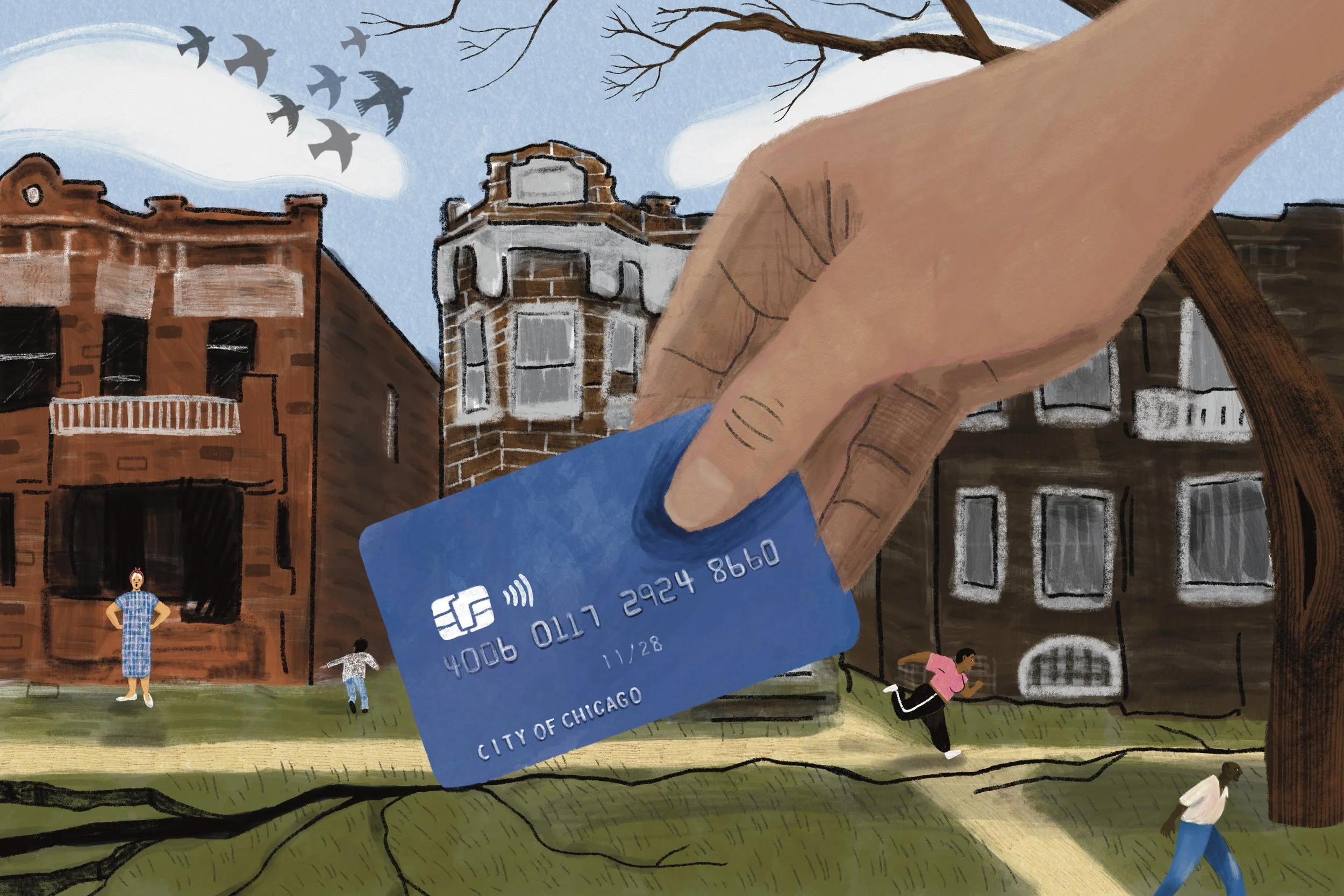
Chicago’s affordability crisis impacts residents in many ways. Meanwhile, our city is deep in debt and local leaders are clashing on spending and how to generate more revenue. (Gaby FeBland/for City Bureau)
Chicago Documenters notes from Fabienne Elie, Ava Grubb, Katrina Herring, Ayanna Israel, Zara Norman and Gillian Waldo were used to help report this story. Find more public meeting coverage at Documenters.org.
Affordability — or the lack of it — is a hot button topic in Chicago. But what does it mean and how does it affect how our city spends and makes money?
The word, or some variation of it, was consistently mentioned at City Council hearings last fall as officials scrambled to finalize this year’s $16.8 billion budget, close a $1.19 billion budget deficit and adjust for evaporating federal and COVID-era funding. A key sticking point was Mayor Brandon Johnson’s proposed corporate head tax, part of his strategy to push large companies to pay more to support community programs. That proposal failed as alders argued it would threaten jobs, although a WBEZ analysis found little evidence of that.
Johnson and his team called the alder-led budget “morally bankrupt,” saying it shifts more burden onto taxpayers through plans to sell $1 billion in outstanding utility debt, ambulance payments and red-light camera tickets to private collectors. Alders said the plan was necessary to meet ballooning pension obligations, avoid more borrowing, and encourage economic development, particularly downtown.
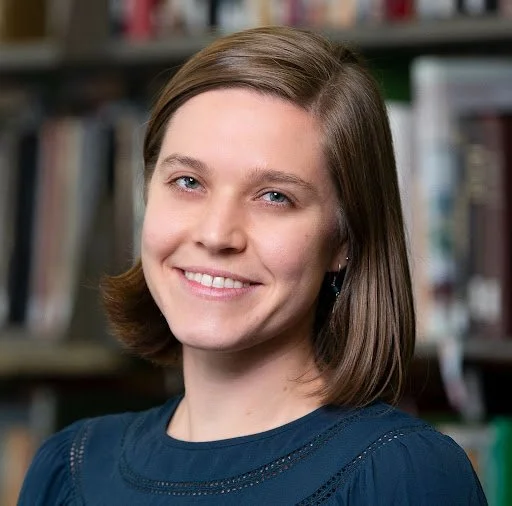
Margaret M. C. Thomas is a University of Chicago professor specializing in material hardship (Photo: Courtesy of Margaret M. C. Thomas)
This debate has played out amid other affordability issues in and beyond Chicago: changing SNAP work requirements and eligibility, rising property taxes and mortgages, dwindling affordable housing, freezing sub-minimum wages for tipped sub-minimum wages for tipped workers, and debating a “millionaire’s tax” in Springfield.
But affordability is an overly broad term, says Margaret Thomas, Ph.D., an assistant professor at the University of Chicago Crown Family School of Social Work, Policy and Practice. Too often, politicians use it “to not have to talk about the specifics.”
“I would encourage people to understand that they're not missing something,” said Thomas, who studies material hardship and poverty. “Affordability isn't some concept they just never learned the definition to and everybody else knows. It's evolving. It's political, it's contextual.”
Thomas spoke to City Bureau about how residents can think about affordability, press elected officials to define what they really mean by it, and hold them accountable.
This interview has been condensed and edited for length and clarity.
What makes affordability so relevant in Chicago right now?
I think affordability is so salient right now because it has been picked up and foregrounded by both politicians and the media. It's really a catch-all for a lot of economic concerns people have both in Chicago and around the country.
It’s been quite evident that the affordability term is being used in two main ways. One is basic needs, like the price of gas and groceries. But a lot of polling actually suggests that when you talk to Americans, in general they're thinking more about the overall cost of living [and] affordability in terms of middle class norms: the cost of [a] mortgage, child care or higher education. Those are two fairly different categories of need.
What would make conversations about affordability clearer and more accessible?
When somebody says they're talking about affordability, I would encourage people to probe that, to try to figure out what they mean by it, to ask questions, to try to understand what it's being applied to.
If the mayor gives a speech about affordability, and the things he emphasizes are property taxes and the price of gas, what is being covered here? Does it address the kinds of economic concerns you as a citizen or a resident or a consumer have?
We all bring different priorities and needs. If your basic concern is you're going to lose Medicare and or Medicaid and SNAP because of the changes happening at the federal level, and you're concerned about putting food on the table, maybe the speech about affordability that really means property tax increases doesn't matter all that much to you. Or maybe it does, because the home you own is your biggest resource, and having to pay twice as much taxes as you anticipated is actually the thing that's going to keep you from being able to cover that gap in food.
Why is it important to ask for specifics?
If residents aren’t hearing specifics, they can’t know what’s likely to happen that might impact the things they care about in terms of affordability.
Asking what, specifically, a leader or organization proposes to do to impact X or Y issue is likely to give them better information to make decisions about or to push their leaders on.
How can residents do that?
One basic suggestion I’d offer is for residents to organize together and to draw on community organizations which may have more established skills and strategies to communicate with political and community leaders.
Is there anything that gives you hope about what the city is doing when it comes to meeting basic needs or affordability?
Things I've heard suggest that the city and the county are paying a lot of attention to some of the potential challenges that folks are going to face, including changes to some of the federally regulated social assistance programs that are coming. [They are] trying to be as proactive as possible to help people demonstrate their eligibility for SNAP and Medicaid when new work requirements are implemented. I've done some work around guaranteed income, and I'm really enthusiastic about the county intending to pursue extensions of their guaranteed income pilots. That's really promising.
These are structural problems, these are systemic issues, and government or organized responses are the solution to that. I certainly feel hopeful about the continued organizing that we see within and among communities to support members meeting their basic needs.
Carolina Baldin is a freelance journalist in Chicago. Born and raised in the São Paulo, Brazil, area, she earned her law degree from Mackenzie Presbyterian University in her hometown before switching to journalism. She earned her master’s in magazine journalism from Northwestern University in 2023 and was a Winter 2026 Civic Reporting Fellow focusing on the city budget.
Support our Civic Reporting Fellowship and Documenters programs by becoming a recurring donor.