Do you owe money for parking tickets and other unpaid fines? Here’s what to know about Chicago’s debt sale, debt relief programs, and how to spot a debt scam.
by Grace Del Vecchio, Jerrel Floyd and Sophia Kalakailo
About this guide
The City of Chicago is selling debt residents and visitors owe for municipal fines and fees to a private debt collector as a way to help cover its 2026 budget gap.
While owing money for traffic tickets or water bills might not be biggest portion of debt many of us are facing — debt for student loans, credit cards and medical bills are often what hit us hardest — our city-owned debt is about to undergo some urgent changes. It’s also something our elected officials are making decisions about in real time.
We hope this guide can help you manage that and get a better understanding of how the city handles this debt.
Who are we?
City Bureau is a nonprofit civic media lab based in Bronzeville. For the past 10 years, we’ve been creating journalism resources for Chicagoans as they navigate issues such as migrant labor rights, modern-day redlining, and maternal health. For more information about our work, visit citybureau.org or find us @city_bureau on Instagram.
Navigation links
Skip to: Getting Rid of Debt | City Debt Sale | Spotting Debt Scams
Common issues: Will the city boot my vehicle? | Low-income relief programs | Financial abuse or coerced debt | Immigration concerns
Resource List
Legal assistance
Illinois Legal Aid Online: Free legal aid 24/7/365, in English and Spanish, with online tools available outside of office hours to help with crises such as eviction, debt, food insecurity, domestic abuse, deportation and divorce.
Cook County Legal Aid: Free legal assistance for residents — regardless of income, language or immigration status — facing housing issues such as eviction or foreclosure; and debt challenges related to consumer debt or past-due property taxes.
Ascend Justice: Supports people affected by gender-based violence or the child welfare system through a range of legal and advocacy support services that include help with disputing debt with a collector, limiting collector contact, bankruptcy referrals and other debt-related services.
The National Association of Consumer Advocates: Use this nonprofit’s attorney finder to search for consumer lawyers with experience in bankruptcy, problems with debt collectors, wage and bank garnishment, and debt reduction scams.
Handling your debt
City of Chicago Payment Portal: Look up what you owe the city and make payments.
AnnualCreditReport.com: Run a free credit report to see what debts have been reported, or print out a mail-in request for a physical copy.
Debt Help Illinois: A free nonprofit service from Illinois Legal Aid Online and Working Credit where residents can get information on legal help, tools and guidance for managing consumer debt.
Debt scams
Federal Trade Commission Consumer Advice: Find information on how to identify and report fake and abusive debt collectors.
Illinois Attorney General’s Office: Get consumer protection resources on topics including common scams, predatory lending, legal assistance referrals, student loan forgiveness and how to file a consumer complaint if you might be involved in a debt settlement scam.
Illinois Department of Financial and Professional Regulation: Provides a list of authorized debt collectors in the state and forms for filing a statement of coerced debt.
Helpful laws
Illinois laws include the Debt Settlement Consumer Protection Act, and the Credit Repair Services Organization Act, which were created to protect consumers who enter into agreements with debt settlement and credit repair providers and to regulate debt settlement providers.
The Fair Debt Collection Practices Act is a federal law that protects consumers from unfair practices by third-party debt collectors.
Read more about your consumer rights from Illinois Legal Aid.
Getting Rid of Debt
I got a letter, call or email about owed debt or realized I might owe the city money. What should I do?
The most common mistake with debt is ignoring it. One of the first things to do is to get an understanding of the debt you have:
Do I have debt with the city?
You can look up if you have outstanding non-medical debt on the City of Chicago Payment Portal (chipay.chicago.gov). Such debt could include:
parking, red light camera or automated speed enforcement tickets
utility bills (water, sewer and garbage, and water-sewer tax)
administrative hearing fines — a large category of debt that can range from police-issued tickets for vandalism to building code violations
You’ll need information such as the ticket number, license plate, driver’s license or notice number to look up vehicular debt. For utility bills, you need your account number and ZIP code.
How do I pay off debt I owe to the city?
In addition to looking up debt, Chicago’s online payment portal allows you to pay what you owe.
What if I can’t afford to pay?
Chicago offers relief programs for vehicle, utility and administrative hearing debt. You qualify if your household income is less than 300% of the Federal Poverty Guidelines, which is $47,880 per year ($3,990 monthly) for a single person, or $99,000 ($8,250 monthly) for a family of four as of 2026. If you’ve been accepted into any of the city’s three programs, you are eligible for the others.
Clear Path Relief program
What you have to do: Pay off original fine amounts for traffic tickets received within the past three years, plus a minimum down payment of at least $25 and a portion of the impounded vehicle fees if your car is currently impounded.
What it does: Waives older eligible vehicle debt, which includes fines for speeding, running red lights, non-metered parking (like zone parking violations) and compliance (like not having a city sticker or current license plate)
IMPORTANT NOTES
Parking meter debt is NOT included in this program. Participants have to either pay off all of their meter ticket debt or enter into a payment plan for it to be eligible for the Clear Path Relief program.
You can only sign up for this program once, and any new debt after you join is not eligible for relief.
Residents can apply online on the city’s website.
Utility Billing Relief
What you have to do: Manage reduced-rate water and sewer bills with no past-due balance for one year.
What it does: Forgives remaining debt from past water and sewer bills and taxes
Residents can apply online on the city’s website. For questions, call 312-744-4426.
Administrative Debt Relief
What you have to do: Complete a payment plan, with a minimum down payment of $25, or pay 50% of the total fines from violations issued by police, Streets and Sanitation, building inspectors or Business Affairs and Consumer Protection.
What it does: Waives additional interest, fees and costs.
Residents can apply online on the city's website.
Is Chicago’s Fresh Start Debt Relief program an option for me?
You are only eligible for the Fresh Start Debt Relief program if you are a Chicago resident who has acquired Chapter 7 bankruptcy discharge. (Note that Chapter 7 bankruptcy, known as “straight” or “liquidation” bankruptcy, is different from other types, such as Chapter 13 “wage earner’s” bankruptcy.)
Filing for bankruptcy can be a complicated process, and it’s best to consult an expert for guidance. A legal aid organization should be able to guide you through the required steps (see above for a list of local legal aid organizations).
For those who are eligible, the Fresh Start program requires participants to only pay the base fine for parking, compliance, camera and standing tickets. All penalties and fines on the tickets will be waived after completing the plan.
How does the city collect debt?
The city tries to get people to pay what they owe by sending letters, emails and text messages; or pursuing court judgments, which can result in wage garnishment, bank account garnishment and the seizure of personal property and some real estate.
If you don’t pay within a certain time period, the enforcement escalates. The city might boot your vehicle (also known as vehicle immobilization) or deny you employment opportunities, licenses or permits after running a debt check. These are called “unique enforcement mechanisms,” and the city can only use them on debts it owns.
Outside law firms also act as collections agencies. When bills go unpaid, the Department of Finance sends your information to a city-contracted collection agency, which then mails a notice of collections to the person owing money. This can eventually affect your credit score.
The type of debt determines when your debt is referred to collections agencies. For vehicle debt:
The pay-by or contest-by date is 21 days after you are notified of the violation
After another 25 days, your unpaid ticket takes on “final determination” status. These tickets can count toward the three unpaid violations it takes for your car to be booted.
90 days after final determination, your debt is referred to a collection agency.
Unpaid water and sewer bills water and sewer bills are referred to collection agencies after 90 days for inactive accounts if the amount is at least $200, and after one year for active accounts if the amount is at least $1,000.
Late fees range from $0-$110 depending on the type of violation.
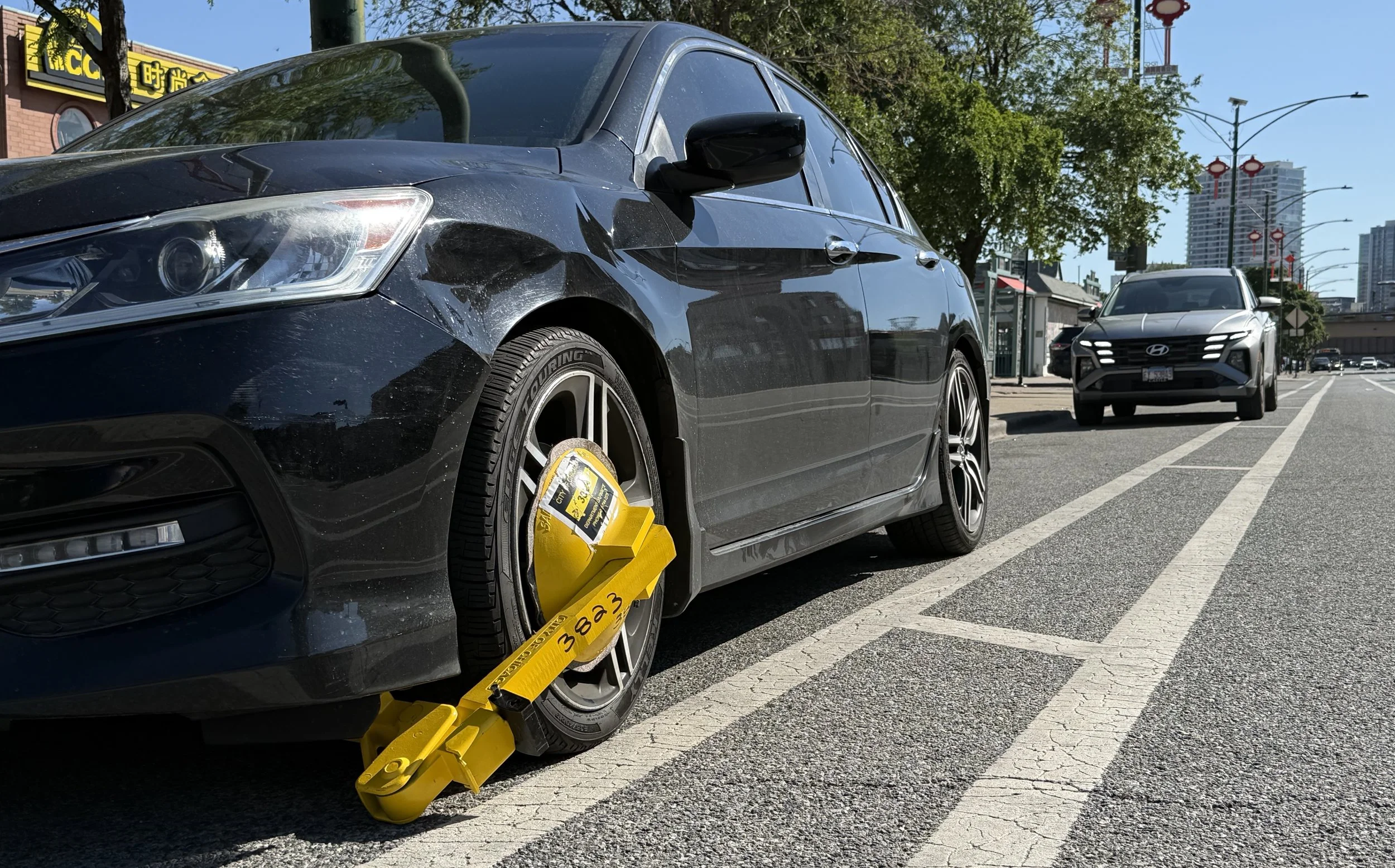
Will the city boot my vehicle? What do I do once it’s booted?
The city can only boot vehicles for debt it owns. If your debt is sold (see below for more on the debt sale), the city will not boot it.
Vehicles can get booted if the registered owner:
has three or more unpaid parking, red light, and/or automated speed enforcement tickets in final determination status — meaning they are 25 days past the pay- or contest-by date
OR has two such unpaid tickets older than one year.
If you don’t pay the debt within 24 hours of booting, the vehicle can be towed to a city auto-pound. Then on top of the boot fee, you’ll have to pay towing and storage fees:
Boot fees include:
A $100 boot fee for passenger vehicles
A $400 boot fee for truck tractors, semi-trailers and trailers
Tow fees include:
A $150 tow fee for passenger vehicles
A $250 tow fee for vehicles over 8,000 pounds
Once your vehicle is towed:
You owe $20 for the first five days a passenger vehicle is stored at a city auto-pound and $35 per day thereafter
For vehicles over 8,000 pounds, it costs $60 for the first five days the vehicle is stored and $100 per day thereafter
Vehicles will remain boot-eligible until all tickets are paid, or you enter into a qualifying payment plan.
A debt collector is suing me. What can I do?
“Don't ignore it. [In] something like 70% of consumer debt cases, the consumer just never shows up, and there’s a default judgment entered,” said Steve Uhrich, a consumer debt solutions product manager with Illinois Legal Aid Online.
A default judgment is declared when the opposing party is absent or inactive, meaning the other party wins by default.
If a person is taken to court over debt, they have the right to go to court and press the debt collector to prove:
They are the legal owner of the debt
They’re suing the correct person and for the correct amount
Fees and interest were calculated accurately
Some of the debt owed to Chicago stretches back over 30 years, and records could easily be incomplete or inaccurate.
If you are a low-income community member, you can reach out to a legal aid organization such as Legal Action Chicago, Illinois Legal Aid Online or CARPLS for support (find contact info in the resource list above).
What does it mean for someone to be considered collection-proof?
People can be considered “collection-proof” if they don’t have any income or assets that a debt collector can claim. But this only applies to consumer debt. That means even a “collection-proof” person has to pay parking fines, criminal judgment debt, alimony, child support, federal taxes and student loans.
Some common types of collection-proof sources of income include:
Unemployment benefits
Military veteran benefits
Social Security benefits
Disability
Public assistance
SNAP
Child support and alimony payments
ILAO has a tool on its website that helps clients draft a debt collector letter they can send to a creditor to inform them of their collection-proof status.
I was a victim of financial abuse, and my abusive partner put a lot of debt in my name and/or coerced me into taking on debt. What can I do?
On Jan. 1, 2026, a new state law went into effect that concludes that a “debtor is not liable for any coerced debt.”
Under the new law, coerced debt is defined as debt “incurred by the debtor because of fraud, duress, intimidation, threat, force, coercion, [or] undue influence.” Victims whose personal information was used by a family member without their permission are also protected.
The requirements include supplying an agency with a Statement of Coerced Debt Form.
With the form, victims are asked to supply at least ONE of the following:
A police report that identifies the coerced debt and explains the circumstances in which the debt was incurred.
A court order declaring the debt to be coerced debt
A written verification form filled out by a qualified third party (i.e., a social worker, therapist, attorney, law enforcement officer, psychologist, medical professional or a clinical professional counselor. A religious leader or a person who provides services for victims and survivors of various forms of abuse also count).
Additional documentation that highlights the debtor is a victim of coerced debt. (This can include orders of protection, text messages, social media posts, emails, letters, applications, etc.)
“That's an easier pathway to dispute this type of debt than having to go through those unknown avenues where you are just arguing and calling,” Yoo said. “This is a clear pathway, and then at that point, the collection agency has to make a determination.”
Legal aid organizations like Ascend Justice can help with these steps. Find more information in our resource list above.
I got fined by the city when someone else was driving my car. What do I do?
Regardless of the driver, the registered vehicle owner is responsible for all violations issued to the vehicle, according to the city. You can call 312-744-7275 to reach the parking ticket helpline for assistance with contesting a ticket and addressing ownership issues.
I am undocumented or have another immigration status I’m worried will be affected by a traffic ticket or debt. What are my rights?
It’s important to note that while minor traffic tickets such as speeding or driving without a license should not affect your immigration case, the Trump administration has increasingly deported people with such convictions — or no convictions at all — according to a 2025 report from The Marshall Project.
The administration also confirmed last year that it stripped some international students of their authorization due to minor infractions like speeding tickets, although it later said it would reverse that decision.
U.S. Immigrations and Customs Enforcement cannot enforce traffic laws in Illinois or arrest people for traffic violations, and Illinois law enforcement generally cannot transfer people into ICE custody, according to ILAO.
If you are arrested during a traffic stop, talk to a lawyer about how that could affect your immigration status. Legal aid organizations like ILAO (listed in our resources above) can help connect you with a lawyer.
In Illinois, you also cannot go to jail for having debt, but a judge could order your arrest if you disobey a court order, such as a required court appearance.
ICE agents have detained several people going to court for administrative hearings related to city tickets and other courthouses, as recently as June. Advocates from organizations like the Street Vendors Association of Chicago and the Illinois Coalition for Immigrant and Refugee Rights have helped move some of these hearings to Zoom.
I have other non-city debt or need additional help — where should I go?
Find more resources for consumer debt in our resource list above.
Do I have debt with a private company?
You can call a company that you think you may owe money directly to confirm the status of what you owe.
Debt experts recommend keeping a file of information sent by a collections agency. If a debt collector is potentially using outreach tactics that could be viewed as harassment, it's best to have a record of it. (See below for more information on debt scams.)
If you haven’t been directly contacted about debt, you can find out if you owe money through a full credit report.
You are entitled to one free credit check annually through one of the three nationwide credit bureaus: Equifax, Experian and TransUnion. The three unions have a centralized website, phone number and mailing address dedicated to requesting free credit reports. You can request yours one of the following ways:
visit AnnualCreditReport.com
call 1-877-322-8228, or
complete the Annual Credit Report Request Form and mail it to:
Annual Credit Report Request Service, P.O. Box 105281, Atlanta, GA 30348-5281
“If you don't recognize [the debt], be quick to challenge that debt both with the credit bureau and with the collection agency that reported that debt,” said Elizabeth Yoo, a senior attorney for economic justice with Ascend Justice, a legal aid organization.
The Illinois Legal Aid Online has some additional information on its website around responding to debt collectors.
Reaching out to a debt collector who shows up on your credit report and inquiring about payment plans is another option. They might offer plans that match your income level.
BEFORE DOING THIS: Double-check the information about what you owe is accurate. It is possible to request debt validation information from a collector.
City Debt Sale
What (and whose) debt are they selling?
Chicago wants to make around $90 million by selling at least $1 billion of outstanding debt to private debt collectors.
Officials are targeting vehicular debt, according to city documents. That includes unpaid fines for parking, speeding and red light camera tickets, and traffic control violations, which account for approximately 28% of the city’s total $8.2 billion debt.
Officials are focusing on older debt, according to the finance department and other city documents. But that could change after its contracted facilitator figures out what debt will be most attractive to buyers.
What happens if they sell my debt?
City-run relief programs would not apply to debt that is sold, as it would no longer be owed to the city, the Department of Finance said.
The methods a third party would use to collect debt can vary. It won’t be clear how collections enforcement will change until there is a buyer. (See above for how the city collects debt currently.)
The city will make sure there are guardrails in place, said Ald. Gilbert Villegas (36th), who championed the debt sale plan during budget season. “What we don’t want is people being harassed,” he said.
However, the Department of Finance said a third-party buyer of the debt may use “any available general debt collection methods to collect as governed by state law.” That includes contacting you by phone, mail and at work — unless they know your employer prohibits it. They can also contact other people to locate you. Agencies can report your debt to credit bureaus, but they have to contact you first.
Collectors can also sue you, which can result in a debt judgement. That opens up the door to possible wage or bank account garnishment and the seizure and sale of personal property and real estate, according to Illinois Legal Aid.
What’s off limits?
The sale cannot include debt from emergency medical services, per an executive order Mayor Brandon Johnson issued in December. That includes $1.5 billion in unpaid ambulance fees.
He also:
Said collections must comply with consumer protection laws
Prohibited harassment, misrepresentation, coercion and intimidation
Ordered clear notice and accessible ways to dispute the debt
Wants collectors to prioritize long-term compliance and resident stability over short-term extraction.
“I will not allow the sale of debt to lead to the use of predatory and immoral tactics against the people of Chicago,” Johnson said in a statement when he issued the order.
Why is the city selling its debt?
As the city stared down a $1 billion projected budget gap for 2026, a coalition of alders put together an alternative budget to oppose the mayor’s proposed corporate head tax and amend other aspects of his original proposal.
The alternative $16.6 billion spending plan passed in late December. It included a shopping bag tax increase, a new retail liquor fee, a small property tax hike and the sale of city debt.
EXPLAINER: As Grocery Costs Increase, So Does the Checkout Bag Tax
Johnson has called the debt sale unfeasible and “immoral.”
City Council was looking for “creative ways” to close the budget gap, Villegas said. The idea of selling outstanding debt came about as one way to avoid further raises to property taxes.
The city already uses private debt collectors. What’s different about the sale?
Current collectors for the city may mail notices and communicate with the debtor, but these agencies ultimately do not own your debt. The city still owns it, controls enforcement and debt relief, and receives the collected money.
These private collectors typically receive 25% of the amounts collected as payment for their services.
Spotting Debt Scams
American households are taking on record-levels of personal debt. In response, debt scams are on the rise. Here’s what you need to know to protect yourself and your loved ones from bad actors.
Data from the Federal Trade Commission shows that debt collection calls rose nearly 200% per capita from 2024 to 2025, with over 400,000 Americans filing complaints last year. Along with that, nearly half of complaints reported in 2025 described the collection enforcement as abusive, threatening or harassing — four times higher than the year prior.
Predatory debt scams can take a variety of forms, but are often scammers posing as debt collectors sending fake bills (For example, a text message falsely claiming you have unpaid highway tolls). But scams can also include dubious credit repair companies that try to charge you high fees to help you negotiate your debt — something you can do yourself — and repair your credit.
As scammers become more sophisticated, it can be tricky to spot scams. Here are ways you can protect yourself, learn how to verify what you owe, identify reputable sources and know your rights.
How can I verify if I owe money?
You don’t have to depend on debt collectors to provide you with information about what money you owe and for what. See above for how to verify what you owe.
If a debt collector contacts me, how do I know if it’s real or a scam?
Consumers have reported aggressive and persistent tactics from scammers. If you are contacted by a debt collector, look out for these red flags:
A debt collector threatens you with criminal charges, or any legal action like an arrest
They refuse to give you information about your debt or is trying to collect a debt you don’t recognize
They refuse to give you a mailing address or phone number
They ask for your personal financial information
An authorized debt collector should not make you feel rushed or that you’ve done something wrong. By law, debt collectors have to tell you the following in writing or over the phone:
the name and mailing address of the debt collector
the name of the creditor you owe money to
how much money you owe, with detail that includes interest, fees, payments and credits
what to do if you don’t think it’s your debt
your debt collection rights, including your right to get information about the original creditor if you ask for it within 30 days of getting validation information from the collector
All debt collection agencies have to be registered through the state. You can see a list of authorized debt collectors on the Illinois Department of Financial and Professional Regulation’s website.
A debt relief company promised to help me get rid of my debt. How do I know it’s legit?
According to debt experts, there is very little profit in helping a person get rid of their debt. If the program isn’t directly connected to a nonprofit, charity or municipal body, experts suggest exercising caution.
Residents are advised to contact the Illinois Attorney General's Office if they feel like they are in a debt settlement scam.
How can I find reliable debt settlement and credit repair sources?
Dealing with debt can feel overwhelming, and scammers know that and attempt to take advantage. Scammers often say you have a problem they can fix for a fee. They will rush you and give you instructions on how to pay them (often with a gift card or cryptocurrency, or through a wire transfer or payment app).
Be cautious when searching for debt settlement assistance, and remember: Someone else should not be getting rich off your debt.
If you receive a call from a random company offering you assistance with lowering your debt or increasing your credit score for a small fee, say no thank you and hang up. If faced with one of these calls:
don’t share any personal or financial information
never pay upfront for any services
don’t rush
There are often resources available that don’t require a middle man to assist you. Chicago and other municipalities offer various debt relief programs. You can call private companies directly to negotiate payment options and even negotiate down your debt.
However, if you are looking to get help from a credit counselor, here are questions you should ask any potential candidates:
What will you do to help me?
How much will I have to pay?
Do you have free education and information?
Are you licensed to work in Illinois?
Any reputable organization should send you free information about services. You can look up organizations that you’re considering on the Illinois Attorney General’s website.
Green flags for a reputable organization include:
does not charge you in advance for help it hasn’t given yet
has credit counselors who are accredited or certified by an outside organization
offers a range of services, including budget counseling, debt management classes, and free educational materials
will give you a specific quote in writing for any one-time or monthly fees
will help you even if you can’t afford the fees or contributions
Get more information about what to watch out for when getting financial assistance from the FTC.
Know Your Rights
There are federal and state laws in place that prohibit debt collectors and scammers from predatory actions and protect your rights as a consumer. Illinois laws include the Debt Settlement Consumer Protection Act, and the Credit Repair Services Organization Act, which were created to protect consumers who enter into agreements with debt settlement and credit repair providers and to regulate debt settlement providers.
The Fair Debt Collection Practices Act is a federal law that protects consumers from unfair practices by third-party debt collectors. Debt collectors are given parameters about how and when they can contact you. Under the law, debt collectors:
can contact you by phone, mail, or other means between 8 a.m. and 9 p.m. unless you agree to other times
must follow the 7-in-7 rule, which limits debt collectors to seven calls to a consumer within seven days. They also cannot contact you within seven days after talking to you about the debt
can contact you at work unless they know your employer prohibits it
cannot reveal to your employer or coworkers that you owe money
can contact other people to locate you, but can’t reveal that you owe a debt
If you have a lawyer, the debt collector must contact them instead. If you don’t have a lawyer, you can send a letter to the collector requesting they stop contacting you, or only contact you at certain times or in specific ways. Once the collector receives your letter, then can only contact you to confirm they’ve received your request or let you know they plan on taking future legal action.
Read more about your consumer rights from Illinois Legal Aid.